Huawei’s terminal cloud service creates a new experience of Mate 40 series digital life.
[Global Network Intelligence Comprehensive Report] On October 30th, Huawei announced at the annual flagship new product launch conference that HUAWEI Mate 40 series mobile phones support the function of "digital RMB hardware wallet" in accordance with the unified standards of digital currency Research Institute of the People’s Bank of China, and bring terminal cloud service experience upgrades such as AR Map 2.0, Huawei theme movie template and Skylink overseas 5G Internet access. Huawei theme, Huawei music and other terminal cloud service applications bring more smart life experiences to all-scene terminals such as watches, speakers and car machines, and jump into a beautiful digital life with users.
Black technology upgrade, jump into the extraordinary 5G experience
HUAWEI Mate 40 series has Kirin 9000 series chips, creating the most powerful Huawei Mate mobile phone so far, which not only deduces the new height of 5G communication, but also brings groundbreaking digital service experience to users and jumps into a better and smarter digital new world.
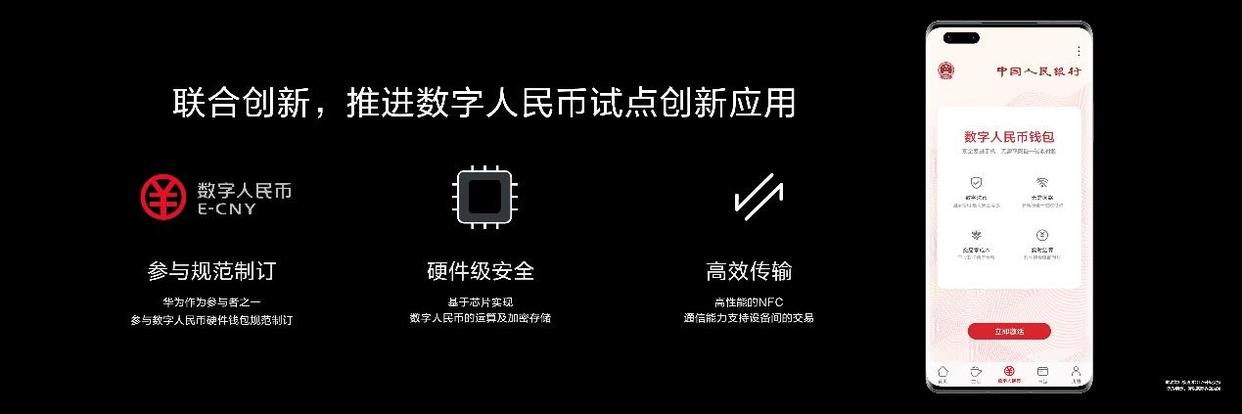
White list users in the pilot area of digital RMB can use the "digital RMB hardware wallet" function of HUAWEI Mate 40 series. HUAWEI Mate 40 series mobile phones are based on Huawei’s hardware-level security capabilities. The mobile phone has encrypted storage, high-performance NFC communication capabilities and transaction functions between devices, which is conducive to the use of digital RMB on the mobile phone. In the digital RMB pilot scenario, HUAWEI Mate 40 series mobile phone users can enjoy a safer and more convenient new mobile payment experience brought by dual offline transactions. Users can open a digital RMB hardware wallet on the mobile phone only by using their personal mobile phone number; Receiving and paying parties can directly complete offline transactions by "touching" their mobile phones in areas where there is no network or poor signal such as subways, airplanes and remote areas.

Huawei Wallet has supported transportation cards, bank cards, mobile phone eID (Citizen Network Electronic Identity), door keys, membership cards, work cards and other keys and card and card swiping services, and innovatively launched Huawei Card, the exclusive credit card for Huawei mobile phone users. Mate 40 series enables mobile wallets to be upgraded again. Users can participate in the "I have a Populus euphratica forest" charity project through Huawei wallet to make donations and receive exclusive Populus euphratica forest charity electronic cards, which is convenient for viewing the progress of the project and the growth of Populus euphratica. Huawei theme has also produced exclusive themes, wallpapers and off-screen displays for this charity project for users to download and use.
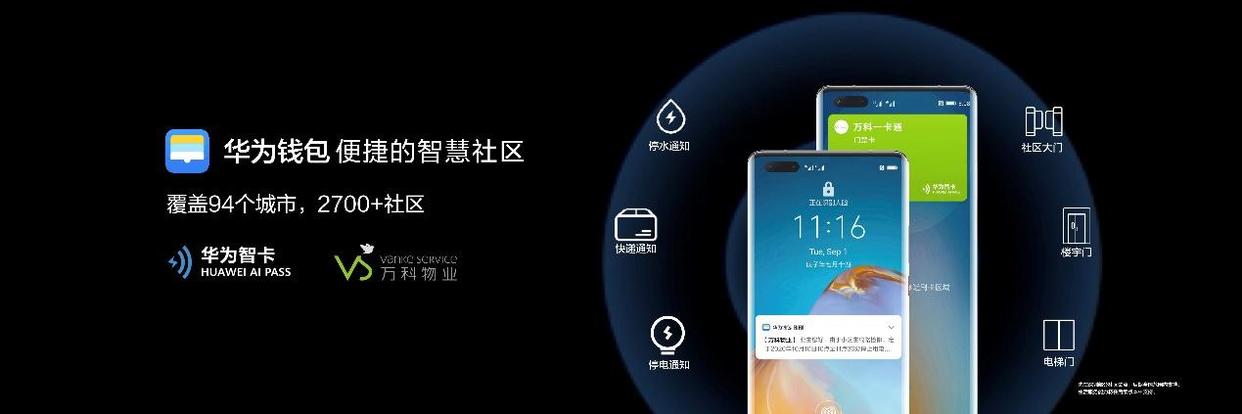
Huawei Wallet also cooperates with Vanke Property. Vanke Property’s mobile phone card will provide owners with convenient functions and intimate services such as Huawei’s mobile phone opening the door with one touch and express notification. The "Smart Flash Card" black technology allows users to "swipe through the customs" every time they open the door without manual selection, thus opening up smart community life.
Huawei AR Map 2.0 was officially unveiled at the press conference. Through the coordinated optimization of software and hardware, the visual positioning accuracy, speed and AI recognition accuracy were further improved to create a smoother and more realistic AR experience for consumers. After the Mogao Grottoes in Dunhuang, users can experience AR augmented reality effects with Mate 40 series and other mobile phones in popular business districts such as Beijing Square, Shanghai Nanjing East Road and Shenzhen Vientiane Tiandi.
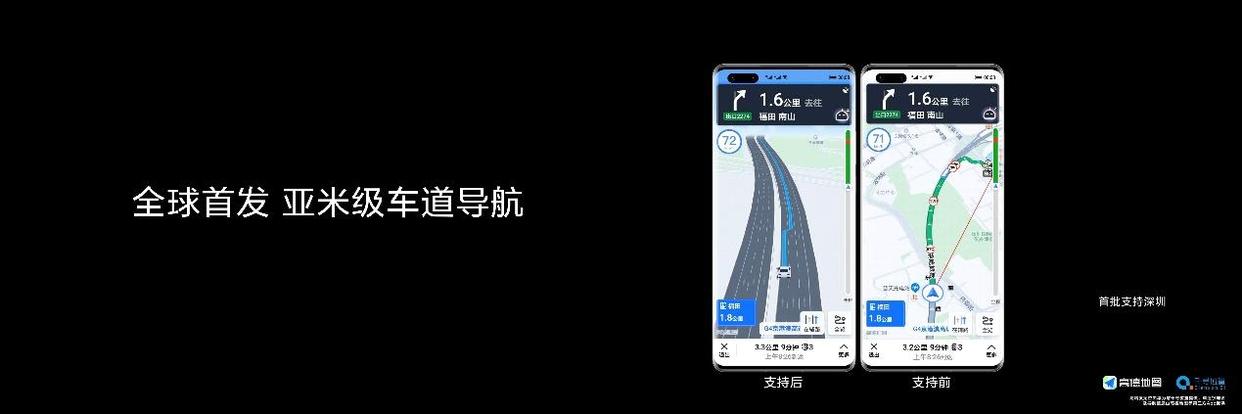
HUAWEI Mate 40 series is the world’s first sub-meter lane navigation. The Gaode Map App displayed at the conference can realize sub-meter lane navigation by integrating the high-precision positioning capability of Mate 40 series. The high-precision positioning capability is jointly provided by Huawei and Chihiro Location, and is open to application developers through HMS Core.
Soft and hard integration, exploring and experiencing new breakthroughs
With the release of Mate 40 series, Huawei theme will continue to bring personalized artistic style to more Huawei end users. Based on the champion works of urban pictorial unit in 2020 Huawei Global Theme Design Competition, a limited travel theme exclusive protective shell will be launched for HUAWEI Mate 40 and Mate 40 Pro model users, bringing users the unique culture and charm of nine cities including Beijing, Shanghai, Guangzhou, Hangzhou, Nanjing, Wuhan, Jinan, Luoyang and Chengdu. Users can also receive a set of travel mobile phone themes for free with the travel theme protective case.
HUAWEI Mate 40 series brings innovative and super-perceptive Leica movie imaging system, which provides users with all-round recording ability of visual images. Six micro-movie templates and lightweight editing tools, such as scenery and architecture, are available for users to easily shoot and edit works, and users can also obtain more movie templates through Huawei themes for personalized short video creation. Huawei theme movie template provides 10 kinds of editing templates and 6 kinds of shooting templates, allowing users to quickly make and shoot dynamic short videos with various styles and movie textures, and record the wonderful flow at all times.
Huawei’s terminal cloud service continues to enrich the use experience of mobile phones such as Mate 40 series through various application function upgrades. Huawei Music’s function of listening to songs and recognizing songs allows Mate 40 series users to quickly and continuously identify background music songs through the floating window and automatically generate a song list, so as to capture good songs in the first time.
Huawei browser has launched the webpage translation function, which can automatically identify the language in the webpage and translate the webpage into the target language selected by users. At present, it has supported the translation between 49 languages, allowing users to easily browse foreign websites and quickly grasp global information. With its powerful chip performance, HUAWEI Mate 40 series calmly responds to the complex computing and multi-task load in the 5G era. Skylink is the first to support overseas 5G Internet access services, upgrade users’ overseas travel experience with a lower delay and higher speed network, and the fast network is one step ahead of others.
Mate 40 series brings unparalleled game experience through linear motor synchronous vibration feedback and subwoofer stereo. The game "Ace Racing" demonstrated at the conference has been reserved in Huawei application market and Huawei Game Center.
Huawei’s terminal cloud service continues to provide users with premium and exclusive rights packages. Mate 40 series users only need to register Huawei account and log in to the member center application to receive a series of new machine exclusive rights and interests, and jump into a beautiful digital life: enjoy the selected popular application game packages in Huawei application market; Enjoy Huawei video for free for one month. Huawei Video VIP+ Mango Zone Double Member Package; Free to receive Huawei’s 31-day reading VIP privilege and 1 yuan’s book gift package worth 666 yuan; Free to receive Huawei Music 31-day Super Music VIP and 20 yuan Reading Voucher; Get a mobile phone transportation card that can travel freely in more than 300 cities across the country in Huawei wallet for free, and apply for activating Huawei Card to enjoy the cash back of Huawei Pay consumption pens; Huawei cloud hosting 50GB cloud storage space first month 0 yuan discount; Experience the 7-day membership benefit privilege of Huawei theme for free in a limited time; Free access to Skylink 500MB overseas Internet traffic; There are also rich rights and interests such as VIP annual card for the same journey, and the gift package for raising a car in Togo.
Full scene smart life, seamless experience is more exciting.
Full-scene products such as Huawei Sound Smart Speaker and HUAWEI WATCH GT2 Pro were also released at the conference site. Huawei’s terminal cloud service continued to provide users with a consistent full-scene experience across terminals through powerful capabilities such as unified collaboration of Huawei accounts, ecological expansion of content and services, and multi-terminal collaboration.
Huawei Themes provides more than 13,000 dial themes for users to download at will, and introduces mobile phone, AOD screen-off and dial theme packages, including master of art series, classic IP series and Huawei official selection series, so that users can realize the synchronous dress-up of mobile phones such as Mate 40 series and watches such as HUAWEI WATCH GT2 Pro with one click, and enjoy the aesthetic experience of seamless connection.
The new generation of Huawei Sound smart speakers, which also appeared at the conference, also continued to upgrade the content experience, not only equipped with tens of millions of lossless audio sources of Huawei music and cool dog music and hundreds of thousands of HiFi music libraries, but also reached a cooperation with Hi-Res streaming music service provider "Sony Select" to launch a high-resolution streaming music library in Huawei Sound smart speaker series, bringing users a high-quality music feast.
At present, the search device APP has supported fast locating and searching Huawei terminal devices such as smart phones, headphones and glasses, and can lock devices, remotely play ringtones and erase data.
HMS for Car is a smart vehicle cloud service solution created by Huawei’s terminal cloud service, which brings the rich experience of Huawei’s smart assistant, Huawei application market, fast application center, Huawei video, Huawei music and other terminal cloud service applications to smart car users and provides richer and smarter travel services. The Volvo XC40 RECHAEGE urban luxury pure electric SUV displayed at the press conference is equipped with Huawei HMS for Car solution, which will be officially put into mass production at Guangzhou Auto Show in November, so that more users can feel the new experience brought by the full scene service.
Do not disturb, track or disclose, and protect the privacy of Mate 40 series.
HUAWEI Mate 40 series builds a more comprehensive privacy protection from the kernel to the system, and strives to keep the privacy of users safe. HMS adheres to the principle of "don’t disturb, don’t track and don’t disclose" to ensure that users have complete right to know and control personal data, so that users can enjoy digital life with peace of mind.
In order to facilitate users to manage targeted advertisements on their mobile phones, Huawei provides an advertisement tracking switch, and users can stop targeted advertisements after turning on the "limit advertisement tracking" switch; Users can prevent advertisers from continuously tracking personal data by selecting "Reset Ad Identifier". Huawei browser can also block cross-site data tracking behavior, prevent third parties from collecting users’ online behaviors and habits, and provide users with a more comfortable online experience.
Before Mate 40 series users install third-party source applications downloaded from non-Huawei application market, the application market installer will trigger the security detection of third-party applications, and remind users in time whether the applications to be installed have virus risks. At present, Huawei has joined a number of international anti-virus engines to ensure application security.
Zhang Pingan, president of Huawei’s consumer business cloud service, said at the exchange meeting of Huawei’s terminal cloud service eco-partners that at present, the number of registered developers in Huawei has exceeded 2 million. Thanks to the support of partners and consumers’ love, Huawei’s terminal cloud service will not only continue to enrich the full-scene terminal experience such as Mate 40 series through its own applications, but also continue to empower thousands of industries and join hands with partners to accelerate globalization and jointly serve Huawei’s end users around the world.
Eight years and ten generations have witnessed the unprecedented powerful Mate, and Huawei’s terminal cloud service has also upgraded the Mate series experience through more and more rich own applications, helping Mate 40 series to become the strongest Huawei flagship mobile phone in the new generation.
Reporting/feedback