The world is selling 90 billion dollars. How can Pikachu become the first IP?

Text | Jiang Yuqi

Editor | Shi Yedong

Who is the number one IP in the world?

If it comes to the influence of film works, the phenomenal IP "reconnection" in recent years may be well deserved; If you compare the loyalty and madness of fans, then "Star Wars" may be difficult to find opponents; However, if "gold-absorbing ability" is taken as the judging standard, Pokémon (officially translated as Pokémon, also translated as Pokemon, Petelf and Poké mon) led by Pikachu really deserves it. 

Pokémon’s first live-action film Pokémon Detective Pikachu

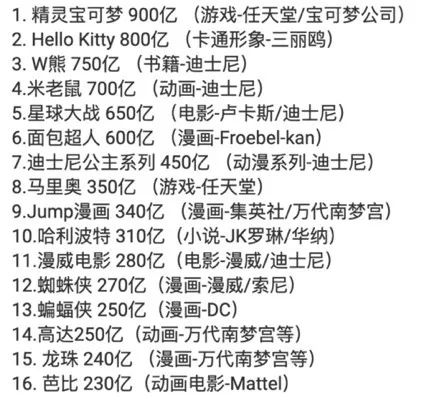
ID: Youhaoxifilm found in Wikipedia’s "List of Highest-Grossing Media Franchises" (hereinafter referred to as the "list") that in the past twenty years, the copyright owners of Pokémon’s products have made accumulated profits of more than 90 billion US dollars through product sales and derivative licenses, ranking first in the IP category of major film and television animation games. This figure is higher than Disney’s Mickey Mouse ($70 billion) and Star Wars ($65 billion), and more than three times that of Marvel Comics movies ($28 billion).

Statistics as of March 2019, unit: USD.

Today, Pokémon’s derivative film, Pokémon Detective Pikachu, which is also the first live-action version of the IP, officially landed in the mainland cinema. As of poison eye’s press release, the film’s arrangement ratio has reached 38% today. In the past few days, the WeChat index of Pikachu has also increased by more than 30% every day, and it has surpassed The Avengers on the 8th. In order to create momentum for the film, the film even invited two business leaders, Wang Jianlin and Ma Huateng, to give the "Pikaqiu" platform, which can be described as quite a row.

How can a small Pikachu have such great market value and influence?

The birth of "the first IP": how "Pikachu" became popular all over the world

In 1989, Nintendo, a Japanese company, one of the three largest video game giants in the world, launched the epoch-making product GameBoy (hereinafter referred to as GB). Driven by the famous game Tetris, GB gained wide acclaim as soon as it came out, among which Tetris alone won tens of millions of sales within two months after its launch.

At the same time, Tian Kaozhi, a "game enthusiast", set up a game development club, GameFreak, trying to make some action games. In Tian Kaozhi’s view, the most distinctive feature of GB is not the lightness and thinness of the company’s main promotion, but its "wired communication function", which reminds him of catching insects and interacting with insects with friends as a child, and thus the idea of developing a game of cultivating and exchanging "insects" came into being-Pokemon took shape.

Tian Kaozhi, founder of GameFreak

As it happens, in 1994, due to the appearance of 32 hosts such as 3DO, SS and PS, the sales volume of GB, which is not dominant in capacity and image quality, began to decline. The annual sales volume in Japan plummeted from more than 3 million to 1.81 million, and the sales volume of software also dropped from nearly 18 million to 10.3 million. In order to get rid of the crisis, Nintendo began to focus on finding new selling points of GB, and Pokemon, which was developed by GameFreak and emphasized the brand-new concept of communication warfare, received attention.

In 1996, the first generation Pokemon games, Pokemon Red and Pokemon Green, were officially launched. Unfortunately, at that time, GB was no longer the most popular handheld device on the market, so Pokemon didn’t make much waves in the early days, and only sold 200,000 copies in one month.

However, at the same time that the first generation of Pokemon was launched, a comic book called Pippi Biography based on the characters in the game began to be serialized. In this cartoon, Pikachu only appeared as a supporting role, and the real protagonist was another Pockmarked Pippi, and the painting style and storyline were also quite meaningless, which was very different from the series of works known to the public later, but it was welcomed by many readers at that time. 

When Nintendo saw this, it started marketing with the biography of Pippi as the position. For example, readers who bought the biography of Pippi had the opportunity to participate in related activities and win the limited edition dream of Baokemeng. Because the number of "dreams" is only 100, relying on hunger marketing and the high popularity of Pippi Biography, it instantly attracted a large number of users to participate, which suddenly boosted the popularity of Pokemon. 

By March 1997, Pokemon had jumped to the TOP30 of Japanese software sales list. With the participation of more users, the interactive and battle functions of Pokemon have also been displayed, and the game experience has been greatly increased. In the following two years, Nintendo revised the game and launched Pokemon Blue and other versions. The sales of the first generation of Pokemon also increased year by year, and eventually sold 45 million sets, becoming one of the most popular games in Nintendo’s history, and successfully revitalizing the company’s business.

Nintendo, who wants to pursue victory, constantly updates its handheld devices, and successively introduces new products such as GameBoy Color(GBC) and GameBoy Advance(GBA) with better picture quality and lighter weight, and at the same time continues to launch new Pokemon games in conjunction with GameFreak. After 1999, Pokemon series successively launched Poké mon Gold and Silver, including seven generations (the eighth generation was released this winter) of handheld games and a large number of derivative games and console games, which reached more than 70 models, sold more than 300 million sets worldwide, and won eight related world records issued by Guinness World Records, laying the foundation for the worldwide popularity of this IP.

However, due to the limited ability to develop and update early Game Freak games, Nintendo, who was worried about the decline of Pokemon, found the primary school of Japan’s largest publishing group and worked together to create derivative cartoons and animations of the IP to gain time for game development. In 1997, while Pokemon became more and more popular, the first Pokémon animation was officially launched. In this series, Pikachu, who has a high popularity in the game, replaced Pippi as the protagonist and suddenly became the spokesperson of Pokémon, an IP.

"Pokémon" animated poster

Facts have proved that the animation of Pokémon is an extremely correct choice. Compared with games with a certain threshold (requiring equipment), with the help of TV and the rising Internet, animation has become a better communication carrier for Pokémon.

During the first generation of Pokémon (1997-2002) broadcast in Japan, the average audience rating reached more than 10% (the average audience rating exceeded 15% in some late Shi Ying League), and almost every episode ranked in the top ten in the same period; The theme song of the animation "The Goal is the Master of Pockmarked Dreams" also captured 1.85 million album sales in Japan; Up to now, 80% of the more than 1,000 episodes of Pokémon in six seasons are ranked in the top ten in the same period.

While the influence of Pokémon is gradually increasing in Japan, IP operators are constantly pushing it to the world. In the United States, companies such as Pokémon and Disney have had in-depth cooperation. In 2000 alone, more than 25 million animated DVDs and VCD; were sold. Statistics from India show that this series was once the animation with the largest number of users among audiences aged 4-14. Up to now, Pokémon has been broadcast in 124 countries. Even in 2016, Netflix revealed that Pokémon is one of the most popular series on Netflix.

The best-selling DVD of Pokémon.

With the popularity of Pokémon and the expansion of Pokemon’s global influence, Poké mon has gradually occupied an increasingly important position in the hearts of users all over the world. In 1999, Pokémon appeared on the cover of Time magazine, and Pikachu was named the second most influential person of the year by Time magazine, calling him "the most popular animated character after Hello Kitty".

In recent years, Pokémon’s influence has a tendency to surpass the pure entertainment field and gradually become a cultural symbol. In the United States, during the election, Hillary Clinton and other politicians even went to the gathering of American Pokémon fans to canvass this huge audience. In Japan, Pikachu is regarded as a "national symbol". When Japan played in the World Cup in 2014, Pikachu defeated Doraemon, etc., and joined hands with more than ten other Pockmarked Dreams to become the mascot of the Japanese team.

 How do Pikachu earn 90 billion dollars?

Such a large global influence naturally makes the market value of Pokémon IP rise.

As early as 1998, Nintendo and Game Freak jointly established The Pokémon Company for brand licensing and derivative product development, and successively set up subsidiaries in the United States and South Korea for different markets. By 2003, the image of Pikachu alone could earn $800 million a year, and it was even selected as "the most profitable virtual character of the year" by Forbes. Today, Pokémon has created a total income of 90 billion dollars for all partners, which is even more difficult for Marvel Comics.

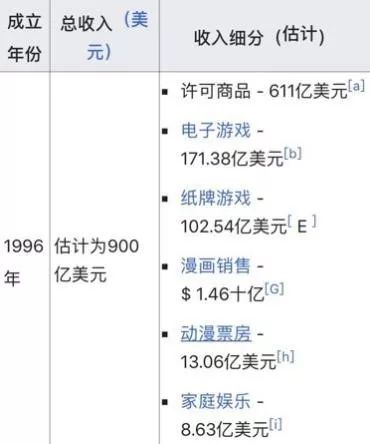
So what did the "Pikachu" rely on to earn this $90 billion? According to the public information, Poison Eye has sorted out the public realization modes of Pokémon on the Internet, and divided them into the following categories: authorization and sale of peripheral derivatives, sales of electronic games, sales of card games, animation and movie income. The specific division is as follows-

The form is from Wikipedia.

1. Authorization and sale of peripheral derivatives

The authorization and sale of peripheral derivatives is one of the most profitable businesses related to Pokémon at present. According to the "list" data, the related income has accumulated to more than 60 billion US dollars in the past two decades. At present, Disney, an entertainment giant in Japan and China and the overlord of derivatives, can earn $45 billion a year from derivatives, but this is the result of the joint efforts of many phenomenal IPS such as Mickey Mouse, Marvel Comics and Star Wars, and Pokémon can sell an average of $23 billion a year, which shows its influence.

In 2004, one year after Pokémon was launched in India, the total sales of related licensed goods exceeded 10 billion rupees, equivalent to 22.1 million US dollars. In Europe, Pokémon-related toys are called "dominant" by the local media. The British Toy Industry Association has awarded the annual toy awards to related products many times. Until 2017, in Britain, Italy and other places, the annual sales of Pokémon toys still increased by more than 50%.

In 2017, Alibaba Pictures and The Pokémon Company reached a strategic cooperation, obtained the development and marketing authorization of Pokémon’s peripheral products in China, and began to promote related products on Tmall and other platforms. According to the data disclosed by Alibaba Pictures, in the first three days of the launch of related products, the transaction volume was nearly 20 million yuan, and the UV was 2.5 times that of the same order of magnitude in daily life, while the daily sales of Pokémon-related derivatives was 30 million yuan.

In 2017, the daily sales volume of Double Eleven Pokémon derivatives reached 30 million yuan.

According to incomplete statistics, there are thousands of genuine Pokémon derivatives around Pikachu at this stage, involving daily necessities, clothing and snacks. In addition to authorized goods, ThePokémon Company has opened more than ten "Baokemeng Centers", nearly 30 "Baokemeng Specialty Stores" and several regional online stores around the world.

2. Video game sales

Video game sales is the oldest and most traditional cash channel of Pokémon, and it is the most popular game IP on almost every Nintendo handheld after GB. Up to now, Pokémon’s various derivative games have sold more than $17 billion and more than 300 million sets worldwide, ranking second in the history of video games in terms of sales volume, second only to Mario produced by Nintendo, and also the best-selling role-playing game in history.

If the handheld computer was one of the thresholds for the maximum popularity of Pokémon games in the past, then the arrival of the mobile game era has solved this problem well. In 2016, Pokémon GO was launched overseas, and accumulated 75 million downloads in half a year. By the end of 2018, Pokémon GO had attracted players to spend as much as 2.2 billion US dollars, including 795 million US dollars in revenue in 2018, up 35% year-on-year. Niantic, its game developer, has also received $200 million in financing and a valuation of $4 billion.

Such a huge income was created when the China market was not fully opened. Although Pokemon has been popular all over the world twenty years ago, mainland players are almost always exposed to pirated and cracked versions. In 2014, even mainland Pokemon fans wrote a petition to Nintendo, hoping to promote genuine Chinese works. Not long ago, Tencent got the agency right of Nintendo’s hottest handheld NS in the mainland, which means that some Pokemon games supporting NS will have the opportunity to gain more space in the mainland in the future.

It is worth mentioning that games are also creating new income possibilities for derivatives and film and television products, and many mature games themselves have gradually formed influential IP, which has the possibility and space for fission. The movie Pokémon Detective Pikachu is a film adapted from the enhanced version of Nintendo’s game The Birth of Detective Pikachu’s New Partner. Thanks to the popularity of this film, the film also opened the "Detective Pikachu Theme Entertainment Exhibition" and a series of pop-up shop in China, which provided a channel for offline consumption of derivatives and continued to increase the income of products around them.

3. Card game sales 

Card game sales are one of the most easily underestimated channels for realizing Pokémon, but in fact, these seemingly insignificant pieces of paper have accumulated more than 10 billion US dollars in revenue. The official name of this card game is "PokémonTrading Card Game" (PTCG), which is an officially authorized card game with the theme of Pokémon.

According to the data disclosed on the official website of Pokémon, as of March 2018, PTCG has sold more than 25.7 billion copies worldwide; According to the statistics of NPD Group, an authoritative survey company in the United States, in 2017, PTCG occupied more than 80% of the market share in the European strategic card market, and the annual sales in many countries in that year increased by more than 400% year-on-year; According to the survey of License Global, as early as 2016, PTCG has surpassed the "Game King" to become the best-selling strategic card game.

Like video games, PTCG has not entered the domestic market due to copyright, policy and market restrictions. However, in Japan, Europe, America and Hong Kong, China, PTCG is promoted by big agents (for example, in North America, the agent of PTCG is the parent company of magic the gathering), and it has a good popularity in the local area, and even has special tournaments. Not only that, in the eyes of many collectors, PTCG also has a very high collection value, and the price of some rare cards can even reach hundreds of thousands of dollars. 

4. Animation and movie revenue

Animation and film revenue mainly includes the copyright income of comics and animation, as well as the box office income of theatrical films, and the global cumulative income has reached billions of dollars. Although this income is almost negligible compared with other incomes, movies and comics, as an important carrier of Pokémon to maintain its popularity and popularity, are still highly valued by Nintendo, elementary school and other interested parties.

In addition to the nearly 1,000 episodes of animation and related cartoons mentioned above, Pokémon has released 1-2 theatrical works every year since 1998. After the first theatrical version of Pokémon: The Counter-attack of Super Dream was released in 1998, it first achieved 7.3 billion yen in Japan (the second in the whole year); Later, when the film was released in North America and other places, it also accumulated more than 160 million US dollars at the box office, setting a box office record for Japanese films in many countries and regions.

Pokémon: The Counter-attack of Super Dream

Counting Pokémon, which will be released in July this year, 23 theatrical versions of Poké mon have been released in the past twenty years, including five in North China and one in mainland (Poké mon: Volcanion and Magearna with a box office of 25 million in 2017). Although the follow-up works failed to continue the glory of the first work, they can still harvest 2-4 billion yen at the local box office every year, ranking among the top 20 in the annual box office list.

The contingency and inevitability behind Pokémon’s popularity.

Thanks to many business lines covering all fields of cultural consumption, the popularity of Pokémon has been growing stronger with the diversification of media forms and entertainment channels since its birth 23 years ago, so that many practitioners talk about Pokémon with admiration and envy. Newell, the boss behind steam, the hottest game platform, has repeatedly lamented the greatness of Pokémon, saying that its developers have made this series better than any other series, and this IP is also the most valuable IP in history, stronger than any product of V Society.

Judging from the development history of Pokémon, there are too many accidental factors that cannot be copied in its success.

The expression of "Big Detective Bikachu" released today is cute.

For example, Pikachu is like this because the designer Nishida Dunzi happened to be raising squirrels at that time. The dream of Pokemon, which helped Pokemon come back to life, was originally a setting to be deleted, but the designer secretly left it behind. Before choosing Pikachu, Nintendo and the Academy actually considered other protagonists, Pippi and another treasure dream Ibu were both taken into consideration … If history is allowed once, any deviation in details may make this IP miss its status today.

But in addition to all these accidents, there are some inevitable factors.

In fact, Nishida Dunzi was not in the design team at first, and the initial design of Pokemon was mainly undertaken by another male designer, Shanshan Jian. Although he also created classic images such as Snorlax, he bluntly said that he always designed images with male thinking, and couldn’t think of any way to create some lovely treasures that female players would also like to participate in the collection. So Shanshan Jian took the initiative to find a female designer, Nishida Dunzi, and created the original Pikachu with the help of the latter. The reason why this "electric squirrel" is called "Pikachu" is also because the name is cute and fits the pronunciation habits of western users.

The earliest Pikachu

The selection of Pikachu as the protagonist of Pokémon is also the result of the team’s consideration in many aspects: First, Pippi in Pippi Biography is too serious to be the protagonist of an all-age animation; Secondly, Pippi’s color is pink, while Pikachu’s is yellow. In the aesthetics of oriental audiences, yellow is more neutral than pink, so it won’t lose male users. In addition, yellow is more recognizable and impactful than other colors, and it is easier to stand out in derivatives.

As for the popularity of Pokémon, it’s not just luck.

Masaichi Kubao, director of the Academy and known as "the father of Pikachu", revealed that Pokémon would do a lot of research before entering any overseas market. "Especially when we push animation to a big market like China, we often look at some works that are very popular in China, or some works that are hot in China but can’t achieve such good results in Japan, and then analyze the reasons. This is the way we use to learn the market differences in different countries. When we brought Pikachu to China, we also did a lot of investigations, including still doing so today. "

It can be seen that although the game of Pokemon and the animation of Pokémon are full of many unknowns in the creative stage, the team is sufficiently forward-looking, and the acceptance, derivative sales and audience characteristics are all included in the planning of the producers, giving them full attention and preparation. And the attention to every little detail has finally made this IP.

On the contrary, before, China derivatives industry practitioners told Poison Eye that one of the important reasons why China film and television derivatives can’t make achievements is that many companies are not forward-looking enough (click here to read: The Wandering Earth derivatives are hot, why didn’t anyone dare to do it before the screening? ), in the creative stage, the elements suitable for derivative development were not selected in advance, and they often waited until the eve of going online to cram for the last minute and make some shoddy products, which further delayed the breakthrough of derivatives in China.

Whether it’s Pokémon, which has remained strong for 20 years, or Marvel Comics, which has accumulated a lot of money and spent ten years building the strongest IP on the screen, these successful IPS are undoubtedly telling the same truth: the success of a good IP was not built in a day. On this road, there are still many places to be cultivated slowly in China’s film and television industry and even the entire entertainment industry.

References:

[1] List of Hester-Grossing Media Franchises Wikipedia

[2] "Tian Kaozhi, the man who created Pokemon" was published by Tailang Gong and Ota Tian Kaozhi in 2004.

(The sales volume and sales data involved in this article are all from Wikipedia statistics unless otherwise specified.)

Wenzhou Airport’s "sky-high price of car ferry" caused controversy and responded that it was clearly marked.

  "The apron is only about 300 meters away from the terminal building. Why do you have to charge so much for such a short distance in car ferry?" Recently, passenger Xiaoxin (pseudonym) posted on the Internet that she and her colleagues flew from Beijing to Wenzhou on the 4th. After disembarking, she took the first-class exclusive car ferry with her to help her first-class colleagues with their luggage. However, Xiaoxin was charged 398 yuan by the airport because she was an economy class passenger. Faced with the query of Xiaoxin’s "overlord clause", Wenzhou Airport responded that the charges were clearly marked and the passengers had been informed in advance.

  passenger

  It is unreasonable to charge 398 yuan for 300 meters.

  It is understood that on May 4, Xiaoxin and a colleague returned to Wenzhou from Beijing on business. Because they didn’t buy a first-class ticket, they took economy class. After arriving at the airport, Xiaoxin went to car ferry in the first class for the sake of helping his colleagues with their luggage.

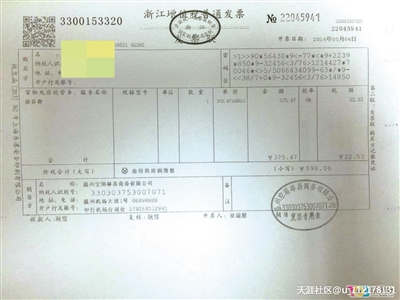
  According to Mr. Chen, a colleague of Xiaoxin, "Xiaoxin thought this charge was expensive at that time, so after paying the fee, he specifically asked them for the invoice."

  On the evening of the 6th, Xiaoxin reported this problem to the airport staff through the complaint telephone number of Wenzhou Airport, and asked if there were any relevant documents stipulated by the price department, and the reply was "This is the regulation of the airport".

  "As for the relevant documents, they said they did, but they could not provide them to us." Later, the airport also explained that the VIP room and car ferry consumption are linked together and belong to VIP consumption.

  Is there a charge for car ferry? In this regard, Xiaoxin has several questions. First, should this fee be collected? Secondly, if you really want to pay the fee, does this 398 yuan meet the relevant charging standards stipulated by the price department? "Who will go to the VIP room to sit for a few hours when leaving Hong Kong? Why do you have to be tied up with other services such as VIP rooms when you leave Hong Kong? This is the overlord clause. "

  airport

  Passengers have been informed before charging fees.

  According to a related person in charge of Wenzhou Airport, the car ferry flight attendant told the passenger that there was a charge of 398 yuan when he found this situation.

  "The colleague of the passenger paid us the fee on the spot. This communication is no problem. The other party also recognized our obligation to inform, and we also provided them with invoices at that time."

  As for whether the fees have been approved by the price department and whether the amount of fees is reasonable, the person in charge said that Zhejiang Province publishes the pricing catalogue of goods every year, but since 2015, the pricing catalogue of civil aviation no longer includes fixed item fees.

  "Our fixed services are completely market-leading prices and do not need the approval of the price department. According to the operating conditions, we have the right to make price adjustments on our own. Moreover, we have also clearly marked the price, which is explained on the official website and service counter of the airport. " The person in charge also said that this price is not high from the price level of national airports, and it belongs to the lower-middle level.

  For the specific expenses included in the 398 yuan, the person in charge said that "all services are included". "Whether entering or leaving Hong Kong, for example, passengers enter and leave through special passages, rest in VIP rooms, or enjoy refreshment services. The charges of this set of processes are inseparable, and it is impossible to extract one of the services for separate charges. The service model is the same throughout the country. "

  Municipal bureau of commodity price

  Currently involved in the investigation.

  Yesterday, in response to this matter, the reporter of Beiqing Daily telephoned the Wenzhou Municipal Price Bureau. According to relevant sources, the competent price department of Wenzhou Municipal Government has been involved in the investigation that morning, and the relevant results will be announced as soon as possible.

  The price bureau said that Xiaoxin’s affairs involved many aspects and were more complicated. It said, for example, can economy class passengers take first class car ferry? If you can, if everyone pays to sit, it may affect the feelings of other passengers. In addition, the Price Bureau has no information about whether the behavior of taking car ferry like Xiaoxin should be charged and who should set the fee standard.

  "At present, there are three modes of price management in our country, namely, government pricing, government-guided pricing and market-regulated pricing. However, this case is quite special. Although we stipulate that there is no charge for passengers to use car ferry now, it is hard to say that passengers in economy class take first-class passengers in car ferry."

  Expert opinion

  Charge or no relevant basis

  Whether car ferry should be charged at the airport, Zhang Qihuai, the chief expert of China Aviation Legal Service Center and lawyer of Lanpeng Law Firm, thinks that there is no relevant basis for the airport to charge passengers for taking car ferry.

  Zhang Qihuai introduced, "There may be a corresponding price regulation for the driving route between the operation of car ferry and the airport, but this cost occurs between the operator of car ferry and the airport and has nothing to do with passengers, so passengers should not be charged any fees."

  But at the same time, as a passenger, this practice also has some shortcomings. "Passengers should consciously abide by the relevant regulations on taking car ferry. It is also inappropriate to take an economy class ticket like Xiaoxin to take the first class exclusive car ferry, but it cannot be used as a reason for the airport to charge it."

  Text/reporter Kong Dejun Intern reporter Wang

Thai prime minister election results released Ba Yu was elected as the new prime minister of the government.

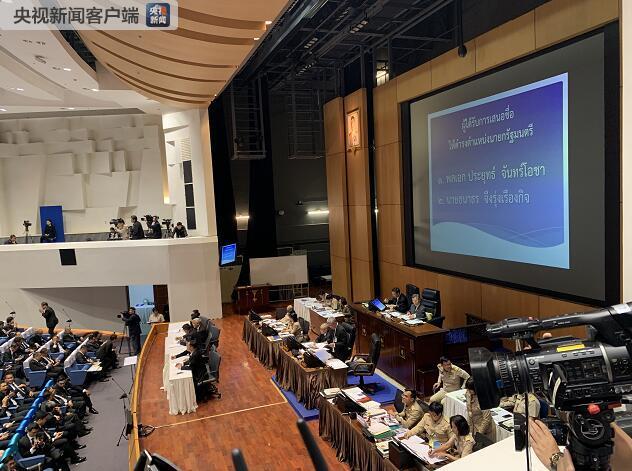
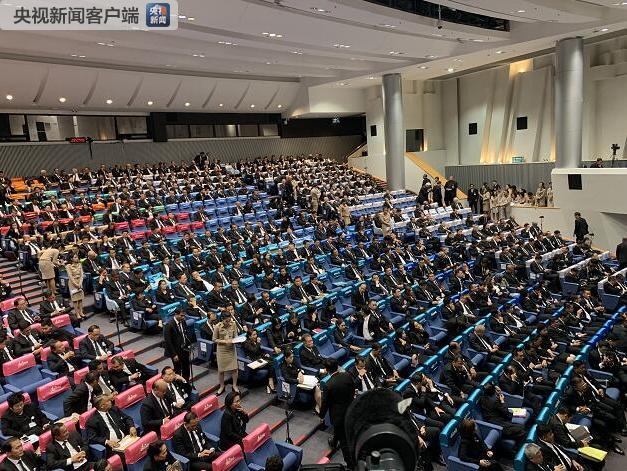
  CCTV News:On the 5th local time, the Thai Parliament held a joint meeting of the upper and lower houses to jointly elect the new Prime Minister. According to the results of the voting statistics that night, the Thai Parliament announced that the current Prime Minister, Ba Yu Zhan Aocha, was elected as the new Prime Minister.

  On the same day, the joint meeting of the upper and lower houses of Congress officially began at 11: 00 am local time. Members of the Thai People’s Power Party nominated the current Prime Minister Ba Yu as the candidate for the new government, while members of the New Future Party of Thailand nominated its leader Tanatong as the candidate for the prime minister.

  Subsequently, members of all political parties had a heated debate on the qualifications of the two candidates. After nearly 11 hours of discussion, it was around 10 pm local time on the 5th. Chuan leekphai, President of the National Assembly, announced the beginning of voting to elect the Prime Minister of the new government from the two existing candidates.

  The voting session of the day was an open vote, and members of the upper and lower houses expressed their support to Congress in turn. According to the final vote count, a total of 747 members of the 750 members of the upper and lower houses of Congress voted. Tanatong, the leader of the New Future Party, won 244 votes, while the current Prime Minister Ba Yu won 500 votes and three abstained. Ba Yu was successfully elected as the new Prime Minister and became the 30th Prime Minister of Thailand.

  News background:

  Thailand held its first general election in nearly five years since the coup on March 24th this year, and elected 500 members of the House of Commons. Different from the previous general elections, according to the latest constitution revised after the coup, the candidate for Prime Minister of Thailand is jointly elected by members of the upper and lower houses of Parliament, and all 250 members of the House of Lords are selected by the National Peacekeeping Order Committee led by the current Prime Minister Ba Yu.

  In 2014, the Thai military launched a coup to overthrow the Thai government led by Yingluck. The former army commander Ba Yu led the establishment of the National Peacekeeping Order Committee, which served as the Prime Minister and has been in power ever since. (CCTV reporter Luo Wei)

Summary of the situation of Wenchuan earthquake with magnitude 7.8 in Sichuan Province

Topic: An earthquake of magnitude 7.8 occurred in Wenchuan County, Sichuan Province.

  Essential life-saving tips for emergency measures  Don’t jump off a building. What does the earthquake do to the human body the most?


    Ten rules of escape in an earthquake   The National Disaster Reduction Committee urgently launched the second-level emergency response for disaster relief.


    Earthquake self-help encyclopedia is highly recommended. China Meteorological Bureau started the second-level emergency response of earthquake disaster meteorological service.


    Zhang Hongwei, spokesman of the Seismological Bureau of China, said that the earthquake was strong and spread widely. The latest measured magnitude is 7.8, and it is felt in Ningxia, Qinghai, Gansu, Henan, Shanxi, Shaanxi, Shandong, Yunnan, Hunan, Hubei, Shanghai, Chongqing and other provinces and cities.


  Casualties: 14,463 people died in Sichuan, 280 in Gansu and 106 in Shaanxi.


  According to statistics from relevant departments, as of two o’clock in the afternoon of May 14th, the death toll of Wenchuan earthquake was 14,866, including 14,463 in Sichuan, 280 in Gansu, 106 in Shaanxi, 14 in Chongqing and 2 in Henan.> > > more


   Sichuan/Chongqing


  As of 16: 00 on the 14th.ChengduThe death toll is 1215.


  [Video] Mianyang TV reporter: As of 18: 30 on the 13th, 18,600 people were buried.


  [Video] The death toll in Mianyang reached 7395. Deyang died 2674 959 people died in Chengdu 


  The severe disaster in Zundao Town, Mianzhu City has caused more than 400 deaths (photos)


   Wenchuan:Yingxiu Town has a population of 12,000, and more than 3,000 people have been given food by the army.


         About a third of the houses collapsed. About 60,000 people have not been heard from. 


  Guangyuan Qingchuan County No.1 Middle School had more than 400 students killed or injured at 15: 00 on the 13th.


  Beichuan:3,000 to 5,000 people died Most buildings in the county collapsed. More than a thousand teachers and students were buried. 


  Some school buildings in Deyang collapsed and a group of students were buried.  Ten people were killed and 86 injured in ziyang.


  Marcand, Sichuan, Jiuzhaigou, Shifang and other places released preliminary reports of casualties.


  Several buildings in shifang city collapsed in the epicenter and hundreds of people were buried. Meishan 8 died and more than 3000 people were injured.


  Eleven people were killed in the Chongqing earthquake.


    As of 8: 00 on the 13th, there were 16 aftershocks of magnitude 5 or above in the earthquake zone, with a maximum magnitude of 6.0.


  The strong earthquake affected Dujiangyan and the road leading to Wenchuan has been completely interrupted.  The highway from Chengdu to Wenchuan is blocked.


  Chengdu can still feel traffic jams and communication difficulties in some sections of aftershocks.  The earthquake is obvious Underground water pipe rupture


  Primary and secondary schools and kindergartens in Chengdu will have a holiday tomorrow.  The social order was basically normal after the Chengdu earthquake.  


  Chengdu Airport was temporarily closed until 18: 00. Flights to Chengdu are preparing to descend to Chongqing Airport.


    Chengdu, Chongqing, Xi ‘an and other areas were closed due to the earthquake.  The first trains of Chengdu Railway Station were all stopped.


  180 trains were stranded due to Wenchuan earthquake. The earthquake caused some trains in Chongqing to leave late. 


  Wenchuan earthquake caused 15 railway collapses and more than 200 trains were stranded on the way. 


   Many highways in Sichuan and Shaanxi were interrupted, and the Ministry of Communications responded to the earthquake disaster urgently. 


  An earthquake of magnitude 7.8 occurred in Sichuan, and many provinces and cities felt it clearly [photos]


  Many Chengdu citizens take refuge outdoors [Photos]


   Don’t believe rumors because of the magnitude 7.8 earthquake in Wenxian County, Sichuan Province.


    Xinhuanet Beijing, May 12th According to the China Seismological Network, at 14: 28 on May 12th, 2008, an earthquake of magnitude 7.8 occurred in Wenxian County, Sichuan (103.4 degrees east longitude and 31.0 degrees north latitude). This earthquake has a high magnitude and a wide range of feelings. It has spread to Ningxia, Gansu, Qinghai, Shaanxi, Shanxi, Shandong, Henan, Hubei, Hunan, Chongqing, Guizhou, Yunnan, Guangxi, Xizang, Jiangsu, Liaoning and Shanghai.> > > more


   Seismological Bureau of Chongqing: The earthquake in Chongqing tonight is a rumor. 


  Experts believe that the Wenchuan earthquake belongs to shallow earthquakes and its destructive power is greater.


    Xizang earthquake experts will rush to Sichuan to support the rescue.  Yunnan earthquake experts rushed to Sichuan to support rescue.


    Hospital emergency transfer patients actively take care of the wounded after the earthquake.


   Sichuan takes measures to prevent new losses caused by aftershocks.


    Dujiangyan scenic area personnel have not found any signs of damage to Dujiangyan water conservancy project.


  There will be little to moderate rain in most parts of Sichuan in the next three days. 


………………………………………………………………………………………………


the Three Gorges


   The Three Gorges Dam has not been affected by the earthquake and is safe at present.


   The epicenter of Wenchuan earthquake is about 1000 kilometers away from the Three Gorges Dam, and the dam is normal (Figure).


………………………………………………………………………………………………


Yunnan/Hainan  


   More than 16,000 residents were resettled in Zhaotong earthquake-stricken area, Yunnan Province.


  One person died and nine people were injured in Zhaotong, Yunnan.


  Xinhuanet Kunming, May 12 (Reporter Guan Guifeng) On the 12th, after the Wenchuan earthquake in Sichuan, Zhaotong City, Yunnan Province felt a strong earthquake. As of 19: 00, the earthquake has caused one death and nine injuries in Zhaotong, and more than 3,000 houses have been damaged to varying degrees.> > > more


  Yunnan: Chuxiong Zhaotong and other places have strong earthquakes and some houses collapsed.


    Kunming, May 12 (Xinhua) According to the news from the Yunnan Provincial Department of Civil Affairs, Chuxiong and Zhaotong in Yunnan were affected by the Wenchuan earthquake in Sichuan, which had a strong sense of earthquake and some houses collapsed. No casualties were reported as of 15: 00.


  The earthquake in Kunming is strong. Haikou city has obvious earthquake sensation. House damage in some areas of Yunnan


  ………………………………………………………………………………………………


Gansu/Shaanxi/Ningxia/Shanxi


  The earthquake in Lanzhou, Gansu Province is obvious There was an obvious earthquake in Qingyang, Gansu.  Emergency response to the earthquake of magnitude Ⅲ in Gansu Province.


    Xinhuanet Lanzhou, May 12 (Reporter Song Changqing) Affected by a strong earthquake, at 14: 30 on the 12th, Lanzhou city felt an obvious earthquake.


    Citizens have taken to the streets to avoid danger, and schools and other units have immediately evacuated people to safe places to avoid danger. A large number of vehicles parked on the side of the road were affected by the vibration, and the alarms sounded one after another. Mobile communication was once generally blocked.> > > more 


  The death toll in Longnan, Gansu Province has increased to 198, and the number of injured has increased to 2414.  12 hours in Longnan disaster area


   The death toll from Wenchuan earthquake in Gansu province rose to 48.  At least 10 people died.


  Xinhuanet Lanzhou, May 12 (Reporter Song Changqing) According to the latest statistics of department of gansu province, as of 21: 00 on the 12th, the death toll from the Wenchuan earthquake in Gansu Province has risen to 48, 16 people were seriously injured, and more than 20,000 people have been resettled. At present, the number of casualties is still under further statistics, and the disaster situation in Wenxian County, which is adjacent to Sichuan, cannot be counted.> > > more


  The Wenchuan earthquake in Sichuan caused 61 deaths and 176 injuries in Shaanxi.


    Xinhuanet Xi ‘an, May 12 (Reporter Yu Shaoliang Mao Haifeng) According to the Shaanxi Provincial Emergency Office, as of 22: 00 on the 12th, the Wenchuan earthquake in Sichuan has caused 61 deaths and 176 injuries in Shaanxi, and the number of casualties reported in various parts of Shaanxi is still increasing.> > > more


  The earthquake in the center of Xi’ an is obvious.


  Students from Xunyi Middle School in Shaanxi Province were evacuated on the playground. image-text  


    The office building in Yinchuan area shook for about 4 minutes.


    Shanxi: I feel that many people ran to the outdoor open area after the earthquake.  


    Strong earthquakes have caused poor communication and power damage in parts of western China. 


   Shaanxi urgently deploys earthquake relief work.


………………………………………………………………………………………………


Beijing/Tianjin/Shijiazhuang


   The State Seismological Bureau said that the rumor that there will be aftershocks in Beijing tonight is not true.


   Xinhua News: The duty room of the State Seismological Bureau said that the rumor that there will be aftershocks in Beijing tonight is not true, and there will be no destructive earthquake in Beijing in the near future.


   The Bird’s Nest, a 3.9-magnitude earthquake in Tongzhou, Beijing, was unaffected.


  There is obvious earthquake sensation in Tianjin area.

    Shijiazhuang area has obvious earthquake sensation.

   Affected by the earthquake, flights from Beijing to Chengdu, Chongqing and Xi ‘an were delayed. 

  Beijing’s public transport systems, such as buses and subways, were not affected by the earthquake.


  Seismological Bureau of Beijing: There will be no destructive earthquake in Beijing in the near future. 

Song Zhanying, the former inspector of the China Banking Regulatory Commission’s Office for Handling Illegal Fund-raising, was expelled from the Party.

  CCTV News:According to the website of the State Supervision Commission of the Central Commission for Discipline Inspection, according to the news of the Discipline Inspection and Supervision Team of the State Supervision Commission of the Central Commission for Discipline Inspection in the State Financial Supervision Administration and the Supervision Commission of Hebei Province, a few days ago, the Discipline Inspection and Supervision Team of the State Supervision Commission of the Central Commission for Discipline Inspection in the State Financial Supervision Administration and the Supervision Commission of Handan City, Hebei Province conducted a disciplinary review and supervision investigation on Song Zhanying, the former inspector of the China Banking Regulatory Commission’s Office for Handling Illegal Fund-raising.

  After investigation, Song Zhanying, as a leading cadre in party member, lost his ideals and beliefs, abandoned his initial mission, violated organizational principles, concealed personal matters, and helped others to join financial institutions in violation of regulations; The bottom line of integrity has fallen, illegally accepting and holding shares of non-listed companies, and illegally doing business; Violation of life discipline; Illegal possession of classified information; Taking advantage of his position to make profits for others in bank loans, employment in financial institutions, etc., and illegally accepting huge amounts of property.

  Song Zhanying seriously violated the party’s organizational discipline, integrity discipline and life discipline, and constituted a serious duty violation and was suspected of taking bribes and using influence to take bribes. He did not converge or stop after the 18th and 19th National Congress of the Communist Party of China, which was serious in nature and had a bad influence. It should be dealt with seriously. According to the Regulations on Disciplinary Actions in the Communist Party of China (CPC), the Supervision Law of People’s Republic of China (PRC), the Law on Administrative Actions of Public Officials in People’s Republic of China (PRC) and other relevant regulations, Song Zhanying was dismissed from the Party Committee meeting of the State Financial Supervision and Administration Bureau, and the treatment he enjoyed was cancelled according to regulations; Collect their illegal income. After the research and decision of the Supervision Committee of Handan City, Hebei Province, Song Zhanying’s suspected crime was transferred to the procuratorate for review and prosecution according to law, and the property involved was transferred with the case.

Shenzhen restarted the points to enter the household. Is the threshold high or low? What are the considerations?

  After a lapse of three years, Shenzhen points will be restarted. On February 8th, Shenzhen Development and Reform Commission, shenzhen public and Shenzhen Human Resources and Social Security Bureau jointly issued the Notice of Shenzhen’s Points-based Household Registration Method (hereinafter referred to as "Household Registration Method").

  In July 2017, Shenzhen issued and implemented the "Measures for Shenzhen’s Points Entry (Trial)" (Shenfa Gaigui [2017] No.1), with a validity period of three years. Therefore, from July 2020 to the present, in the past three years, Shenzhen has suspended the entry of points into households. The latest "Household Entry Measures" will be implemented on February 15th.

  Compared with 2017, the new "Household Entry Measures" mainly made the following adjustments:

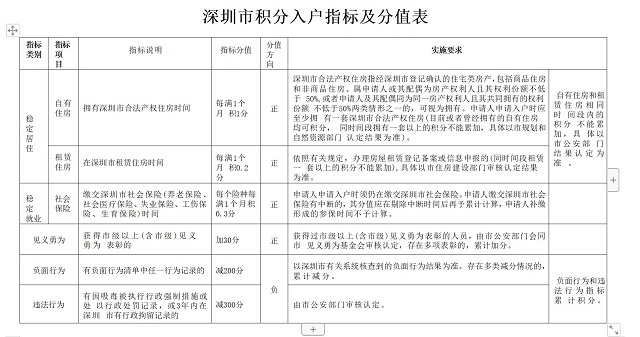
  First, apply for the basic conditions to increase the requirement of no criminal record; The second is to increase the index of being courageous; Third, the indicators of honesty and law-abiding are adjusted and divided into two indicators: negative behavior and illegal behavior; Fourth, the relevant constraints have been added to the situation of applying for entering the household with the spouse’s real estate (or the real estate shared by me and my spouse); Fifth, the minor children of the household applicant are allowed to apply for synchronization with the moving household; The sixth is to adjust the rules of stable residence points.

  Regarding the contents of this adjustment, Huang Rui, director of the Regional Development Planning Institute of China (Shenzhen) Comprehensive Development Research Institute, said in an interview with CBN that the first is to strengthen the social management function of "personal public credit". Increasing the requirement of no criminal record, increasing the index of being courageous, and increasing the audit of commendation and law-abiding situation have a positive guiding role in the behavior of citizens. This kind of information is easy to obtain on the public service platform in Shenzhen, which will not increase the procedural complexity of citizens’ application for household registration, but can guide the formation of good and civilized citizens’ behavior.

  The second is to pay attention to citizens’ demands and optimize the details of policy implementation. It has continued the requirement that the marriage should exist for two years. Last year’s draft for comments proposed to adjust this time limit to five years. The new policy released this time also reflects the adoption and feedback of citizens’ opinions. At the same time, optimizing the integral method of self-owned and leased housing indicators is also to face some practical problems in the process of policy implementation and optimize the implementation details.

  Peng Peng, executive chairman of the Guangdong Provincial System Reform Research Association, told CBN that the previous household policy was the "Trial Measures", which can be revised and improved according to the implementation. At present, the trial period has come. The contents of the new adjustment of the household registration policy are mainly reflected in marriage, family and housing.

  Regarding the reopening of points-to-households at this time, Huang Rui believes that in fact, in 2021, Shenzhen has issued a draft for comments on points-to-households, and in early 2023, the points-to-households channel will be officially reopened. On the basis of fully evaluating the service capacity and environmental carrying capacity of cities such as transportation, education, housing and medical care, and considering the actual needs of economic and social development, Shenzhen should once again send a strong signal to welcome the influx of people.

  Huang Rui said that although Shenzhen has weakened the difference between registered population and permanent population in public services, the registered population is still the main target of basic public services in some cities. The registered population of Shenzhen has exceeded 6.3 million. Restarting the integration of points into households is also a measure for Shenzhen to step up the attraction of the city in the face of talent competition among cities.

  Under the new "Household Measures", how many points of self-owned housing and rental housing can be successfully entered? A staff member of an intermediary agency in Shenzhen told the First Financial Reporter that the threshold for Shenzhen’s points to enter the household has increased year by year. In previous years, the number of households was about 10,000, but if the basic conditions are met, there may be hundreds of thousands of people applying for households. According to previous years’ experience, only when the score is around 300 points can you be qualified to enter the household.

  According to the latest integral household index and score table, 10 years of self-owned housing can be scored 120 points, and 10 years of social security can be scored 180 points, adding up to 300 points. For rental housing, 15 years of rental housing can score 36 points, 15 years of social security can score 270 points, adding up to 306 points.

  According to the "Household Measures", the number of households with points is subject to annual total control. For those who hold the residence permit of Shenzhen Special Economic Zone and have legally stable employment and legally stable residence (including lease) in Shenzhen, they will be awarded points according to the requirements of the points system, sorted according to the points, and approved to enter the household within the quota arranged in the annual plan. The number of annual household indicators is included in the overall arrangement of Shenzhen’s annual household registration population growth plan and announced to the public.

S2 Lingang Toll Station has a high probability of mistaken driving, and will implement the warning of diversion before the station as soon as possible. Source: Jiefang Daily font size: large, medium a

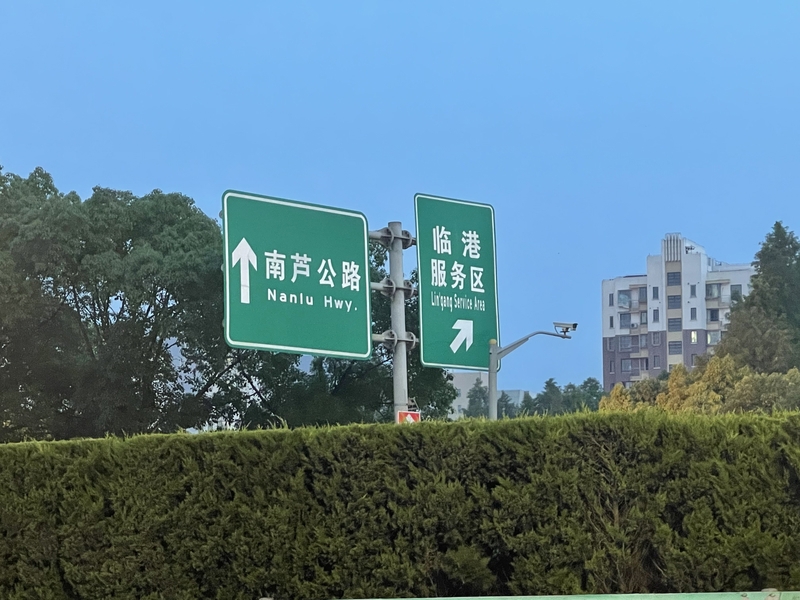
The green sign at the intersection of S2 Lingang Toll Station is misleading. jpeg

The green signboard at the intersection of S2 Lingang Toll Station is misleading. Photo by Wang Haiyan

Reporter Wang Haiyan

S2 Shanghai-Luchaogang Expressway (referred to as "Hulu Expressway") connects Shanghai urban area with Lingang New Area and Yangshan Port, and Lingang Toll Station is its terminal toll exit in Lingang New Area. Different from the general toll station, the port toll station of Hulu Expressway belongs to the diversion before the station, and the direction to Nanlu Highway and the port direction are diverted in front of the toll station. Many cars going to mud towns and heavy equipment industrial zones for the first time will miss the port direction if they are not careful.

"Driving from the urban area to the mud town, many people will take a wrong road at the toll station of Lingang Expressway. It is roughly estimated that the error rate of the first trip to the mud town and the heavy equipment industrial zone is 60%. " Zhang Yinbiao, deputy of the Municipal People’s Congress and secretary of the Party Committee of Mud Town, found that this toll station has a high probability of driving by mistake. Once you drive the wrong way, you will have to drive nearly 30 kilometers more.

The reporter drove to visit the site. When he arrived at the Lingang toll station, he did not take the exit of Nanlu Highway, but chose the exit in the direction of Lingang. After passing through the toll station, I saw that there was a cement isolation pier between the lanes of Nanlu Highway and Lingang, and then I drove forward, and there was no diversion exit ramp. In other words, the wrong driver has no chance to correct the diversion after the station. If you take the wrong exit, it will take almost half an hour to correct the error.

Zhang Yinbiao believes that there should be an opportunity for error correction after the vehicle station that mistakenly enters the direction of Mud Town. It is suggested that the continuous cement isolation pier on the left side of the station has a normal opening, which can be guided by the ground marking signs and indicator poles for safe guidance. Recently, his suggestion got the latest reply from the undertaking department.

Can the cement isolation pier of toll station be adjusted? The undertaking department explained that there are five toll stations in Hulu Expressway, including Lingang Toll Station and Nanlu Highway Toll Station in Lingang area, and the physical locations of the two toll stations are located in the same place. If the isolation pier at the back of the station is set with a constant opening, it does not meet the requirement of isolation between stations in the toll station setting rules. At the same time, the toll mileage of Lingang toll station and Nanlu highway toll station is different. The toll mileage of Lingang station goes to Shengang Avenue and Nanlu station goes to Nanlu station. If the isolation pier at the back of the station is set with a constant opening, the toll charging standards will be different, which will lead to the objection of passing customers. In addition, considering that the traffic of the toll station on the main line of Lingang is concentrated, if the isolation pier at the back of the station is provided with a constant opening, the frequent lane change and intersection of vehicles will easily lead to traffic accidents, which will have certain security risks.

Chengtou Group said that during driving, if you mistakenly drive into the toll station of Lingang main line, you can drive to the ramp of Lianggang Interchange to Tongshun Avenue and take the ground road; If you drive into the direction of Nanlu Highway by mistake, turn around at the intersection where the exit ramp meets Nanlu Highway, and you can re-drive into the direction of Donghai Bridge of S2 Hulu Expressway to your destination.

The reason why this crossing is easy to go wrong is that the sign is not clear enough. The reporter found that although there is a sign indicating the exit of Nanlu Highway near the toll station, and there is a ground sign 500 meters near the exit of Nanlu Highway, it is somewhat confusing. For example, 50 meters near the Lingang toll station, two green signs are erected on the right side of the road, marked "Lingang Service Area" on the right and "Nanlu Highway" on the left, which are covered by surrounding trees. Except for Nanlu Highway, there is no guide sign about "Mud Town" and "Heavy Equipment Industrial Zone". For those who go to Mud Town and Heavy Equipment Industrial Zone, they may confuse the directions of Lingang exit and Nanlu Highway exit.

Zhang Yinbiao suggested that the diversion prompt of the straight section in front of the station should be strengthened, and the continuous diversion prompt should be set up from the straight section after the intersection of S2 Ring Expressway, indicating the diversion direction of Mud Town, Nanlu Highway and Heavy Equipment Industrial Zone.

The traffic police department said that in view of the fact that some motor vehicle drivers still can’t identify lanes on demand, they have coordinated the high-speed maintenance unit to optimize the work plan and strengthen the instructions, that is, adding diversion warning signs and markings such as Mud Town, Nanlu Highway and Heavy Equipment Industrial Zone in front of the toll station, and simultaneously organizing the cleaning and greening to eliminate the phenomenon of greening blocking the signs.

Chengtou Group also said that for the suggestion of adding diversion tips such as mud town, Nanlu highway and heavy equipment industrial zone on the ground, professional design units have been entrusted to design the traffic guidance measures such as signs, and the company has arranged to clean up the situation that the greening of service areas and toll stations affects the identification of road markings and signs.

The traffic police department said that the next step will be to urge the high-speed maintenance unit to implement the diversion prompt scheme before the station as soon as possible, so as to facilitate motor vehicle drivers to identify lanes in advance and ensure safe and smooth traffic.

Regarding the representative’s suggestion on modifying and improving navigation tips, Chengtou Group said that the navigation path modification of related traffic navigation software will actively connect with navigation software vendors to improve the software functions.

Reflections on the Party Building Work in Universities for Nationalities under the New Situation

abstract With the convening of the 18th National Congress of the Communist Party of China and the Third Plenary Session of the 18th Central Committee, and the continuous advancement of comprehensive deepening reform, the party building work in colleges and universities has been pushed to a new starting point. Today’s society is in a critical period of great development and adjustment. Colleges and universities should take the initiative to adapt to the new situation and new tasks in the new period and strengthen the improvement of party building among college students. In particular, they need to cultivate a group of outstanding talents with high political quality, strong coordination ability and good at doing ethnic work, and become the backbone force to solve ethnic problems, promote national economic prosperity and social development, and safeguard national unity and the reunification of the motherland. Therefore, under the new situation, it is very important and urgent to strengthen the party building work in universities for nationalities, which should be highly valued.

keyword Reflections on the Party Building Work in Universities for Nationalities under the New Situation

First, the importance of ethnic party building work under the new situation

Universities for nationalities are an important base for cultivating high-quality talents of ethnic minorities, studying our national policies and theories, and inheriting and carrying forward the excellent cultures of all ethnic groups [5]. It is an important window to show China’s ethnic policies and foreign exchanges, and has trained a large number of outstanding talents of various ethnic minorities for the country and society. Graduates from ethnic colleges and universities have also become one of the backbone forces necessary for ethnic work and social development in ethnic areas, which has great social benefits and made great contributions to solving ethnic problems, promoting ethnic economic prosperity and social development, and safeguarding national unity and the reunification of the motherland. Universities for nationalities are not only the teaching and scientific research centers of various professional knowledge, but also the base for cultivating socialist successors and the ideological front for strengthening national unity [10]. Teachers and students in universities for nationalities have a strong influence on social life, political life and cultural life in ethnic areas. All kinds of ideological information contacted and formed by universities for nationalities will not only have a direct impact on the campus, but also be widely spread to all walks of life in ethnic areas through newspapers, lectures, internet and other channels. Among teachers and students in ethnic colleges and universities, effectively carrying out party building work can improve teachers and students’ political and ideological cultivation, deepen their understanding of the party’s basic line, and better guide teachers and students to study hard for socialist construction and prosperity in ethnic areas. On the issue of maintaining social harmony and stability and promoting the common development of all ethnic groups, ethnic colleges and universities play an irreplaceable role, especially the party building work in ethnic colleges and universities.

Second, the current situation faced by the Party building work in universities for nationalities

(A) the international situation is complex

At present, the international political situation is turbulent, the economic situation is complex and changeable, and the cooperation and conflicts between countries are full of variables, which greatly affect the political, economic and cultural development of our country. Colleges and universities that cultivate talents are inevitably influenced by these factors, which brings a series of challenges and tests to the party building work in colleges and universities [2]. While making remarkable progress in economy and science and technology, China is inevitably under pressure from developed countries, terrorist organizations and separatist forces. Especially in today’s era of economic globalization and cultural diversity, a large number of foreign elements and cultures have flooded into the country, which has enriched people’s spiritual life, but at the same time, because of the bad values, ideology and morality and lifestyle attached to its mixed quality, it will inevitably bring certain negative effects to teachers and students in colleges and universities [4], and colleges and universities have increasingly become the strategic focus of infiltration and competition by foreign hostile forces. With the expansion of foreign exchanges, universities for nationalities are facing more and more new problems, new situations and new situations in the security and stability work, which poses new challenges to the party building work in universities for nationalities.

(B) the domestic situation is diverse

As far as the domestic situation is concerned, while China’s politics, economy, science, technology and culture are making continuous progress, there are also some disharmonious factors: the gap between the rich and the poor is widening, social organization forms, economic components, interest distribution and lifestyle are becoming more and more diversified, and ethnic separatist forces and terrorists still exist. These factors bring hidden dangers of turbulence and contradiction to social development. At the same time, with the rapid development of the information age, all kinds of information make people’s values, ideological understanding and ways of thinking more diversified, which leads to the emergence of some decadent ideas such as money worship, hedonism and extreme individualism, which inevitably brings negative effects to teachers and students in colleges and universities.

At the same time, the general reform of organizational structure and system in colleges and universities in China has brought many problems to the party building work in colleges and universities. At present, due to the increasing scale of colleges and universities, the school forms are diversified from single, and various systems, modes of running schools and management modes coexist [3, 8]. It is even more demanding that party committees in colleges and universities should be able to carry out party building work more effectively and reasonably in combination with reality.

(C) the complexity and diversity of Party building work in universities for nationalities

With the development of economic globalization and the deepening of reform and opening-up, the influence of various social thoughts on colleges and universities is more and more direct, and the reflection of social changes in colleges and universities is more and more rapid, and the independence, selectivity and variability of ideological activities between teachers and students in colleges and universities are further enhanced. At the same time, with the continuous development and progress of network information technology, all kinds of information, culture and ideas that have not been screened and screened are spreading rapidly. College students’ active thinking, pursuit of personality independence, strong democratic consciousness and critical spirit need a clear belief and strong guidance. The party building work in universities for nationalities has its particularity. The universities for nationalities not only have the characteristics of ethnic areas, but also have their national traditions and religious beliefs. As a result, the fields and contents of party building work have become complex and diverse, which requires that the relationship between teachers and students of all ethnic groups must be properly handled, the customs and religious beliefs of all ethnic groups should be respected, and teachers and students of all ethnic groups should be ideologically close to the Party, closely United around the CPC Central Committee and always follow the Party. At the same time, it is required that we must constantly study new situations, put forward new ideas and solve new problems, so as to maintain the vigorous vitality and vitality of the party organizations in ethnic universities and give full play to the important role of the party organizations in the reform and development.

(4) Other factors

In recent years, the relationship between universities and society is getting closer and closer, there are more and more economic activities, more and more temptations and challenges, and the construction of party style and clean government in universities is also facing a severe test. All these require us to strictly abide by the party’s discipline and style of work and earnestly strengthen the party building work in colleges and universities.

3. Ideas on improving the Party building work in universities for nationalities

Strengthening and improving the party building work of students in ethnic universities is an urgent need to give full play to the political and organizational advantages of the party, do a good job in ideological and political education for college students, and cultivate and bring up high-quality talents [1]. Universities for nationalities should combine the development reality, innovate the work mode of party building, and further strengthen and improve the ways of students’ party building.

(A) conscientiously implement the party’s principles and policies, and implement the party building work.

To implement the guiding principles of Party building proposed by the CPC Central Committee, strengthen and improve the Party building work in universities for nationalities, and give full play to the role of Party organizations at all levels in schools, we need to conscientiously do a good job in the construction of Party organizations at all levels in schools, so that the relevant principles and policies of the Party can be implemented in a hierarchical and focused manner [6]. Party building in colleges and universities must adhere to four basic principles: (1) We must closely focus on the basic line of the party, serve the central task of the party, and test the work of grass-roots party organizations by using up the actual effect of the basic task of the cost unit. (2) We must study new situations and solve new problems in the spirit of reform, make innovations and creations by using existing experience, and improve the activities and working methods of grass-roots party organizations. (3) We must strictly live within the Party, strictly observe the Party’s discipline, promote healthy trends, oppose evil spirits, maintain the advanced nature and purity of the party member team, and enhance the ability of grassroots party organizations to resolve their own contradictions. (4) We must base ourselves on our regular work and make unremitting efforts. We should not only make feasible routine plans, but also pay close attention to solving the current outstanding problems.

(B) Starting from the construction of grass-roots organizations and strengthening ideological and political work.

The party’s grass-roots organizations are the basis of all the party’s work and combat effectiveness. Colleges and universities for nationalities should effectively change the situation that "there is no organization, organization and no activity in party member", grass-roots party organizations are not strong in fighting capacity and cohesion, and management education in party member is weak, and select cadres with high political and professional quality and strong sense of responsibility as grassroots party and government leaders [8, 9]. Establish and improve the work system and management system of party organizations, focus on self-construction and play its role around the central work and objectives of the school, face up to its own problems, seek truth from facts, strengthen the quality and efficiency of routine work, and promote the institutionalization and standardization of party organization work.

Combining with the development and changes of actual forms, we constantly innovate our ideas on the basis of inheriting fine traditions. Strengthen the education of ideals and beliefs, actively explore new ideas of ideal education, and pay attention to cultivating students’ correct national outlook, outlook on life and values in ethnic universities. It is necessary to further strengthen the pertinence and effectiveness of ideological and political work and improve its appeal and penetration.

(3) Respect the customs and habits of ethnic minorities and cultivate students’ belief in communism.

There are many ethnic groups in college students for nationalities in China, and the proportion of minority students is also high. Therefore, the proportion of college students with religious beliefs is also high. According to relevant survey data, most college students for nationalities are in a vague stage of understanding religion and lack corresponding religious knowledge and concepts. Ideological and political education in universities for nationalities should always adhere to Marxist ideological and political lines, guide students’ ideological and political work with Marxist outlook on life, world, values and religion, arm college students’ minds with China’s socialist theory, and train reliable builders and successors for socialist construction. Universities for nationalities must strengthen and improve the ideological and political education of college students, especially the work of cultivating and developing party member among college students is facing new problems. Studying the influence of ethnic customs and religions on ethnic minority students in the process of joining the Party and how to get rid of them is the focus of the party building work of ethnic minority college students.

National customs and habits are the product of social and historical development, based on the local natural conditions and economic and cultural life of the nation, and gradually formed in the long-term historical development [5]. The problem of national customs and habits is a sensitive factor in national problems. The customs of all ethnic groups should be respected. This is the consistent policy of our party and state towards the customs and habits of ethnic minorities. The Organization Department of the Central Committee of the Communist Party of China pointed out in the Notice on Properly Solving the Religious Belief of Communist party member that the Communist party member’s religious belief and participation in religious activities violated the nature of the party, weakened the fighting capacity of the party organization and lowered the prestige of the party among the masses, which was also not conducive to the correct implementation of the party’s religious policy. Many college students for nationalities come from areas inhabited by ethnic minorities and places with great religious influence, and they are more or less exposed to some national customs and religious activities before entering the school. How to establish a long-term mechanism for cultivating, educating and developing students’ party member in universities for nationalities, so that minority college students can establish their communist beliefs and firm their communist ideals is a prominent problem in the party building work in universities for nationalities [11].

Find the best methods and strategies to guide the students in ethnic universities to establish correct national and religious views. Universities for nationalities should publicize our party’s ethnic and religious policies through various ways and means, so that college students can establish correct values and communist ideals and beliefs and consciously resist the infiltration and influence of religion [11]. Ethnic college students should always firmly believe that the progress and development of the country and the nation can not be separated from the progress and development of science and technology and education, as well as the idea of equality, unity, mutual assistance and common prosperity of all ethnic groups. Handle the special relationship between religion, nationality and education well, get rid of the interference and bondage of religious thoughts, strive to arm your mind with advanced scientific and cultural knowledge, firmly master the true skills of building a socialist motherland, closely combine the realization of personal happiness, ideals and life values with the revitalization of the economy and the development of ethnic areas, and truly become the builder and successor of building socialist modernization and realizing a harmonious society, and become party member of the Communist Party of China.

References:

[1] Jiang Hua-li. Reflections on Party building in colleges and universities under the new situation [J]. Cultural and educational materials, 2007(2):6-7

[2] Excellence. Strengthening and improving Party building in colleges and universities under the new situation [J]. Party Building Research, 2010(7):34-37

[3] Chen Jin-letter. Thoughts on strengthening Party building in colleges and universities under the new situation [J]. Huazhang, 2011(15):91-92

[4] Yang Qing. On the new situation of party building in colleges and universities [J]. Journal of Yangzhou University, 2007(10):56-58

[5] Bao Jinxia. On the innovation of party member’s education management for ethnic college students [J]. Journal of Inner Mongolia University for Nationalities, 2010(7):93-94

[6] Chen Wansong. A Preliminary Study on the Party Building Work in Colleges and Universities under the New Situation [J]. People of the Times, 2008(3):108-110

[7] Dani. Research on Party Building in Colleges and Universities under the New Situation [J]. Theory and Practice, 2013(9):25-26

[8] Liu Zhenhong. Thoughts on strengthening and improving Party building in colleges and universities under the new situation [J]. Party building and ideological education in schools, 2011(10):7-9

[9] Zhang Deyu. Under the new situation, promote the innovation of Party building in capital universities [J]. Beijing Education, "Capital universities commemorate the 90th anniversary of the founding of the Communist Party of China (CPC)": 23-25.

[10] Abdulla Smayli. Some thoughts on doing a good job in party building among students in ethnic universities in the new era [J]. Society ruled by law, 2009(4):177-179

[11] Wang Xichun. The influence of ethnic customs and religious beliefs on the party building work of ethnic college students and countermeasures [J]. Education and management research, December 2010

(Author: Student Management Office, School of Life and Environmental Sciences, Minzu University of China)

Promoting the diplomacy of a big country with China characteristics and serving the great rejuvenation of the Chinese nation —— A review of China’s diplomatic work in the new era

  General Secretary of the Supreme Leader clearly pointed out at the November 2014 Central Foreign Affairs Working Conference that China must have its own characteristics of great power diplomacy. At the Central Foreign Affairs Working Conference in June 2018, General Secretary of the Supreme Leader further emphasized that the mission of realizing the great rejuvenation of the Chinese nation is to promote the diplomacy of a big country with China characteristics.

  Since the 18th National Congress of the Communist Party of China, the CPC Central Committee with the Supreme Leader as the core has profoundly grasped China’s historical position and international situation, coordinated both domestic and international situations, led China’s foreign work to overcome difficulties and forge ahead, and embarked on a new diplomatic road with China characteristics as a big country, creating a good external environment for achieving the goal of "two hundred years" and realizing the Chinese dream of the great rejuvenation of the Chinese nation.

  Develop global partnership and expand the intersection of interests with other countries.

  On September 15, 2022, the Chairman of the Supreme Leader held a bilateral meeting with Belarusian President Lukashenko while attending the Samarkand Summit of the Shanghai Cooperation Organization in Uzbekistan. The two heads of state decided to upgrade the positioning of China-Belarus relations to an all-weather comprehensive strategic partnership, which is the latest development of China’s global partnership.

  "Like-minded, is a partner. Seeking common ground while reserving differences is also a partner. " The Chairman of the Supreme Leader creatively proposed to build a global partnership based on deepening the diplomatic layout.

  Adhering to dialogue instead of confrontation and partnership instead of alliance, China has made many friends and deepened cooperation with other countries over the past decade, constantly expanding the intersection of interests with other countries, and building a new type of international relations has become wider and wider.

  Promote coordination and cooperation among major powers and build a framework for relations between major powers with overall stability and balanced development; Deepen relations with neighboring countries in accordance with the concept of sincerity and tolerance and the neighboring diplomatic policy of being good neighbors and partners; Uphold the correct concept of justice and interests and the true concept of sincerity, and strengthen unity and cooperation with the vast number of developing countries … … In the new era, China’s foreign relations have been continuously expanded and deepened, and the all-round, multi-level and three-dimensional layout of foreign work has been increasingly developed and improved.

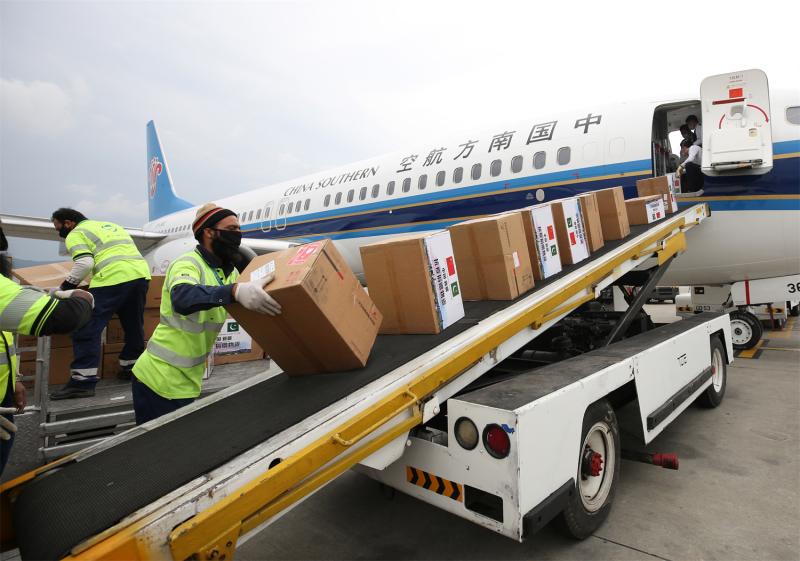
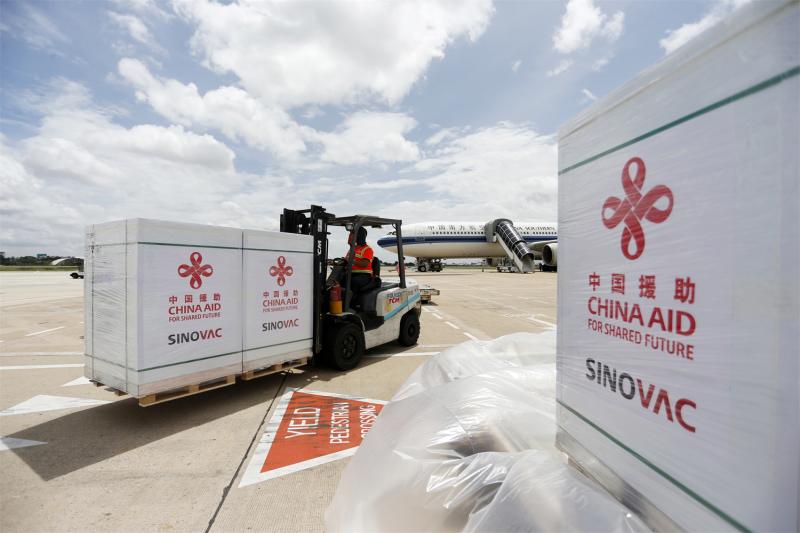
  On March 28th, 2020, at Islamabad International Airport, the staff unloaded the medical treatment materials donated by China. Xinhua News Agency reporter Liu Tianshe

  At 12 o’clock on December 31, 2021, Managua, the capital of Nicaragua, was scorching in the sun. Accompanied by the majestic March of the Volunteers, a five-star red flag slowly rises in the center of the courtyard of the Embassy of China in Nicaragua.

  Gambia, Sao Tome and Principe in 2016; Panama, 2017; In 2018, Dominica, Burkina Faso and El Salvador; In 2019, Solomon Islands and Kiribati; In 2021, Nicaragua … … Since the 18th National Congress of the Communist Party of China, nine countries have established and resumed diplomatic relations with China, and the number of countries with diplomatic relations in China has increased to 181.

  Establish "China-Sweden Innovation Strategic Partnership" with Switzerland, open "China-Russia Comprehensive Strategic Cooperative Partnership in the New Era" with Russia, develop "China-Kazakhstan Permanent Comprehensive Strategic Partnership" with Kazakhstan, and continue to promote "China-India Closer Development Partnership" with India … … China’s partnership forms are more diverse, the connotation is constantly enriched, and the level is constantly improving.

  This is the fan of Zanatas wind farm in Kazakhstan, which was taken on September 13th, 2022. Xinhua News Agency (photo by Dmitry Vasilenko)

  The partnership advocated by China insists on mutually beneficial cooperation, gives full play to their respective advantages, turns winner-take-all into a win-win situation for all parties, expands the cake of common interests through cooperation, and realizes common development and prosperity.

  Promote open cooperation and open up a broad space for common development

  On August 31, 2022, with the whistle sounded, a China-Laos Railway international freight train loaded with tea, fertilizer raw materials and other goods set off from Jiangyin Port in Fuzhou for Vientiane, Laos, and Fujian started the first China-Laos Railway international freight train.

  As the flagship project of "One Belt, One Road" jointly built by China and Laos, the opening of China-Laos Railway has not only made Laos’ dream of changing from a "land lock country" to a "land link country" come true, but also opened up a shortcut from the mainland of China to Laos and Southeast Asia by land.

  In the autumn of 2013, the Chairman of the Supreme Leader proposed a major initiative to jointly build the Belt and Road Initiative during his visit. Insist on discussing, building and sharing, China will promote the high-quality development of the Belt and Road Initiative, implement a more proactive opening-up strategy, form a wider, broader and deeper opening-up pattern, and build a mutually beneficial, multi-balanced, safe and efficient open economic system.

  This is the port of Piraeus, Greece, which was photographed by air on January 16, 2019. Xinhua News Agency reporter Wu Lushe

  On February 27th, 2016, a special train stopped at the entrance of Kamchik Tunnel on the Anglian-Papu Railway in Uzbekistan. Xinhua News Agency reporter Shadati photo

  In the past nine years, more than 140 countries and 30 international organizations have signed more than 200 cooperation documents with China to jointly build the "Belt and Road"; From 2013 to 2021, the accumulated trade volume of goods between China and countries along the route was nearly 11 trillion US dollars, and the two-way investment exceeded 230 billion US dollars; By the end of 2021, China had built 79 foreign trade and economic cooperation zones in 24 countries along the route, with a cumulative investment of 43 billion US dollars, creating 346,000 local jobs … … Crossing different regions, different stages of development and different civilizations, building the "Belt and Road" has been deepening and deepening, opening up a road of opportunity for all countries to achieve common prosperity.

  This is a fireworks display at the opening ceremony of the Peleshac Bridge, which was filmed in Comar, Croatia on July 26th, 2022. Xinhua News Agency reporter Li Xuejun photo

  China sets the stage, the world chorus.

  This is the 50-day countdown to the 5th China International Import Expo(CIIE) and the signing ceremony of the 6th China International Import Expo(CIIE), which was filmed at the National Convention and Exhibition Center (Shanghai) on September 16th, 2022. Xinhua News Agency reporter Fang Yushe

  September 2022, Shanghai. On the occasion of the 50-day countdown to the opening of the 5th China International Import Expo, many enterprises and institutions have locked the booths of the 6th China International Import Expo(CIIE) in advance. The "Expo Entry Story" pushed forward by stubble reflects the full enthusiasm of all parties involved, and shows China’s firm determination to "open the door wider and wider" and its sincerity to share market opportunities with other countries in the world.

  The audience visited the comprehensive exhibition hall of China International Fair for Trade in Services National Convention Center in 2022 (photo taken on September 5, 2022). Xinhua News Agency reporter Hao Zhao photo

  Exhibitors at the 130th Canton Fair (photo taken on October 15th, 2021). Xinhua News Agency reporter Liu Dawei photo

  From holding China International Import Expo(CIIE), Service Trade Fair, Canton Fair and Consumer Expo year after year, to coordinating the construction of 21 pilot free trade zones, and then building Hainan Free Trade Port with high quality and high standards; From actively promoting the formal entry into force of the Regional Comprehensive Economic Partnership Agreement, to formally applying to join the Comprehensive and Progressive Trans-Pacific Partnership Agreement, and then promoting the development of economic globalization in a more open, inclusive, inclusive, balanced and win-win direction … … In the new era, China has opened its arms to the world, promoted the construction of an open world economy, and shared development opportunities and gathered development forces in China’s integration with the world.

  This is the location of the 2nd China International Consumer Goods Expo, which was shot in Haikou on July 30th, 2022. Xinhua News Agency reporter Guo Chengshe

  Upholding the concept of diplomacy for the people and safeguarding the legitimate rights and interests of overseas China citizens and legal persons.

  On the evening of September 25th, 2021, after unremitting efforts, Ms. Meng Wanzhou, who was illegally detained by the Canadian side for more than one thousand days, finally returned home safely. The phrase "If faith has color, it must be China Red" expresses the common aspiration of 1.4 billion people in China.

  Since the 18th National Congress of the Communist Party of China, China has practiced the concept of diplomacy for the people, rooted in, cared for and benefited the people, and firmly safeguarded the legitimate rights and interests of Chinese overseas citizens and legal persons.

  To build an overseas livelihood project, China’s diplomacy is committed to weaving a safety net for China citizens and enterprises going abroad, providing a safer travel environment for overseas China tourists, striving for a better study environment for China students, creating a more friendly business environment for China businessmen, bringing warmer care to overseas Chinese in China, finding a broader market for China goods, creating better working and living conditions for China workers overseas, and helping them realize their dreams.

  During the five years from 2012 to 2017, China successfully organized nine evacuation operations for overseas citizens, handled more than 100 cases of China citizens being kidnapped or attacked abroad, and accepted nearly 300,000 cases of consular protection and assistance.

  On March 29th, 2015, the 19th escort formation of China Navy, Linyi Ship, arrived in Aden Port, Yemen, and the female crew of Linyi Ship helped the evacuated children board the ship. Xinhua News Agency (photo by Xiong Libing)

  In 2020, the COVID-19 epidemic spread all over the world. The Party and the government always cared about the safety of overseas China citizens, tried every means to ensure the health, safety and working life of China citizens, and distributed "health packages" and "Spring Festival packages" to overseas students and overseas Chinese to help China citizens with real difficulties return to China in an orderly manner; Carry out the "Spring Seedling Action" and actively strive for and assist overseas China citizens to vaccinate.

  The 24-hour "12308" consular protection hotline, embassies and consulates all over the world, and the global risk assessment and early warning service & HELIP; … From the moment they stepped out of the country, China citizens always had the protection of the motherland behind them.

  Promote global governance reform and create more favorable conditions for China’s development and world peace.

  Autumn colors are first dyed, and the Qiantang River is surging.

  In September 2016, G 20 leaders gathered in Hangzhou, Zhejiang. Chairman of the Supreme Leader presided over the summit and comprehensively expounded China’s view of global economic governance for the first time — — Based on equality, oriented by openness, driven by cooperation and aimed at sharing. The summit promoted the transformation of the G20 from short-term policies to medium-and long-term policies, and from crisis response to long-term governance mechanisms.

  On January 16th, 2021, in Belgrade, the Serbian capital, airport staff unloaded the COVID-19 vaccine produced by China Sinopharm Group. Xinhua News Agency (photo by Predrag milosavljevic)

  With the increasing changes in international power and global challenges, strengthening global governance and promoting the reform of the global governance system have become the general trend.

  From APEC leaders’ meeting in Beijing to G20 leaders’ meeting in Hangzhou, from SCO summit in Qingdao to BRICS leaders’ meeting, from "Belt and Road" international cooperation summit forum to China-Africa cooperation forum in Beijing, from Boao Forum for Asia to the Conference on Dialogue of Asian Civilizations, the Communist Party of China (CPC) and the leaders of world political parties, and the first phase meeting of the 15th Conference of the Parties to the Convention on Biological Diversity & HELIP; … A series of major home diplomacy has become a shining business card of China’s diplomacy in the new era, reflecting the glorious course of China’s active participation in global governance.

  This is the logo of the Asian Infrastructure Investment Bank (AIIB) photographed on October 25th, 2021. Xinhua News Agency reporter Li Heshe
  Advocate the concept of global governance, adhere to the concept of common, comprehensive, cooperative and sustainable security, constructively participate in the political settlement of international and regional hot issues, constructively participate in global climate governance, promote the strengthening of global public health governance, initiate the establishment of Asian infrastructure investment bank and new development bank, and put forward the global development initiative and global security initiative & HELIP; … A series of new ideas, new ideas, new initiatives, and concrete plans and actions have contributed China’s wisdom and injected action into solving various problems faced by mankind, demonstrating China’s diplomacy as a great power in the new era.

  On October 14, 2021, the staff transported the Kexing COVID-19 vaccine that the government of China assisted Cambodia at Phnom Penh International Airport, Cambodia. Xinhua News Agency (photo by Pi Long)

  On May 7th, 2021, a medical expert group of China government visited a sampling site in Covid-19 in Vientiane, the capital of Laos, to learn about the sampling process, information collection, criteria for judging close contacts and environmental disinfection. Xinhua News Agency (Photo courtesy of the China Municipal Government Medical Expert Group)

  On August 21st, 2020, in a Covid-19 testing institution in Juba, the capital of South Sudan, members of China’s anti-epidemic medical expert group communicated with local medical staff. Xinhua News Agency (Photo courtesy of China Embassy in South Sudan)

  On January 19th, 2021, medical staff vaccinated an indigenous person with China COVID-19 vaccine in Tabatinga, Brazilian Amazon. Xinhua News Agency (photo by Lucio tavola)

  "There are many and huge world problems, and global challenges are rising day by day, which should and can only be solved through dialogue and cooperation. International affairs are discussed by everyone, and helping each other in the same boat has become a broad consensus of the international community. " The speech made by the Chairman of the Supreme Leader at the 75th anniversary summit of the founding of the United Nations showed the profound thinking of China leaders on promoting the reform of the international governance system.

  Facing the future, China has placed its own development in the grand coordinate system of human development, and has always been a builder of world peace, a contributor to global development, a defender of the international order and a provider of public goods, working hand in hand with people from all countries to help each other and courageously move forward towards the goal of building a community of human destiny.

  Reporter: License, Ma Zhuoyan, Cheng Xin

  Poster design: Yin Zhelun

  New Media Editor: Wu Jinfu

People’s Republic of China (PRC) Military Facilities Protection Law

Xinhua News Agency, Beijing, June 10th

People’s Republic of China (PRC) Military Facilities Protection Law

(Adopted at the 12th meeting of the 7th the NPC Standing Committee on February 23rd, 1990, the first amendment was made according to the Decision of the 10th meeting of the 11th the NPC Standing Committee on August 27th, 2009, and the second amendment was made according to the Decision of the 9th meeting of the 12th the NPC Standing Committee on June 27th, 2014, and revised at the 29th meeting of the 13th the NPC Standing Committee on June 10th, 2021).

catalogue

Chapter I General Provisions

Chapter II Delimitation of Military Restricted Zones and Military Administrative Zones

Chapter III Protection of Military Restricted Zones

Chapter IV Protection of Military Administrative Zones

Chapter V Protection of Military Facilities Not Classified into Military Restricted Zones and Military Administrative Zones

Chapter VI Management Responsibilities

Chapter VII Legal Liability

Chapter VIII Supplementary Provisions

Chapter I General Provisions

Article 1 This Law is formulated in accordance with the Constitution for the purpose of protecting the safety of military installations, ensuring the efficiency of military installations and the normal conduct of military activities, strengthening the modernization of national defense, consolidating national defense and resisting aggression.

Article 2 Military facilities mentioned in this Law refer to the following buildings, sites and equipment directly used by the state for military purposes:

(1) Command organs, ground and underground command projects and combat projects;

(2) Military airports, ports and docks;

(3) Camp, training ground and testing ground;

(4) Military caves and warehouses;

(five) military information infrastructure, military reconnaissance, navigation and observation stations, military surveying, navigation and navigation AIDS;

(6) Military highways, special railway lines, military power transmission lines and military oil, water and gas pipelines;

(7) frontier defense and coastal defense control facilities;

(eight) other military facilities stipulated by the State Council and the Central Military Commission (CMC).

The military facilities mentioned in the preceding paragraph include temporary facilities necessary for the army to perform its tasks.

Article 3 The protection of military facilities shall adhere to the leadership of the Communist Party of China (CPC). People’s governments at all levels and military organs should jointly protect military facilities and safeguard national defense interests.

The State Council and the Central Military Commission (CMC) are responsible for the protection of military facilities nationwide according to their division of responsibilities. Local people’s governments at various levels shall, jointly with relevant military organs, administer the protection of military facilities within their respective administrative areas.

The relevant military organs shall, in accordance with the prescribed authority and procedures, put forward the requirements for the protection of military facilities that need to be implemented by the local people’s government, and the local people’s government shall, in conjunction with the relevant military organs, formulate specific protection measures and implement them.

Where military facilities are installed, the relevant military organs and local people’s governments at or above the county level shall establish a coordination mechanism for the protection of military facilities, cooperate with each other, supervise and inspect the protection of military facilities, and coordinate and solve problems in the protection of military facilities.

Article 4 Organizations and citizens in People’s Republic of China (PRC) have the obligation to protect military installations.

It is forbidden for any organization or individual to destroy or endanger military facilities.

Any organization or individual has the right to report and accuse acts that destroy or endanger military facilities.

Article 5 The State gives overall consideration to economic construction, social development and the protection of military facilities, and promotes the coordination between economic and social development and the protection of military facilities.

Article 6 The State implements the policy of classified protection and ensuring key points for military facilities. The classification and protection standards for military installations shall be stipulated by the State Council and the Central Military Commission (CMC).

Article 7 The state shall adopt corresponding supporting policies and measures for places where military facilities and economic construction are greatly affected. Specific measures shall be formulated by the State Council and the Central Military Commission (CMC).

Article 8 Organizations and individuals who have made outstanding contributions to the protection of military facilities shall be commended and rewarded in accordance with the provisions of relevant laws and regulations.

Chapter II Delimitation of Military Restricted Zones and Military Administrative Zones

Article 9 Military restricted zones and military administrative zones shall be demarcated according to the nature, function, security and confidentiality requirements and efficiency requirements of military facilities. The specific demarcation standards and procedures shall be stipulated by the State Council and the Central Military Commission (CMC).

The term "military restricted zone" as mentioned in this Law refers to a military area with important military facilities or military facilities with high security and confidentiality requirements and major risk factors, which needs special measures to be protected by the state and is demarcated in accordance with legal procedures and standards.

The term "military administrative zone" as mentioned in this Law refers to a military zone with relatively important military facilities or military facilities with high security and confidentiality requirements and great risk factors, which needs the state to take special measures to protect it, and is demarcated in accordance with legal procedures and standards.

Tenth military restricted zones and military administrative zones shall be determined by the State Council and the Central Military Commission (CMC), or by the relevant military authorities in accordance with the provisions of the State Council and the Central Military Commission (CMC).

The revocation or alteration of the military restricted zone and the military administrative zone shall be handled in accordance with the provisions of the preceding paragraph.

Article 11 The scope of military restricted zones and military administrative zones on land and water shall be jointly delineated by the people’s governments of provinces, autonomous regions and municipalities directly under the Central Government and relevant military organs at or above the corps level, or by the people’s governments of provinces, autonomous regions and municipalities directly under the Central Government, relevant departments of the State Council and relevant military organs at or above the corps level. The scope of air military restricted zones and particularly important land and water military restricted zones shall be delineated by the State Council and the Central Military Commission (CMC).

The adjustment of the scope of military restricted zones and military administrative zones shall be handled in accordance with the provisions of the preceding paragraph.

Twelfth military restricted zones and military administrative zones shall be set up by the local people’s governments at or above the county level in accordance with the unified regulations of the state.

Article 13 The delineation or adjustment of the scope of military restricted zones and military administrative zones shall take into account economic construction, ecological environment protection and the production and life of local residents on the premise of ensuring the security and confidentiality of military facilities and their use efficiency.

If it is necessary to delimit or adjust the scope of military restricted zones and military administrative zones due to the construction of military facilities, it shall be completed before the construction of military facilities construction projects starts. However, unless approved by a military organ at or above the theater level.

Article 14 Delineation or adjustment of the scope of military restricted zones and military administrative zones shall be handled in accordance with the provisions of relevant laws and regulations if it is necessary to expropriate and requisition land, houses and other real estate, overwhelm mineral resources, or use sea areas and airspace.

Article 15 Where the temporary military facilities set up by the army to perform tasks need to delimit the temporary restricted military zones and temporary military administrative zones on land and water, they shall be jointly demarcated by the local people’s governments at or above the county level and the relevant military organs at or above the regimental level, and shall be filed with the organs at the next higher level respectively. Among them, if the functions and powers of the relevant maritime administrative agency are involved, their opinions shall be sought before delimitation. After delimitation, it shall be announced by the local people’s government at or above the county level or the relevant maritime administrative agency.

After the military completes its mission, it shall, in accordance with the procedures specified in the preceding paragraph, promptly cancel the designated temporary military restricted zones and temporary military administrative zones on land and water.

Chapter III Protection of Military Restricted Zones

Article 16 The administrative unit of the military restricted zone shall, according to the specific conditions and the designated scope, build fences, barbed wire and other obstacles for the land military restricted zone, and set obstacles or boundary markers for the water military restricted zone.

Where it is difficult to set obstacles or boundary markers in the actual waters within the scope of the military restricted zones in waters, the relevant maritime administrative agency shall announce the location and boundary of the military restricted zones in waters to the public. The military restricted zone in the sea area shall be marked on the chart.

Article 17 Personnel, vehicles, ships and others other than the land and water military restricted zones management units are prohibited from entering the military restricted zones, aircraft are prohibited from flying at low altitude over the land and water military restricted zones, and photography, video recording, reconnaissance, measurement, positioning, description and description of the military restricted zones are prohibited. However, unless approved by the relevant military authorities.

Aircraft are prohibited from entering the military restricted zone in the air, except those approved in accordance with relevant state regulations.

The use of photography, video recording, audio recording, survey, measurement, location, description and description of materials in military restricted zones shall be approved by the relevant military organs.

Article 18 It is forbidden to build or set up non-military facilities and to develop and utilize underground space in the land military restricted zone. However, unless approved by a military organ at or above the theater level.

In the military restricted zone of waters, it is forbidden to build or set up non-military facilities, and it is forbidden to engage in aquaculture, fishing and other activities that hinder the movement of military ships and endanger the safety and efficiency of military facilities.

Article 19 If the protective measures taken in the military restricted zones on land and water are insufficient to ensure the safety and confidentiality of military facilities, or the military facilities in the military restricted zones on land and water have significant risk factors, the people’s governments of provinces, autonomous regions and municipalities directly under the Central Government and the relevant military organs, or the people’s governments of provinces, autonomous regions and municipalities directly under the Central Government, the relevant departments of the State Council and the relevant military organs may jointly delimit the scope of the military restricted zones on land and water according to the nature, topography, local economic construction and social development.

Safety warning signs shall be set up by the local people’s governments at or above the county level in accordance with the unified regulations of the state, and the location shall be jointly determined by the military restricted zone management unit and the local people’s governments at or above the county level.

If it is difficult to set up safety warning signs in the actual waters within the security control scope around the military restricted zone in waters, it shall be implemented in accordance with the provisions of the second paragraph of Article 16 of this Law.

Article 20 Delineation of the security control scope around the military restricted zones on land and waters shall not change the ownership of the original land, land attachments and waters. Within the security control area around the military restricted zones on land and water, local residents can work and live as usual, but they are not allowed to carry out blasting, shooting or other activities that endanger the safety and efficiency of military facilities.

If the delineation of the security control scope around the military restricted zone affects the exercise of the rights of the real estate owner or usufructuary right holder, compensation shall be made in accordance with the provisions of relevant laws and regulations.

Chapter IV Protection of Military Administrative Zones

Article 21 The administrative unit of a military administrative zone shall, according to the specific conditions and the designated scope, build a fence, set up barbed wire or set up boundary markers for the military administrative zone.

Twenty-second personnel, vehicles, ships, etc. outside the administrative unit of the military administrative zone must be approved by the administrative unit of the military administrative zone to enter the military administrative zone or to take photos, video recordings, survey, measure, locate, describe and describe the military administrative zone.

Twenty-third in the land military administrative zone, it is forbidden to build or set up non-military facilities, and it is forbidden to develop and utilize underground space. However, unless approved by a military organ at or above the corps level.

It is forbidden to engage in aquaculture in the military administrative zone of waters; Without the approval of military organs at or above the corps level, non-military facilities shall not be built or set up; Fishing or other activities shall not affect the combat readiness, training, duty and other actions of military ships.

Twenty-fourth waters designated as military and civilian ports in military administrative zones shall be managed by military and civilian zones; Where it is necessary to build new non-military facilities in the waters under local administration, the consent of the unit in charge of military facilities must be obtained in advance.

Measures for the administration of airports, ports and docks for military and civilian use designated as military administrative zones shall be formulated by the State Council and the Central Military Commission (CMC).

Chapter V Protection of Military Facilities Not Classified into Military Restricted Zones and Military Administrative Zones

Twenty-fifth military facilities that are not classified into military restricted zones and military administrative zones shall be protected by military facilities management units; Management units at or above the regimental level may also entrust local people’s governments to protect them.

Article 26. Quarrying, taking soil, blasting and other activities within a certain distance of military facilities that are not included in the military restricted zone or the military administrative zone shall not endanger the safety and efficiency of military facilities.

Article 27 The scope of security protection shall be delineated on the periphery of combat projects that are not included in military restricted zones and military administrative zones. The scope of safety protection of combat engineering shall be jointly defined by the people’s governments of provinces, autonomous regions and municipalities directly under the Central Government and the relevant military organs according to the nature, topography and local economic construction and social development of combat engineering, or by the people’s governments of provinces, autonomous regions and municipalities directly under the Central Government, relevant departments of the State Council and relevant military organs. In areas where the layout of combat engineering is relatively concentrated, the scope of security protection of combat engineering can be delineated in contiguous pieces. The local people’s governments at or above the county level shall, in accordance with the relevant provisions, set boundary markers for the scope of safety protection of combat projects.

The revocation or adjustment of the scope of safety protection of combat engineering shall be handled in accordance with the provisions of the preceding paragraph.

Twenty-eighth delimit the scope of safety protection of combat projects, without changing the ownership of the original land and land attachments. Within the scope of safety protection of combat engineering, local residents can produce and live as usual, but they are not allowed to carry out mountain quarrying, mining and blasting; Engaged in building buildings, structures, roads, irrigation and water conservancy capital construction, logging and other activities, shall not endanger the safety and efficiency of combat engineering.

If the delineation of the scope of safety protection of combat projects affects the exercise of rights by real estate owners or usufructuary rights holders, compensation shall be made in accordance with the provisions of relevant laws and regulations.

It is forbidden to open closed combat projects without permission, to destroy the camouflage of combat projects, and to block access to combat projects. Without the approval of the superior competent military organ at or above the division level of the combat engineering management unit, photography, video recording, survey, measurement, positioning, description and description of the combat engineering shall not be carried out, and non-military materials and equipment shall not be stored in the combat engineering or engaged in production activities such as planting and breeding.

If it is really difficult to avoid combat engineering in new projects and construction projects, an application for dismantling or relocating or rebuilding combat engineering shall be made in accordance with the relevant provisions of the state; If the application is not approved, it shall not be dismantled or relocated or rebuilt.

Article 29 In the military airport clearance protection zone, it is forbidden to build buildings, structures or other facilities that exceed the airport clearance standard, and it is forbidden to engage in activities that affect flight safety and the use efficiency of airport navigation AIDS.

Military airport management units shall regularly check the airport clearance protection, and if they find that the buildings, structures or other facilities built exceed the standard of military airport clearance protection, they shall promptly report to the relevant military organs and the competent department of the local people’s government. The relevant military organs and the competent departments of the local people’s governments shall deal with them in a timely manner in accordance with the provisions of this law.

Article 30 The relevant military organs shall inform the local people’s government about the situation and needs of the clearance protection of local military airports.

The local people’s government shall inform the relevant military authorities about the local land and space planning and the construction plan of tall building projects that may affect the clearance protection of military airports.

The local people’s government shall formulate protective measures and urge the relevant units to set up flight obstacle signs for tall buildings, structures or other facilities in the clearance protection area of military airports.

Article 31 The relevant provisions on the clearance protection of military airports shall apply to the clearance protection of civil-military airports and the old airports and helicopter landing pads managed by the army.

The clearance protection of highway airstrips shall be implemented with reference to the relevant provisions on clearance protection of military airports.

Thirty-second local people’s governments at all levels and relevant military organs adopt the methods of entrusted custody and sectional responsibility to implement joint defense between the military and the people to protect the safety of military pipelines.

Underground military pipelines should be set up with route markers or permanent signs, and signs should be set up on vulnerable sections and parts. The underwater military pipeline in the sea area where the specific location, boundary and route have been announced shall be marked on the chart.

Article 33 Within the scope of electromagnetic environment protection of military radio fixed facilities, it is forbidden to build or install equipment and electromagnetic obstacles that affect the use efficiency of military radio fixed facilities, and it is forbidden to engage in activities that affect the electromagnetic environment of military radio fixed facilities.

Protection measures for electromagnetic environment of military radio fixed facilities shall be jointly determined by the military and local radio management institutions in accordance with the relevant provisions and standards of national radio management.

The provisions of the preceding two paragraphs shall apply to the protection of electromagnetic environment of radio fixed facilities in military restricted zones and military administrative zones.

The electromagnetic environment protection of military radio fixed facilities involves radio management between military systems and non-military systems, which shall be implemented in accordance with the relevant provisions of the state on radio management.

Article 34 Without the approval of the State Council and the Central Military Commission (CMC) or the authorities authorized by the State Council and the Central Military Commission (CMC), the frontier defense and coastal defense control facilities shall not be dismantled or moved, nor shall civilian facilities be built or set up on them. Arranging construction projects around frontier defense and coastal defense control facilities shall not endanger the safety and efficiency of frontier defense and coastal defense control facilities.

Article 35 No organization or individual may damage or move military surveying markers without authorization. Arranging construction projects around military surveying markers shall not endanger the safety and use efficiency of military surveying markers.

The protection of military surveying markers shall be implemented in accordance with the provisions of relevant laws and regulations.

Chapter VI Management Responsibilities

Article 36 The local people’s governments at or above the county level shall make plans for national economic and social development and arrange construction projects that may affect the protection of military facilities, and the relevant departments of the State Council and local people’s governments shall take into account the needs of the protection of military facilities and solicit the opinions of relevant military organs in writing in accordance with regulations. When necessary, the local people’s government may, jointly with relevant departments and relevant military organs, evaluate the construction project.

The relevant departments of the State Council or the local people’s governments at or above the county level shall examine the situation of soliciting opinions from military organs when examining and approving the construction projects specified in the preceding paragraph; If the opinions of the military organs are not solicited according to the regulations, they shall be asked to solicit opinions; If the changes in the contents of the construction project during the examination and approval process may affect the protection of military facilities, the opinions of the relevant military organs shall be sought again.

The relevant military organ shall submit a written reply within 30 days from the date of receiving the letter for comments; If it is necessary to consult a military organ at a higher level or to conduct investigation, measurement and testing, the time for reply may be appropriately extended, but usually it shall not exceed 90 days.

Article 37 The armed forces shall consider the needs of local economic construction, ecological environmental protection and social development when making plans for the construction of military facilities and organizing the construction of military facilities projects, conform to the overall requirements of land and space planning, and conduct safety and confidentiality environmental assessment and environmental impact assessment. Involving land and space planning, it shall solicit the opinions of the relevant departments and local people’s governments in the State Council, and try to avoid the red line of ecological protection, nature reserves, hot areas of local economic construction and areas with dense civilian facilities. If it is really unavoidable and it is necessary to dismantle or relocate the production and living facilities, it shall be done according to law.

Thirty-eighth local people’s governments at or above the county level shall avoid military facilities when arranging construction projects or opening up tourist attractions. If it is really unavoidable and it is necessary to dismantle, relocate or convert military facilities to civilian use, it shall be negotiated by the people’s governments of provinces, autonomous regions and municipalities directly under the Central Government or the relevant departments of the State Council and the military organs at the theater level, and reported to the State Council and the Central Military Commission (CMC) for approval or the authorities authorized by the State Council and the Central Military Commission (CMC) for approval; If it is necessary to rebuild military facilities, it shall be approved by the relevant military organs.

Where military facilities are demolished, relocated, rebuilt or converted to civilian use due to the reasons mentioned in the preceding paragraph, the local people’s government that requests them shall give policy support or financial subsidies to the relevant military organs in accordance with relevant regulations. Where the relocation or reconstruction of military facilities involves the use of land and sea islands, the local people’s government shall go through the relevant formalities in a timely manner according to law.

Article 39 If military facilities lose their effectiveness and need not be rebuilt due to the adjustment of military tasks, changes in surrounding environment and natural damage, the administrative unit of military facilities shall, in accordance with the prescribed procedures, promptly report to the State Council and the Central Military Commission (CMC) for approval or the authorities authorized by the State Council and the Central Military Commission (CMC) for approval, and dismantle them or convert them to civilian use.

After the army completes its mission, it shall dismantle the temporary military facilities set up in time.

Fortieth military airports and ports shall be jointly used by military and civilian, and shall be approved by the State Council and the Central Military Commission (CMC). The joint use of military and civilian wharf shall be approved by the people’s governments of provinces, autonomous regions and municipalities directly under the Central Government or the relevant departments of the State Council in conjunction with the military organs at the theater level.

Article 41 The local people’s governments at or above the county level shall, in conjunction with the units in charge of military facilities, formulate specific protective measures for military restricted zones, military administrative zones and military facilities that are not included in them, which may be announced for implementation.

Specific protection measures for military installations classified into military restricted zones and military administrative zones shall be submitted for approval together with the plan for delineating the scope of military restricted zones and military administrative zones.

Article 42 Military organs at all levels shall strictly perform their duties of protecting military facilities, educate military personnel to cherish military facilities, keep them secret, establish and improve rules and regulations for the protection of military facilities, and supervise, inspect and solve problems in the protection of military facilities.

The relevant military organs shall support and cooperate with law enforcement and judicial activities for the protection of military facilities.

Forty-third military facilities management units should conscientiously implement the rules and regulations on the protection of military facilities, establish military facilities files, and inspect and maintain military facilities.

Military facilities management units shall take safety monitoring and technical preventive measures for important parts of military facilities, and upgrade and improve them in a timely manner according to the needs of military facilities protection and scientific and technological progress.

Military facilities management units shall not use military facilities for non-military purposes, except for emergency rescue and other emergency tasks.

Article 44 The unit in charge of military facilities shall know about the construction projects around military facilities, and if it finds that it may endanger the safety and efficiency of military facilities, it shall promptly report to the relevant military organs and the competent department of the local people’s government, and cooperate with the relevant departments to deal with it according to law.

Article 45 The administrative units of military restricted zones and military administrative zones shall, in accordance with the provisions of relevant laws and regulations, protect the ecological environment, natural resources and cultural relics in the military restricted zones and military administrative zones.

Forty-sixth military facilities management units shall, when necessary, provide the local people’s governments at or above the county level with the location information of underground and underwater military pipelines. Local people’s governments shall protect underground and underwater military pipelines when local construction is carried out.

Article 47 People’s governments at all levels should strengthen education on national defense and the protection of military facilities, so that all citizens can enhance their awareness of national defense, protect military facilities, keep military facilities secret, and stop acts of destroying and endangering military facilities.

Article 48 The local people’s governments at or above the county level shall, jointly with the relevant military organs, organize regular inspections and assessments of the protection of military facilities within their respective administrative areas, urge them to rectify hidden dangers and problems that affect the protection of military facilities within a time limit, and improve the protection measures for military facilities.

Article 49 The State practices the responsibility system and assessment system for the protection of military facilities, and regards the completion of the protection of military facilities as the content of assessment and evaluation of local people’s governments, relevant military organs, military facilities management units and their responsible persons.

Article 50 Where a military restricted zone or a military administrative zone needs the assistance of a public security organ to maintain public security management order, a public security organ may be established upon the decision of the State Council and the Central Military Commission (CMC) or upon the approval of the public security organ of a province, autonomous region or municipality directly under the Central Government by the relevant military organ.

Article 51 In violation of the provisions of this Law, the personnel on duty of the unit in charge of military facilities shall stop any of the following circumstances:

(1) illegally entering a military restricted zone, a military administrative zone or flying at low altitude over a military restricted zone on land or in waters;

(2) Illegally photographing, videotaping, recording, surveying, measuring, locating, depicting and describing the military restricted zones and military administrative zones;

(3) engaging in activities that destroy or endanger military facilities.

Article 52 If one of the circumstances listed in Article 51 of this Law fails to stop it, the unit in charge of military facilities may, in accordance with the relevant provisions of the state, take the following measures:

(1) Forcibly take away and control the personnel who illegally enter the military restricted zone, the military administrative zone, or drive or control an aircraft to fly at low altitude over the military restricted zone on land and water, detain the personnel who violate the law seriously and immediately transfer them to organs with jurisdiction such as public security and national security;

(two) immediately stop the transmission of information and other acts, seize the equipment, tools or other articles used to commit illegal acts, and transfer them to public security, national security and other organs with jurisdiction;

(three) in case of emergency, remove obstacles that seriously endanger the safety and efficiency of military facilities;

(4) using weapons according to law in emergency situations such as endangering the safety of military facilities or the life safety of personnel on duty.

Soldiers, civilian military personnel and other military personnel who are under any of the circumstances listed in Article 51 of this Law shall be dealt with in accordance with the relevant provisions of the military.

Chapter VII Legal Liability

Article 53 Anyone who, in violation of the provisions of Article 17, Article 18 and Article 23 of this Law, enters the military restricted zone of waters without authorization, engages in aquaculture and fishing in the military restricted zone of waters, engages in aquaculture in the military administrative zone of waters, or engages in fishing in the military administrative zone of waters, which affects the actions of military vessels, shall be given a warning by the competent departments of transportation and fisheries, ordered to leave, and his fishing gear and catches shall be confiscated.

Article 54 Whoever, in violation of the provisions of Article 18, Article 23 and Article 24 of this Law, builds or sets up non-military facilities in the land and water military restricted zones and military administrative zones, or develops and utilizes the underground space of the land military restricted zones and military administrative zones without authorization, or builds or sets up non-military facilities in the waters under the local management of military and civilian ports designated as military administrative zones without the consent of the military facilities management unit, shall be ordered by the competent departments of housing and urban and rural construction, natural resources, transportation and fisheries to stop construction activities.

Article 55 Whoever, in violation of the provisions of the first paragraph of Article 28 of this Law, starts quarrying, mining and blasting within the scope of safety protection of combat projects shall be ordered by the competent departments of natural resources, ecological environment and public security organs to stop the illegal act and confiscate the products and illegal income; If the construction of buildings, structures, roads or capital construction of farmland water conservancy affects the safety and efficiency of combat projects, the competent departments of natural resources, ecological environment, transportation, agriculture and rural areas, housing and urban and rural construction shall give a warning and order it to make corrections within a time limit.

Article 56 Whoever, in violation of the provisions of the third paragraph of Article 28 of this Law, opens a closed combat project without permission, destroys the camouflage of the combat project, blocks the passage of the combat project, and uses the combat project for storing non-military materials and equipment or planting, breeding and other production activities, shall be ordered by the public security organ and the competent department of natural resources to stop the illegal act and restore the original state within a time limit.

Article 57 Whoever, in violation of Article 28, paragraph 4, and Article 34 of this Law, dismantles, relocates or reconstructs combat projects without authorization, or dismantles or moves frontier defense and coastal defense control facilities without authorization, shall be ordered by the competent department of housing and urban and rural construction and the public security organ to stop the illegal act and restore to the original state within a time limit.

Article 58 Where buildings, structures or other facilities that exceed the standard for the clearance protection of military airports are built in violation of the provisions of the first paragraph of Article 29 of this Law, the competent department of housing, urban and rural construction and natural resources shall order the removal of the ultra-high part within a time limit.

Article 59 Whoever, in violation of the provisions of Article 33 of this Law, constructs or sets up equipment and electromagnetic obstacles that affect the use efficiency of military radio fixed facilities within the scope of electromagnetic environment protection, or engages in activities that affect the electromagnetic environment of military radio fixed facilities, shall be given a warning by the competent departments of natural resources, ecological environment and radio management institutions and ordered to make corrections within a time limit; If no correction is made within the time limit, the jamming equipment shall be sealed up or obstacles shall be forcibly removed.

Sixtieth any of the following acts shall be subject to the punishment provisions of Article 23 of the People’s Republic of China (PRC) Public Security Administration Punishment Law:

(1) illegally entering a military restricted zone or a military administrative zone, or driving or manipulating an aircraft to fly at low altitude over a military restricted zone on land or water, and refusing to stop it;

(2) conducting activities that endanger the safety and use efficiency of military facilities within the security control range outside the military restricted zone, or within a certain distance of military facilities not included in the military restricted zone or the military administrative zone, and refusing to stop them;

(three) in the military airport clearance protection area, activities that affect flight safety and the efficiency of airport navigation AIDS are not stopped;

(4) illegally photographing, videotaping, recording, surveying, measuring, locating, depicting and describing the military restricted zones and military administrative zones, and refusing to stop them;

(5) Other acts that disturb the management order of military restricted zones and military administrative zones and endanger the safety of military facilities, if the circumstances are minor enough for criminal punishment.

Article 61 Whoever, in violation of state regulations, intentionally interferes with the normal work of military radio facilities, or causes harmful interference to military radio facilities, and refuses to make corrections according to the requirements of relevant competent departments, shall be punished in accordance with the provisions of Article 28 of the Law of People’s Republic of China (PRC) on Public Security Administration Punishment.

Article 62 Whoever destroys frontier defense and coastal defense control facilities, fences, barbed wire, boundary markers or other military facilities in military restricted zones and military administrative zones shall be punished in accordance with the provisions of Article 33 of the Law of People’s Republic of China (PRC) on Public Security Administration Punishment.

Article 63 Whoever commits one of the following acts, which constitutes a crime, shall be investigated for criminal responsibility according to law:

(1) destroying military facilities;

(2) negligently damaging military facilities, resulting in serious consequences;

(3) Stealing, robbing or robbing equipment, materials and equipment of military facilities;

(4) divulging secrets of military facilities, or stealing, spying, buying or illegally providing secrets of military facilities for overseas institutions, organizations and personnel;

(5) damaging the electromagnetic environment of military radio fixed facilities and interfering with military radio communication, if the circumstances are serious;

(six) other acts that disrupt the management order of military restricted zones and military administrative zones and endanger the safety of military facilities, if the circumstances are serious.

Sixty-fourth soldiers, military civilians and other military personnel who commit one of the following acts shall be punished in accordance with the relevant provisions of the military; If the case constitutes a crime, criminal responsibility shall be investigated according to law:

(1) Having the acts specified in Articles 53 to 63 of this Law;

(two) unauthorized use of military facilities for non-military purposes, or other abuse of power;

(3) AWOL or dereliction of duty.

Article 65 Any public official who neglects his duty, abuses his power or engages in malpractices for personal gain in the protection of military facilities shall be punished according to law; If a crime is constituted, criminal responsibility shall be investigated according to law.

Article 66 Whoever, in violation of the provisions of this Law, destroys or endangers military facilities shall be dealt with by the marine police agency according to law if it falls within the scope of functions and powers of the marine police agency.

In violation of the provisions of this law, there are other acts of destroying or endangering military facilities, which shall be dealt with by the relevant competent departments according to law.

Article 67 Whoever violates the provisions of this Law and causes losses to military facilities shall be liable for compensation according to law.

Article 68 Anyone who violates this Law in wartime shall be severely investigated for legal responsibility according to law.

Chapter VIII Supplementary Provisions

Article 69 This Law shall apply to the protection of military facilities belonging to the Chinese People’s Armed Police Force.

Article 70 The protection of facilities such as scientific research, production, testing and storage of important weapons and equipment in the national defense science, technology and industry shall be implemented with reference to the relevant provisions of this Law. Specific measures and facilities catalogue shall be stipulated by the State Council and the Central Military Commission (CMC).

Article 71 the State Council and the Central Military Commission (CMC) shall formulate measures for implementation in accordance with this Law.

Article 72 This Law shall come into force as of August 1, 2021.