Sorry, there may be network reasons or this page is not available. Please try again later.

  I. Oil reserves


  The United States is one of the countries with the largest proven oil reserves in the world. As of January 1, 2004, its proven oil reserves were 22.7 billion barrels, ranking 11th in the world. More than 80% of the country’s reserves are concentrated in four States in the United States: Texas (24%), Alaska (22%), Louisiana (20%) and California (19%). Other oil-producing states include New Mexico, Oklahoma, Wyoming, Kansas, Mississippi and North Dakota. Due to the over-exploitation in the late 1980s and the first half of 1990s, the oil reserves in the United States decreased rapidly. At present, the oil reserves in the United States decreased by about 20% compared with 1990.


  Second, production


  The United States is the third largest oil producer in the world after Saudi Arabia and the Russian Federation. According to the statistics of American oil and gas magazine, the American oil output in 2003 was 7.9 million barrels per day, accounting for 9.2% of the world’s total oil output. The output of crude oil is 5.7 million barrels per day, and the rest is natural gas liquid (NGL). At present, the output is the lowest in the past 50 years, which is about 25% lower than the 10.6 million barrels per day in 1985. There are about 500,000 oil producing wells in the United States, but most of them belong to marginal wells. According to statistics in 2003, the main oil producing areas are concentrated in the Gulf of Mexico, Texas land oil fields, the northern slope of Alaska, California, Louisiana land oil fields, Oklahoma and Wyoming. In 2003, the United States drilled 30,151 new oil and gas wells, including 5,694 oil wells, 20,011 natural gas wells and 4,446 dry wells. Compared with 25,536 wells drilled in 2002, it increased by 18%. With the progress and development of geophysical prospecting technology and drilling equipment, the output of deepwater oil fields in the Gulf of Mexico has increased rapidly. At present, the output of deepwater oil fields accounts for two-thirds of the oil production in the Gulf of Mexico in the United States. Because most of the energy resources in the United States are concentrated in the territory of the federal government, and the exploration and exploitation of oil and gas are subject to many restrictions by the federal government, it is difficult to increase oil production significantly. Due to the low return on energy investment, the investment in the oil industry has been greatly reduced since 1980, which has led to the aging of the existing oil supply infrastructure in the United States, such as pipeline transportation and refinery processing, and the serious shortage of production capacity.At the same time, domestic production costs are higher than the international level, and environmental protection requirements are increasingly demanding. As a result, many refineries have been forced to close down. Relevant data show that no new refinery was built in the United States from the late 1980s to the 1990s. The petroleum refining and processing industries in the United States are mainly concentrated in Texas, Louisiana, California, Illinois, Pennsylvania, New Jersey, Washington, Ohio and Indiana. According to the statistics of British Petroleum Company (BP), the refining capacity of the United States in 2002 was 16.76 million barrels per day, accounting for about 20% of the world’s total refining capacity of 8,390 barrels per day. At present, the dominant oil companies in the American market are mainly ExxonMobil, Philips Continental, Chevron Texaco, Shell Oil, Frontier Oil, Marathon Oil and other companies. The U.S. Department of Energy predicted in its energy policy article that the oil production in the United States will drop from the current level of 580 barrels per day to 5.1 million barrels per day in 2020, and the Gulf of Mexico will play an important role in the future, and its share in domestic oil production will increase from the current 27% to 40% in 2010.


  Third, consumption


  The United States is the largest oil consumer in the world. In 2003, the consumption was 20.071 million barrels per day (equivalent to 914.3 million tons), an increase of 1.9% over the previous year, accounting for 25.1% of the total oil consumption in the world. In the current composition of energy consumption in the United States, oil accounts for 42%, coal accounts for 24%, natural gas accounts for 20%, nuclear energy accounts for 8-,and hydropower, solar energy and wind energy account for 4%. According to the statistics of British Petroleum Company (BP), in the composition of oil consumption in the United States in 2003, transportation oil accounted for about 67.5% of the total oil consumption, industrial oil accounted for about 24.2%, civil oil accounted for about 3.9%, electric oil accounted for about 2.4%, and commercial oil accounted for about 1.9%. After experiencing the oil crisis in the 1970s, the United States began to pay attention to improving energy utilization and saving energy, and the energy intensity continued to decline. At the end of 1990s, the energy required for producing every dollar decreased by 44% compared with that in 1970, and the annual per capita oil consumption decreased from 31 barrels in 1978 to 26 barrels in 2000, a decrease of 20%. On the whole, since 1973, American economy has increased by 126%, while energy consumption has only increased by 30%.


  In order to improve the energy utilization rate, the federal government formulated the Energy Star program as early as the 1970s, and in the late 1980s, it set energy-saving standards for related industries, such as automobile manufacturing, household appliances and building lighting. Some energy-intensive production units, such as wood processing and papermaking, chemical industry, petrochemical refinery, metal smelting, food processing, ceramics and glass firing, have either adopted new energy-saving technologies or shut down and turned around, reducing the dependence of the economy on energy to some extent. In addition, the adjustment of macroeconomic structure and the rise of non-energy-intensive industries, such as communication and information technology, microelectronics and financial services, have also greatly reduced the energy intensity of the United States.


  On the other hand, because the transportation industry in the United States accounts for more than 65% of its total oil consumption, the automobile industry in the United States developed rapidly during the period of low oil prices in the 1980s and 1990s, and the vehicle types became larger and larger, especially the fuel-intensive vehicles such as off-road vehicles and sports cars, which were favored by consumers. Therefore, the demand for petroleum products, mainly gasoline, has greatly increased. The US Department of Energy predicts that in the next 20 years, US oil consumption will increase by 33% and natural gas consumption by 50%, and by 2020, US oil consumption will reach 26-27 million barrels per day.


  Iv. import


  The United States has been a net energy importer since 1950s. After 1985, its dependence on imported oil increased significantly. In 2003, its import volume increased from 4.3 million barrels per day in the mid-1980s to 12.2 million barrels per day (equivalent to 605.1 million tons), an increase of 7.9% over the previous year, accounting for 62% of its total domestic oil demand and 26.8% of the world’s total imports. Among them, the import volume of crude oil is 9.645 million barrels per day and that of oil products is 2.609 million barrels per day. The main import sources are Canada (2.1 million barrels per day), Saudi Arabia (1.8 million barrels per day), Mexico (1.6 million barrels per day) and Venezuela (1.4 million barrels per day). Among the sources of oil imports in the United States, more than two-fifths of oil imports come from member countries of the Organization of Petroleum Exporting Countries. From 1973 to 2000, the dependence of American domestic market on imported oil increased from 35% to 52%, natural gas increased from 5% to 15%, and the proportion of energy imports in its total imports exceeded 10%. In order to meet the increasing domestic oil demand and ensure the safety of energy supply, the United States has formulated a multi-faceted global supply system strategy in its energy policy and implemented a diversified policy of oil and gas import sources. In addition to taking Saudi Arabia, Kuwait and other oil-producing countries in the Middle East as the leading sources of supply, it also makes full use of the convenience of the North American Free Trade Area to consolidate the existing energy production and cooperation with Canada and Mexico.Increase investment in onshore and offshore oil and gas fields in Latin America and Central and South America countries such as Venezuela, Trinidad and Tobago, Bolivia, Brazil, Argentina, Chile, Paraguay, Uruguay, Colombia, etc., and ensure the source of oil supply for the United States in this region. And set up the US-Russia oil and gas working group and the US-Kazakhstan oil and gas and commercial energy working group, increase investment in Aegean and African countries and regions, and make use of technological advantages to carry out deep-sea oil and gas exploration and production in the Atlantic basin between Canada and the Caribbean, Brazil and West Africa.


  V. Inventory


  Strategic reserve oil


  After being hit by the oil embargo imposed by the oil-producing countries in East Arab in the early 1970s, President Carter signed the energy policy and energy-saving law in 1975 and decided to establish a strategic oil reserve. On July 21, 1977, about 412,000 barrels of Saudi light crude oil were injected into the salt cave on the coast of the Gulf of Mexico as the first strategic storage. According to the relevant laws, only when the domestic energy supply or import is blocked, or the oil price rises sharply due to the oil embargo, which may seriously threaten national security or economic operation, can the President of the United States decide and order the use of strategic reserve oil. On November 13, 2001, President George W. Bush announced that the strategic oil reserve would be increased to 700 million barrels. At present, the strategic oil storage capacity of the United States is 727 million barrels. The International Energy Agency requires that the United States’ oil reserves (strategic and non-strategic stocks) should reach 90 days’ import. The maximum withdrawal amount of strategic oil reserves is 4.3 million tons/day, and it takes about 13 days from the withdrawal of stocks to entering the US market. In order to establish strategic oil reserves, the United States has invested a total of 21 billion US dollars, of which 4 billion US dollars are used to purchase oil storage facilities and 17 billion US dollars to purchase reserve oil. The reserve oil will come from 20 countries, of which light crude oil accounts for about one-third of the total reserve oil and two-thirds is heavy crude oil (crude oil with sulfur content above 2%). As of August 24, 2004, the United States had 667 million barrels of strategic reserve oil, which was equivalent to 55 days’ import at that time. Among them, 270 million barrels of light crude oil and 397 million barrels of heavy oil.(In 1985, the strategic stock oil reached the import volume equivalent to 118 days at that time). The main oil storage locations are related states in South America, such as Louisiana and Texas, which are close to the Gulf of Mexico. The strategic reserve oil of the United States has played an important role in stabilizing the international oil market. Since the establishment of the strategic oil reserve, only when Iraq attacked Kuwait in early 1991 and caused the price of the international oil market to rise sharply, according to the allocation quota of the international energy agency, President Bush ordered the Ministry of Energy to use 33.75 million barrels of crude oil when launching the operation desert storm to calm the price rise in the oil market. But in the end, the United States only used 17.3 million barrels, which effectively brought the international oil price down sharply.


  Commercial petroleum inventory


  According to api gravity data, by the end of July, 2004, the commercial inventory of crude oil in the United States was 298 million barrels, up by 4.6% over the same period of last year, the inventory of gasoline was 212 million barrels, up by 5.2%, and the inventory of other oil products was 158 million barrels. At the end of July, the national inventory of various oil products (excluding strategic oil reserves) was 959.6 million barrels, a slight increase of 0.2% over a year ago.


  VI. The Impact of Oil Price Fluctuation on American Economy


  Since 2003, especially since August this year, the sharp and rapid rise in oil prices has caused the international oil market to fall into panic again. The New York Mercantile Exchange’s September West Texas Intermediate crude oil futures price broke through the psychological defense line of $40 and $45 per barrel in just a few weeks, and reached the $50 mark. Finally, on August 20, it fell back after hitting $49.40. Compared with the beginning of the year, oil prices have increased by about 50%.


  People in the industry have consistent views on the reasons for the rising oil prices, mainly as follows: 1. Compared with other commodities, the monopoly of oil is still strong. In order to maintain the selling price, the Organization of Petroleum Exporting Countries has been adopting the sales strategy of limiting production and insuring prices in recent years, but the supply has decreased. 2. The international market demand shows a slow growth trend, and the oil import demand of emerging countries, especially China and Indian countries, rises sharply. 3. The geopolitical situation is turbulent, and anti-government forces in Iraq threaten to blow up oil production facilities, kidnap foreign companies as hostages and carry out terrorist activities. The political turmoil caused by Venezuela’s domestic election has affected its oil production and export, and the protracted tax evasion case by KOS Oil Company in Russia has caused market panic. 4. Speculation in the oil futures market has intensified. As soon as traders encounter trouble, they will take the opportunity to speculate, which will contribute to the rise and fall of oil prices. 5. The production capacity of the member countries of the Organization of Petroleum Exporting Countries is close to the limit, and their ability to regulate oil supply is declining.


  As for the possible impact of this oil price on the economy, there are different opinions. As the impact of oil price fluctuation on economy is lagging behind, judging from several oil crises since 1970s, every crisis is always accompanied by high inflation and economic recession. For example, the first oil crisis when the Arab countries imposed an oil embargo led to a serious global recession in 1973-1975, the oil crisis triggered by the Iran-Iraq war in 1979 led to a global recession in 1981-1982, and the oil price shock triggered by the Gulf War plunged the western industrialized countries into a relatively moderate economic recession in 1990-1991. Therefore, some economists believe that this sharp rise in oil prices will inevitably bring considerable negative impact to the world economy. Take the United States as an example. In 2004, its GDP increased by 4.5% in the first quarter, and decreased to 3% in the second quarter. Affected by the oil price shock, many American economists have lowered their economic growth forecasts in the second half of the year, arguing that high oil prices will affect consumer spending, reduce investment, reduce national real income, keep the unemployment rate high, widen the foreign trade deficit, and may lead to inflation. What’s more, it is believed that the American economy may experience stagflation or fall into recession again in 2005. However, some institutions, such as the Federal Reserve Board of the United States, are optimistic that the impact of this oil price shock on the US economy is limited, and it will not lead to a new economic crisis. The reason is that from a macro perspective, there has been no fundamental change in the relationship between supply and demand in the international oil market.The oil supply is sufficient, the demand for oil in the United States has not increased significantly, and it is backed by a considerable oil inventory. More importantly, the tolerance for rising oil prices is greatly enhanced compared with the past, so it can cope with price fluctuations in the international oil market in a short period of time. Once speculation subsides, the oil market will return to its original pattern.


  The author believes that oil is a strategic scarce resource. Although major oil importing countries have been practicing energy conservation and improving energy utilization for a long time, the status of oil as a major energy source cannot be effectively replaced for a long time to come. With the continuous development of the world economy, especially the rapid economic development of developing countries such as China and India, the demand for oil in the international market is bound to increase. At the same time, the international geopolitical pattern is turbulent, especially the terrorist activities in major oil-producing countries such as the Middle East, which will always be an unstable link in the supply chain of the international oil market. Therefore, in the long run, oil prices will continue to rise with the increase in demand caused by the development of the world economy. The possibility of a sharp rise in oil prices in the short term due to temporary factors and speculation is not ruled out. From the perspective of the United States, as it experienced the oil crisis in the 1970s, it adjusted its macro-energy policy in time, paid attention to the diversification of energy composition, increased the development of natural gas resources, nuclear energy and other alternative energy sources, improved energy utilization rate and focused on energy conservation, diversified import channels, and a huge strategic oil reserve, so its overall resilience to resist the energy shortage crisis was greatly enhanced compared with the past, and short-term oil price fluctuations had relatively little impact on the economy. Therefore, although this oil price shock will definitely affect its economic growth in the second half of 2004, it is estimated that it will not have a reversible impact on its economic activities, and the specific impact will need further close attention.


  According to the statistics of the U.S. Department of Energy, 48% of the total crude oil consumed in the United States is used to produce gasoline and other fuels. Due to the popularity of multi-purpose vehicles with high horsepower and high fuel consumption, the consumption of gasoline in the United States has increased by 24% since 1990. Since September and November, especially since this year, due to the intensified price fluctuation in the international primary raw material market and domestic natural disasters, especially the hurricane that frequently visited the relevant States in the southern United States last year and this year (which is also the gathering place of many large American oil refineries), the domestic petroleum products in the United States, such as gasoline and heating oil, have shown a tight supply market situation, which has led to. It is estimated that gasoline consumption will increase by 48% over the current level in 2025. Because domestic production is far from meeting the market demand, the proportion of imported gasoline in the total gasoline consumption in the United States has soared from 4% in 1995 to about 10% at present. According to the forecast of the Energy Information Administration, by 2025, the gasoline consumption in the United States will increase from the current 8.9 million barrels per day to 13.3 million barrels per day. By then, gasoline alone will account for half of the crude oil consumption in the United States. At the same time, the proportion of diesel oil, heating oil and aviation fuel oil in the demand for refined oil will also increase greatly. In sharp contrast, since the second half of the 1990s, the domestic refining capacity in the United States has increased by less than 1%.


  The main reasons for the imbalance between supply and demand in the oil market are:


  Since the 1970s, due to the persistent surplus of international crude oil market, oil prices have been hovering at a low price for a long time. At this stage, American refineries have maintained a low rate of return and a low rate of return on investment, which greatly inhibited investors from expanding refinery facilities and launching new refineries. In fact, since 1976, the United States has not built a new refinery (just increasing the production scale of existing facilities). At present, the number of oil refineries has decreased by more than half compared with 1981, while gasoline consumption has increased by 45%. According to the statistics of the relevant departments of the US Department of Energy, the number of refineries in the United States has decreased from 324 in 1981 to 148 (including 4 idle ones). These refineries are located in 32 States in the United States, with an overall crude oil processing capacity of 17.12 million barrels per day. In the past ten years, nearly 50 refineries have closed down, and most of the existing enterprises have outdated equipment and various accidents. The reason is mainly attributed to the large-scale reorganization of oil refining enterprises after the two oil crises in the 1970s, such as selling and closing excess production equipment, which led to the reduction of the number of refineries in this industry. In addition to the overcapacity factors that affected the new investment in the oil refining industry in the 1980s and 1990s, various regulations in the United States, such as more stringent environmental laws, clean air laws, relevant regulations on air quality, water quality, waste and automobile exhaust emissions, more additional government licenses and regulations to further reduce the sulfur content in gasoline and diesel, in addition,Refineries also need to produce gasoline and diesel with different standards according to federal standards, state government standards and local government standards, and it takes time to apply for more complicated government licenses. Clean fuel standards (such as the introduction of various environmental protection standards one after another, the increasingly strict emission standards for automobile exhaust, etc.) undoubtedly make refinery production more difficult and new capital investment increase. According to statistics from the United States, in the past 10 years, the refining industry in the United States has invested about $47 billion in environmental protection projects, mainly for producing low-sulfur unleaded gasoline that is more conducive to environmental protection. Under the restriction of internal and external environment, many oil refining enterprises have high input and low output, while some refineries are forced to close down because they cannot adapt to the increasingly fierce industry competition.


  List of refinery distribution and crude oil processing capacity in the United States


  Number of refineries by state, among which idle number crude oil processing capacity


  Idle processing capacity (barrel/day)


  Delaware 1 175000


  Georgia 1 1 28000 28000


  New Jersey 6 1 666000 51000


  Pennsylvania 5,770,000


  Virginia 1 58600


  West Virginia 1 19400


  Illinois 4 896000


  Indiana 2 433000


  Kansas 3 296200


  Kentucky 2 227500


  Michigan 1 74000


  Minnesota 2 335000


  North Dakota 1 58000


  Ohio 4 551400


  Oklahoma 5 484961


  Tennessee 1,180,000


  Wisconsin 1 33000


  Alabama 3 1 130200 16700


  Arkansas 2 76800


  Louisiana 17 2772723


  Mississippi 4 364800


  New Mexico 3 112600


  Texas 26 1 4628491 880


  Colorado 2 87000


  Montana 4 181200


  Utah 5 167350


  Wyoming 5,152,000


  Alaska 6 373500


  California 21 2026788


  Hawaii 2 147500


  Nevada 1 1707


  Oregon 1 0


  Washington 5 616150


  The United States totals 148 4 17124870 118580.


  Puerto Rico 2 1 109500 42000


  Virgin Islands 1,495,000


  As can be seen from the above table, refineries in the United States are mainly concentrated in Texas, California and Louisiana. The above three States account for 43.2% of the total number of refineries in the United States, and the crude oil refining capacity accounts for 55.1% of the United States. Texas alone accounts for 17.6% and 27.0% of the total in the United States.


  Geographically, refineries in the United States are mainly concentrated in Texas and Louisiana near the Gulf of Mexico in the southern United States.


  About 25% of the existing refinery production capacity in the United States is controlled by foreign enterprises. Mainly operated by large petrochemical multinational companies, such as BP, Shell Chemical Company, Dow Chemical Company, ExxonMobil Company, Texaco Company, Continental Philips Company, Chevron Company, Marathon Schlander Company, Citgo Petroleum Corp., Motiva Enterprises LLC, Murphy Oil USA Inc., Valero, Total Petrochemical Inc.,


  Western refining co., chalmette refining LLC., premcor refining group Inc., etc.


  Since the beginning of the 21st century, due to the turbulent world political situation and increasing demand, the price of international crude oil market has been rising, which has led to an increase in market demand for oil products. Although refineries are operating at full capacity, the demand is still in short supply. At the same time, due to the aging equipment of many refineries, accidents continue (for example, BP’s refinery in Texas suffered two accidents, including the explosion in the first half of 2005, which caused dozens of casualties and heavy losses), and the shutdown of refineries along the Mexican coast caused by two hurricanes in August and September 2005, as well as speculation in the international oil futures market, which further aggravated the shortage of oil products in the US oil market, and the prices of motor gasoline and diesel oil soared.


  The Impact of Hurricane Katrina and Rita on American Petroleum Refining Industry


  In late August and late September, 2005, two successive hurricanes Katrina and Rita swept through the Gulf of Mexico, which not only brought serious casualties and huge property losses to Louisiana and eastern Texas, but also caused heavy losses to the oil refining industry in the United States.


  According to the statistics of the US Department of Energy, the oil production in the Gulf of Mexico is 1.5 million barrels per day (equivalent to 75 million tons), which is one of the important oil producing areas in the United States. There are dozens of large refineries of multinational oil companies in Texas, Louisiana and Mississippi near the Gulf of Mexico. For example, there are 17 refineries along the Mexican coast in Texas, including 10 refineries in Houston, with a daily refining capacity of 2.3 million barrels of crude oil, accounting for 13% of the total refining capacity in the United States. There are four refineries in Beaumont and port arthur, with a daily processing capacity of 1.1 million barrels of crude oil, accounting for 7% of the total refining capacity in the United States. Exxon Mobil (ExxonMobil) has 348,500 barrels per day, Motiva (Shell) has 285,000 barrels per day, Total has 233,500 barrels per day, and Valero has 255,000 barrels per day (according to the statistics of the US Department of Energy on January 1, 2005). There are three refineries in Christie, Kobos, with a daily processing capacity of 586,000 barrels of crude oil, accounting for 3% of the total refining capacity in the United States. The three refineries in Lake Charles, Louisiana, which were severely hit by this hurricane, were completely shut down. They were Citgo, with a refining capacity of 324,300 barrels per day, ConocoPhillips, 239,400 barrels per day and Calcasleu, with a refining capacity of 30,000 barrels per day.


  Affected by the hurricane, the production capacity of about 3.5 million barrels per day (equivalent to 20% of the country’s total refining capacity) was temporarily closed. Among them, the refineries in Port Arthur in eastern Texas and Lake Charles in Louisiana suffered from wind disaster or power failure, and the refining capacity of 1.7 million barrels of crude oil per day completely stopped (accounting for about 10% of the national total refining capacity). And thus triggered a sharp rise in the retail price of gasoline in the southern region.


  Crude oil production and refinery processing capacity in the Gulf of Mexico in the United States


  (Figures as of August 2005)


  Proven reserves of Zhoubie crude oil


  (Million barrels) Ranks crude oil output in the United States.


  (1,000 barrels per day) Ranks the number of refineries in the United States and ranks the processing capacity of refineries in the United States.


  (million barrels) market share in the United States


  USA 148 1712.49


  Texas 4583 2 1073 2 26 1 4.6 26


  Louisiana 452 8 228 5 17 2.8


  Alabama 52 19 20 16 3 0.114


  Mississippi 169 14 47 13 4 0.365


  Georgia nothing 1 0.028


  Florida 68 17 8 20 0 0


  Oklahoma 588 6 171 7 5 0.485


  Arkansas 50 20 18 17 2 0.077


  Subtotal 5962 1565 58.469


  Source: Energy Information Administration of the US Department of Energy, Census Bureau and National Petroleum News "Market Information in 2004".


  As can be seen from the data in the above table, the Gulf of Mexico in South America occupies a considerable share in the US energy market in terms of crude oil production, refinery quantity and processing capacity, and also has a certain impact on domestic and even international oil prices.


  After learning from a painful experience, the US government decided to review the existing oil refining industry mechanism in the United States to find out whether there is monopoly and price manipulation in the industry after consumers were hit by the recent sharp rise in oil prices and complained. To this end, the CEOs of Exxon Oil Company, Shell Oil Company, BP America Company, Continental Oil Company and Chevron Company, which account for 42% of the national oil refining capacity, were invited to attend the Senate hearing to explain why they made profits as high as $32.8 billion in a quarter from June to September 2005.


  In order to cope with the increasing demand for oil products and reduce price fluctuations, members of the Senate and House of Representatives of the United States have proposed new refinery expansion bills, and some have proposed to build new refineries in areas where the unemployment rate is 20% higher than the national average. This will not only achieve the purpose of building refineries, but also increase employment. Some suggest giving preferential tax treatment or tax exemption to attract investors, and some suggest using abandoned military bases as the site of new refineries, which can cause less opposition from nearby residents. However, judging from the current actual situation, a substantial increase in the supply of domestic oil products in the United States can not be achieved overnight. Although the oil supply can be increased to a certain extent by restructuring the refining industry again, combining and expanding existing refineries, improving production processes and processes, even those refineries that have not yet reached full production are limited in their production capacity. The fundamental way to solve the problem is to build a new refinery, but it is expected to face great resistance. The first is the site selection. Many people will agree to build the refinery, a potential pollution source and a "time bomb", in their own backyard. Secondly, it is complicated and time-consuming to apply for relevant permits and obtain approval from competent authorities at all levels. The most important thing is to build a new refinery with large investment, low average profit level and long payback period. The investment in building a new refinery is usually as high as several billion dollars, and even a small refinery needs about one billion dollars.However, the sharp fluctuation of the international oil market price has increased many uncertainties in predicting the investment recovery period and return rate of refineries, which has inhibited the investment desire of potential investors. There is also a recognized view that due to the continuous integration and merger of the oil industry in the past few decades, most small companies with little capital and weak technical strength have been washed out or merged. At present, most of the companies operating in the market are multinational companies, and the market participants in this industry are relatively few, and the competition is not as fierce as other industries. In other words, the monopoly is strong. The rise in oil prices has been expected by these companies for many years, so they will never give up this opportunity to make a lot of money. Building a new refinery will undoubtedly increase competitors and reduce the average profit rate, so there is little interest in these current vested companies.  

Editor: Wang Yuxi
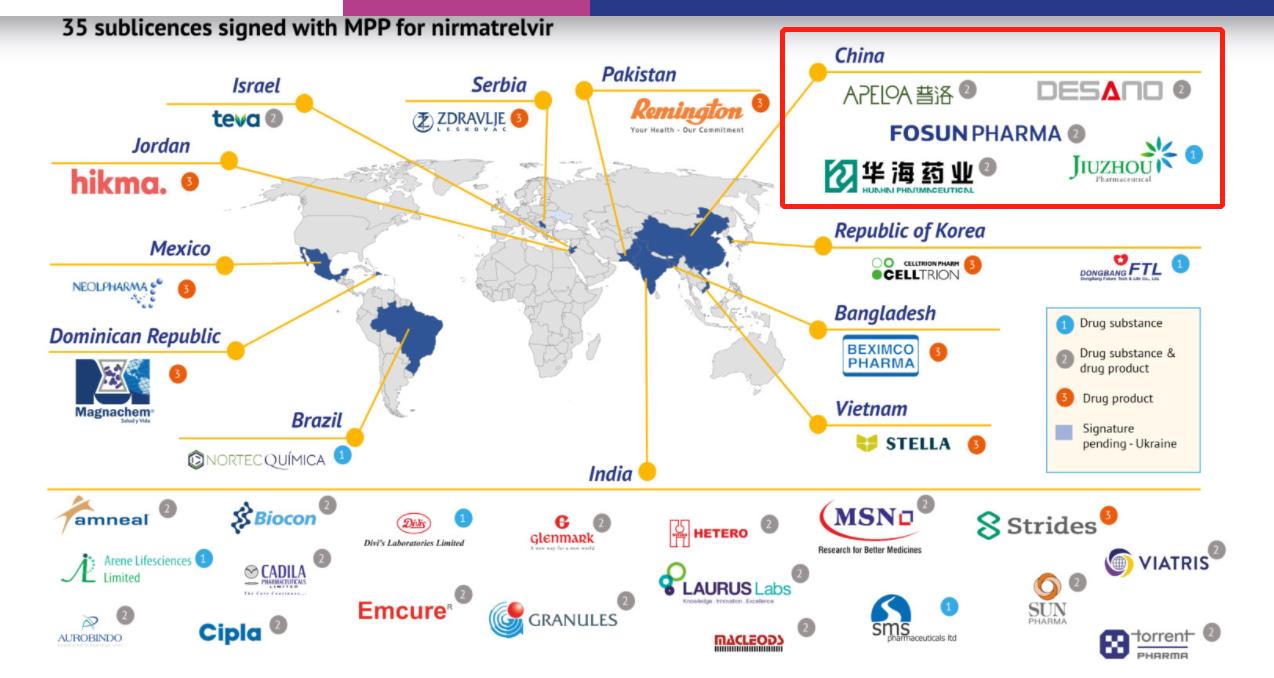
Official announcement! Five pharmaceutical companies in China obtained the license for free imitation and production of Pfizer COVID-19 oral medicine.

  The market rumors of Pfizer COVID-19’s oral medicine imitation license have been confirmed.

  On March 17th, official website, a pharmaceutical patent pool (MPP), announced that it had signed agreements with 35 companies, which were allowed to copy and produce nirmatrelvir, one of the ingredients of Paxlovid, an oral drug of Pfizer COVID-19.

  According to the map released by official website, the countries involved in the agreement are distributed in 12 countries around the world, among which 6 companies will focus on the production of APIs, 9 companies will produce drugs, and the remaining 20 companies will have both. There are five pharmaceutical companies in China, including Huahai Pharmaceutical (600521), Puluo Pharmaceutical (000739), Fosun Pharmaceutical (600196), Jiuzhou Pharmaceutical (603456) and Shanghai Disino, among which Jiuzhou Pharmaceutical only produces APIs, while others can produce APIs and preparations at the same time.

  It is worth noting that the agreement will help to expand the accessibility of Pfizer COVID-19 oral medicine in 95 low-and middle-income countries, accounting for about 53% of the world population, but excluding China.

  Earlier on March 17, the above news was circulated in the market, and the above listed companies once had a daily limit. Previously, it was rumored in the market that Puluo Pharmaceutical could only produce APIs. According to the newly published map, Puluo Pharmaceutical can produce both raw materials and preparations.

  It is worth noting that a Ukrainian company is also on the list of 35 companies. MPP said that due to the current conflict, it could not be signed, but the license could still be used.

  According to the data of official website, the Pharmaceutical Patent Pool Organization is a public health organization supported by the United Nations, which is committed to increasing access to life-saving drugs for low-and middle-income countries and promoting drug development.

  On January 20th, local time, the Pharmaceutical Patent Pool Organization (MPP) announced through official website that it had signed an agreement with 27 pharmaceutical companies to allow them to produce and supply the oral anti-Covid-19 drug Molnupiravir of Merck to 105 low-and middle-income countries or regions around the world, so as to promote the affordability and accessibility of the drug in the world. Five China pharmaceutical companies, such as Fosun Pharma, Borui Pharma, Shijiazhuang Long Ze Pharmaceuticals, Shanghai Diseno and Langhua Pharmaceuticals, are among them, of which the first four are allowed to produce both raw materials and finished products, and Langhua Pharmaceuticals is allowed to produce raw materials.

  In other words, two pharmaceutical companies, Fosun Pharma and Shanghai Disino, have obtained the rights to prevent and control the production of Pfizer and Merck.

  Pfizer’s Paxlovid is a combination of PF-07321332 and ritonavir, which has been approved for conditional marketing in China. Molnupiravir of Merck is a nucleoside drug in oral form, which has not been approved in China.

Notice of Beijing Municipal Bureau of Economy and Information Technology on soliciting the third batch of members of "Beijing General Artificial Intelligence Industry Innovation Partnership Program"

  In order to speed up the application of large-scale models and continuously promote the commercialization and large-scale popularization of typical applications, on the basis of summing up and evaluating the work experience of the first and second batch of partner programs, the third batch of "partner program" members is now organized, focusing on "high-quality data supply, high-performance computing power supply and high-value model application", and the partner members in five fields of computing power, data, model, application and investment are widely collected. The relevant matters are notified as follows.

  I. Scope of the "Partnership Program"

  The "Partnership Program" aims to build a market-oriented service platform with industrial synergy, complementary advantages and resources, effective application and flexible cooperation mechanism among partners.

  (1) Calculation partners. Widely collected throughout the country, especially in Beijing, Tianjin, Hebei, Mongolia and surrounding areas. Computing partners have the ability to provide diversified and high-quality computing resources, and can give priority to providing high-quality computing services to large model teams and enterprises in this city, which can effectively reduce the threshold for computing use of small and medium-sized enterprises and individual developers, and can access the computing interconnection and operation service platform in Beijing. Computing partners should have cooperation cases with large model enterprises and AIGC enterprises in high-performance computing support. Encourage enterprises with domestic computing resources to actively participate.

  (2) Data partners. Data partner is the main body of data factor market, including data provider and data trader. Aiming at the high-quality data required for large-scale model training, it can combine specific application scenarios, give full play to the advantages of massive data resources and professional advantages of data providers, and realize the effective supply of training data and the compliant, efficient, safe and orderly flow. Priority should be given to the fact that the relevant data resources of data providers can be physically migrated, relying on the pioneer area of Beijing data basic system and the National Artificial Intelligence Data Training Base, and provide data support for large-scale model training through platform transactions. Encourage enterprises that can provide high-quality data resources for practical application scenarios such as intelligent manufacturing, government affairs, finance, medical care, entertainment and education to actively participate.

  (3) Model partners. Model partners mainly include general model enterprises, industry model enterprises and model service providers. The technical parameters of the general large model need to reach the domestic leading level, and the development of industry models based on the general large model is encouraged. Model partners should have the ability to provide application services by using large models, and can provide application services based on specific industries, or rely on the basic model platform to train and optimize through exclusive industry data to provide industry application services. Related model services or applications have achieved commercial cooperation or large-scale promotion and use.

  (4) Application partners. Application partners refer to all kinds of industry users who apply large-scale model capabilities to support business development. They should have a clear demand for cooperation in open scenarios, and have the ability and willingness to cooperate with applications. They can open their own typical application scenarios and rely on model products and services to drive business to improve quality and efficiency. Encourage central enterprises, state-owned enterprises and other units to actively participate.

  (5) Investment partners. Investment partners can empower the development of general artificial intelligence industry by means of capital assistance and service docking, and play the role of incubation, guidance and driving. They should have the sustainability of investment and services, provide a good environment for investment, incubation and cooperation docking, and regularly hold docking exchanges, salons roadshows and other activities to drive scientific and technological innovation, discover typical scenarios, promote cooperation, and promote the high-quality development of the digital economy. In the past two years, the number of investment projects in large models and related industries of investment partners has reached more than 5; Investment partners organize at least 10 roadshows and other service docking activities every year.

  Second, the reporting conditions

  (1) reporting conditions. Units that are willing to participate in the development of general artificial intelligence industry in Beijing and meet the relevant conditions of five types of partners. There is no bad record in terms of quality, safety, reputation and social responsibility.

  (2) Relevant rights and interests. Enjoy the docking service of computing power, data and application among partners, and provide relevant policy publicity and guidance.

  Third, the working mechanism

  In order to fully reflect the service docking effect of the "Partner Program", mobilize the enthusiasm of partner members and promote the double improvement of cooperation quality and effect, the working mechanism of partner member units is specially formulated.

  The member units that have been selected into the partnership plan should actively participate in relevant activities or meetings and perform their partnership duties. After comprehensive evaluation, the member units that do not participate in relevant activities without reason will take measures such as "reminding and revoking partner membership" respectively. All partner memberships are reviewed quarterly, and enterprises and institutions that fail to reflect the role of partner members will be led out after a quarter of observation. All partner member units shall strictly abide by the objective facts in providing capacity services and information disclosure, and shall not slander their peers. The materials and documents shared or disclosed shall comply with relevant laws and regulations, and bear relevant responsibilities caused by self-behavior.

  Fourth, the declaration method

  The reporting entity can choose to assume one or more partner roles according to its own business type. The applicant should fill in the Application Form for the Third Batch of Beijing "Partnership Program" (see the attachment for details), and send the official application form PDF document and Word document to the contact email before March 1, 2024.

  I hereby inform you.

Beijing Bureau of Economy and Information Technology    

February 5, 2024  

  (Contact: Zou Qifeng, Wang Wei and Li Yiming; Tel: 18730662199 13810101764 13910808181; E-mail: gaozhengzhou@jxj.beijing.gov.cn)

Mycoplasma pneumonia is threatening, and adults and children may get sick. How should we deal with it?

CCTV News:Recently, the number of patients infected with mycoplasma pneumoniae has increased in many places, especially in children, and the treatment time is long. Many patients and their families have questions. Why is it not good after treatment for a while? I’ve already hit pneumonia vaccine, why can I get mycoplasma pneumoniae pneumonia? How to prevent uninfected people?

Hao Hongwen, chief physician of Pediatrics, Oriental Hospital, Beijing University of Chinese Medicine, gave the following answers to nine common questions about mycoplasma pneumoniae pneumonia.

Question 1: Why did you get mycoplasma pneumonia after playing in pneumonia vaccine?

Hao Hongwen:This is actually a question that we often answer parents in clinic. Usually, children and the elderly are vaccinated with pneumonia vaccine, which is mainly aimed at Streptococcus pneumoniae. However, the pathogen of this popular pneumonia is Mycoplasma pneumoniae, and there is no vaccine against Mycoplasma pneumoniae at present. Therefore, even if vaccinated with pneumonia vaccine, pneumonia caused by Mycoplasma pneumoniae cannot be prevented, because the pathogen is different. Of course, pneumonia vaccine has positive significance in preventing pneumonia and other diseases caused by Streptococcus pneumoniae.

Question 2: I went to check my blood when I had a fever and cough. The antibody against Mycoplasma pneumoniae was also negative, but not positive. Why did it eventually become Mycoplasma pneumoniae pneumonia?

Hao Hongwen:This is because the most positive time of mycoplasma pneumoniae antibody is 5-7 days after infection, so the initial examination may be negative, and some of them will be false negative. Therefore, negative antibody to mycoplasma pneumoniae can not rule out mycoplasma pneumoniae infection.

Question 3: What are the characteristics of mycoplasma pneumonia? How to identify?

Hao Hongwen:Pneumonia caused by mycoplasma infection is characterized by "double weight and light weight".

First of all, the symptoms are serious. Children mainly have a severe fever and cough, and most of them will continue to have a high fever, or the low fever will continue all the time, and the cough will be very heavy. In the first day or two of the onset, the cough may not be obvious, and then the cough will gradually become obvious, mainly manifested as paroxysmal and irritating cough, that is, coughing up in a big array, and even coughing badly will vomit and shed tears. This kind of cough, often with little phlegm at the beginning, is characterized by dry cough, and phlegm will appear in the middle and late stage of the course of the disease, which is the "first weight".

Although this kind of pneumonia has a severe fever and cough, the rales of the lungs are often not heard in the early and middle stages of the disease. Therefore, there is no dry and wet rales after the doctor auscultates the lungs. In layman’s terms, it is no problem to auscultate the lungs. This is a "light".

The characteristic of this disease is twofold and lightness, and the "second weight" is that the chest radiograph is heavier. If a child has a fever for more than three days, high fever for more than three days or low fever repeatedly, and his cough gradually worsens for more than three or four days, he must also consider this kind of pneumonia. Although there is no obvious abnormality in auscultation, doctors will generally advise the child to take a chest film to see if there is any pneumonia. The chest film may show signs of lung inflammation, some of which may be patchy, some may even be large white consolidation, and even pleural effusion. This is the "second weight".

Therefore, we simply sum up the characteristics of mycoplasma pneumoniae pneumonia as "double weight and light weight". If parents and friends find that their children have such characteristics of fever and cough, they must also pay attention to the possibility of mycoplasma pneumoniae pneumonia, and if necessary, conduct chest X-ray or even chest CT examination under the guidance of a doctor.

Question 4: How is Mycoplasma pneumoniae infected? How to prevent it?

Hao Hongwen:The infection of mycoplasma pneumoniae is the same as our common respiratory infections, and it is mainly transmitted through the mouth and nose, so it is easy to be infected in crowded places or in close contact with patients if no protective measures are taken. Therefore, in view of this route of infection, we still have to emphasize that children should go to crowded, closed and unventilated places as little as possible. If the disease is at a high incidence, it is recommended that children wear masks as much as possible and wash their hands frequently when going to these places. Of course, it is necessary to have enough sleep, a reasonable diet, and timely increase or decrease clothes according to the weather conditions, so as to enhance the child’s resistance and avoid the infection of mycoplasma pneumoniae. If someone in the family has been infected with mycoplasma, try to wear a mask or live in a separate room, and open the window frequently for air at home. Especially for families with two children, it is particularly easy to infect each other.

Question 5: Pneumonia only affects the lungs. Will there be other complications?

Hao Hongwen:Mycoplasma pneumoniae pneumonia, its impact on the human body is relatively extensive. The mild pneumonia will gradually recover after a few days of medication, and it will have a greater impact on the severe pneumonia or the pneumonia with long fever time and heavy lung imaging. The common complications are divided into two parts: intrapulmonary and extrapulmonary. The intrapulmonary complications include plastic bronchitis, embolism (which can be independent or combined with other parts), pleural effusion, and some children may be complicated with acute asthma attack and mixed lung infection. Extrapulmonary, including nervous system, circulatory system, blood system, skin, liver damage, kidney damage, etc., among which myocarditis, myocardial damage and liver damage are more common, and in addition, in the nervous system, encephalitis may be common. Skin complications will have some rashes, and the blood system may have some changes in blood cells such as platelets. Each system will also have serious complications, even life-threatening, so we can’t take it lightly.

Question 6: Why did the symptoms get worse after taking cephalosporin from the beginning?

Hao Hongwen:This is because penicillin and cephalosporins play a role by inhibiting the synthesis of cell walls, but when mycoplasma pneumoniae is infected, mycoplasma pneumoniae has no cell walls, so cephalosporins can’t play a role. The use of macrolides such as azithromycin or erythromycin mainly inhibits the synthesis of protein, thus inhibiting the activity of mycoplasma and playing an anti-infection role. Therefore, if mycoplasma pneumoniae is infected, cephalosporins are ineffective. However, some patients may be complicated with bacterial infection and also use cephalosporins.

Question 7: Mycoplasma pneumoniae pneumonia, how should it be treated?

Hao Hongwen:If it is mycoplasma pneumoniae pneumonia, it is generally divided into mild and severe. Mild pneumonia is treated with macrolides such as azithromycin for three days, which may be extended to five days according to the condition, or cyclic erythromycin and roxithromycin can be used. At the same time, you can use some drugs to relieve cough and phlegm. Traditional Chinese medicine can generally use Shegan Mahuang Decoction and Maxing Shigan Decoction after syndrome differentiation.

Severe mycoplasma pneumonia is mainly treated with azithromycin for 7 days, and then stopped for 3-4 days. According to the situation, a second course of treatment or a third course of treatment may be needed, with cough relieving, phlegm resolving, aerosol inhalation, etc., and anticoagulation treatment if necessary. Chinese medicine can be treated with Maxing Shigan Decoction combined with Sanzi Yangqin Decoction and Huanglian Jiedu Decoction. In this process, if the symptoms are not relieved, fever or severe cough persist, it is necessary to consider whether it belongs to drug resistance, mixed infection or other complications according to the situation, and consider switching to other antibiotics, adding hormones, combining antibiotics, bronchoscopic lavage, immunoglobulin and other treatments. This needs the doctor to decide according to the situation.

Quinolones are the first choice for adult treatment, as well as new tetracyclines.

In short, each patient’s situation is different. Under the guidance of treatment principles, specific problems are analyzed and solved. During the period, children should drink water properly, atomize to dilute sputum, and eat digestible food.

Question 8: Why did you use azithromycin and erythromycin, but your condition still hasn’t improved?

Hao Hongwen:This is because the improvement of the disease is related to the following factors: the first is to feel the virulence of this pathogen, the second is whether our body’s resistance is moderate (too weak or too strong), and the third is whether the drug is resistant. If you feel that the pathogen is more virulent, the child’s immunity is weak or too strong, then the drug is not enough to weaken the pathogen or inhibit the excessive immune response, so even the drug can not quickly inhibit the development of the disease. Mycoplasma pneumoniae pneumonia can be divided into mild pneumonia and severe pneumonia, as well as refractory mycoplasma pneumonia. It refers to that after 7 days of treatment with regular macrocyclic lipid antibiotics such as azithromycin, the clinical symptoms and signs or imaging examination have not improved, or other complications have occurred. This year’s guide in 2023 also mentioned "macrolide nonreactive mycoplasma pneumonia", which means that the condition has not improved after 72 hours of treatment with regular macrolide drugs. If drug resistance is considered, new tetracycline drugs such as doxycycline and minocycline can be selected. These drugs are suitable for children over 8 years old, and those under 8 years old are beyond the instructions, which need full evaluation and informed consent of parents. So it is also mycoplasma infection, but the development and changes of the disease are different because of different factors. However, this kind of refractory pneumonia or unresponsive pneumonia is often easy to develop into severe pneumonia. In addition to antibiotic treatment, it is often necessary to cooperate with a variety of therapeutic drugs and means.

Question 9: In the late stage of mycoplasma pneumoniae infection, the child has a bad appetite and a persistent cough. What should I do?

Hao Hongwen:Some children with mycoplasma pneumoniae pneumonia still have some cough symptoms after 2-3 courses of anti-infection treatment, or at the later stage of disease treatment, the children show poor appetite and cough with persistent phlegm. At this time, considering that there may be airway hyperresponsiveness or other sequelae from western medicine, we can continue to adopt corresponding treatment and atomization. Traditional Chinese medicine treatment also has advantages. Traditional Chinese medicine believes that the residual evil is not exhausted and the healthy qi has been injured in the later stage of the disease. Traditional Chinese medicine is used to clear the residual evil and help the healthy qi. At the same time, some other treatments of traditional Chinese medicine, such as cupping and massage, can be used to assist the recovery of pneumonia. (Reporter Yan Yan)

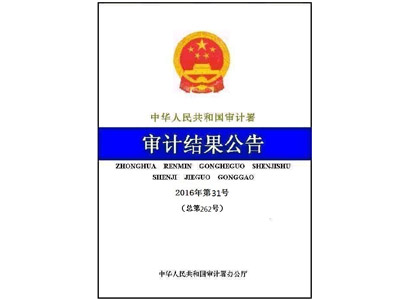
In 2016, the National Audit Office released 54 cases that had dealt with violations of discipline and law.

  Cctv newsToday, the National Audit Office released 54 cases of violations of discipline and law that have been handled so far in 2016. Some of the key cases were disclosed for the first time, which aroused widespread concern.

  Announcement No.31 of the Audit Commission this year shows that:

  Yao Zhongmin, the former chairman of the Board of Supervisors of China Development Bank, was suspected of taking advantage of his position to benefit relatives: The audit found that from 2005 to 2014, Yao Zhongmin was suspected of operating illegally in the loan business of China Development Bank to seek illegitimate interests for relatives. In August 2014, the Audit Commission transferred this clue to the Central Commission for Discipline Inspection for investigation and handling. In September 2016, the Central Commission for Discipline Inspection gave Yao Zhongmin the punishment of expelling from the Party and public office, and transferred the suspected crimes, clues and money involved to judicial organs for legal treatment.

  Bai Xueshan, the former vice chairman of Ningxia Hui Autonomous Region, was suspected of illegally interfering with land transfer. The audit found that from 2006 to 2013, Bai Xueshan was suspected of illegally interfering with land transfer and land acquisition compensation, resulting in the loss of state-owned rights and interests. In January 2015, the Audit Commission transferred this clue to the Central Commission for Discipline Inspection for investigation and handling. In December 2015, the Central Commission for Discipline Inspection gave Bai Xueshan the punishment of expelling from the Party and public office, and transferred the suspected crimes, clues and money involved to judicial organs for legal treatment. (CCTV reporter Chen Changwei)

  The Audit Commission regularly tracks the investigation and handling of clues about violations of discipline and law transferred to relevant departments and units. The relevant information about violations of discipline and law that have been dealt with until November 2016 is announced as follows:

  1. Yao Zhongmin, former chairman of the Board of Supervisors of China Development Bank, is suspected of taking advantage of his position to benefit his relatives.

  The audit found that from 2005 to 2014, Yao Zhongmin was suspected of illegal operation in the loan business of China Development Bank to seek illegitimate interests for relatives. In August 2014, the Audit Commission transferred this clue to the Central Commission for Discipline Inspection for investigation and handling. In September 2016, the Central Commission for Discipline Inspection gave Yao Zhongmin the punishment of expelling from the Party and public office, and transferred the suspected crimes, clues and money involved to judicial organs for legal treatment.

  2. Bai Xueshan, former vice chairman of Ningxia Hui Autonomous Region, was suspected of violating regulations and interfering with land transfer.

  The audit found that from 2006 to 2013, Bai Xueshan was suspected of illegally interfering with land transfer and land acquisition compensation, resulting in the loss of state-owned rights and interests. In January 2015, the Audit Commission transferred this clue to the Central Commission for Discipline Inspection for investigation and handling. In December 2015, the Central Commission for Discipline Inspection gave Bai Xueshan the punishment of expelling from the Party and public office, and transferred the suspected crimes, clues and money involved to judicial organs for legal treatment.

  3. Sun Zhaoxue, former general manager of China National Gold Corporation, and Yang Zhigang, chief engineer, were suspected of taking bribes and other issues.

  The audit found that from 2010 to 2014, Sun Zhaoxue, Yang Zhigang and others were suspected of illegally operating mining rights mergers and acquisitions, providing financial support for specific enterprise project development, and profiting from them. From 2014 to 2015, the Audit Commission transferred the above clues to the Central Commission for Discipline Inspection and the Supreme People’s Procuratorate for investigation and handling. By December 2016, the Central Commission for Discipline Inspection had given Sun Zhaoxue the punishment of expelling from the Party and public office. The Beijing No.2 Intermediate People’s Court and the Tieling Intermediate People’s Court of Liaoning Province sentenced Sun Zhaoxue and Yang Zhigang to 16 and 10 years’ imprisonment respectively for accepting bribes, the crime of huge amount of unidentified property and the crime of accepting bribes by non-state staff, with 3.5 million yuan of personal property confiscated and a fine of 500,000 yuan. All the stolen money and goods have been recovered.

  4. Zeng Jianping, former director of the printing department of China Banknote Printing and Minting Corporation, was suspected of accepting bribes.

  The audit found that from 2010 to 2014, some equipment and materials of China Banknote Printing and Minting Corporation were purchased without public bidding, and Zeng Jianping was suspected of accepting money from some non-public bidding suppliers. In July 2014, the Audit Commission transferred this clue to the Beijing Municipal People’s Procuratorate for investigation and handling. In June 2015, the Beijing No.2 Intermediate People’s Court sentenced Zeng Jianping to 11 years in prison for accepting bribes, and confiscated 110,000 yuan of personal property, and recovered 2.239 million yuan of illegal income from bribery and turned it over to the state treasury.

  5. Mao Shijia, former general manager of China Shipping Development Co., Ltd. and others are suspected of making illegal profits for relatives and friends.

  The audit found that from November 2004 to the end of 2013, Mao Shijia was suspected of collaborating with Liu Houping, deputy general manager of China Shipping Development Co., Ltd., and others to hand over the petrochemical oil transportation business to relatives for profit. In March 2014, the Audit Commission transferred this clue to the Ministry of Public Security for investigation and handling. In December 2014, Shanghai No.1 Intermediate People’s Court sentenced Mao Shijia to 6 years’ imprisonment and fined 1.5 million yuan for the crime of illegal profit-making by relatives and friends. Liu Houping was sentenced to three years and six months in prison for accepting bribes from non-state staff and fined 200,000 yuan.

  6. Chen Fujiang, former deputy general manager of China Shipping Group Shanghai Branch, and others are suspected of illegally operating similar business problems.

  The audit found that from September 2010 to October 2013, Chen Fujiang was suspected of taking advantage of being in charge of the Asia-Pacific and European transportation business of China Shipping Group Shanghai Branch, and after establishing a joint venture with Yuan Linlin and others, he gave the enterprise special preferential treatment in violation of regulations to obtain illegal benefits. In March 2014, the Audit Commission transferred this clue to the Ministry of Public Security for investigation and handling. In March 2015, the Intermediate People’s Court of Hongkou District of Shanghai sentenced Chen Fujiang to 4 years and 6 months in prison and Yuan Linlin to 4 years in prison for the crime of illegally operating similar businesses.

  7. Jiang Kaihua, a former staff member of the Housing and Urban-Rural Development Committee of Dandong City, Liaoning Province, was suspected of abusing his power to seek resettlement houses for relatives and friends.

  The audit found that from 2010 to 2011, Jiang Kaihua was suspected of abusing his power and seeking 8 sets of resettlement houses for 4 relatives and friends. In May 2014, the Audit Commission transferred this clue to the Liaoning Provincial Commission for Discipline Inspection for investigation and handling. In December 2014, the People’s Court of Zhenxing District, Dandong City, Liaoning Province sentenced Jiang Kaihua to 18 years in prison for abuse of power, corruption and fraud, and confiscated 100,000 yuan of property and fined 30,000 yuan; In December 2015, the relevant departments of Dandong City gave Jiang Kaihua the punishment of expelling the party membership and public office.

  Eight, Sichuan Huixin Rongtong Industrial Development Co., Ltd. defrauded the shed reform funds.

  The audit found that in August 2013, in the shantytown renovation project in Wuhou District, Chengdu, Sichuan Huixin Rongtong Industrial Development Co., Ltd., Deng Junru, the legal representative of the company, was suspected of instructing employees to forge false resettlement compensation supplementary agreements and cash receipts to defraud the shed reform funds. In April 2014, the Audit Commission transferred this clue to the Sichuan Provincial Public Security Bureau for investigation and handling. In December 2015, the People’s Court of Wuhou District, Chengdu, Sichuan Province sentenced Deng Junru to 3 years’ imprisonment, suspended for 4 years and fined 30,000 yuan for contract fraud. Sichuan Huixin Rongtong Industrial Development Co., Ltd. was fined 100,000 yuan for contract fraud.

  Nine, Chen Yanqiu, former deputy director of the Yanzhiwu Expressway Construction Management Office in Shaanxi Province, and others were suspected of defrauding the demolition compensation and other issues.

  The audit found that from 2009 to 2010, Chen Yanqiu, former deputy director of the expressway construction management office in Yanzhiwu, Shaanxi Province (from Jingzhidan County to Wuqi County, Yan ‘an City), and others were suspected of defrauding the demolition compensation by fraud; During the bidding process of this project, China Foreign Construction Co., Ltd. and other construction enterprises are suspected of lending or borrowing qualification bidding and colluding with bidding. From 2015 to 2016, the Audit Commission transferred these clues to the Shaanxi Provincial People’s Procuratorate and the Ministry of Transport for investigation and handling. In May 2016, the People’s Court of Zhidan County, Shaanxi Province sentenced six people, including Chen Yanqiu, to fixed-term imprisonment ranging from two years and six months to 10 years for corruption, with a co-existence fine of 1.9 million yuan. The transportation department shall notify the relevant construction enterprises, reduce their national comprehensive credit rating and be included in the "blacklist" of Shaanxi highway construction market.

  X. Zhang Songtao, former secretary of the Party branch of Hongxing Village, Gongchang Town, Longxi County, Dingxi City, Gansu Province, and others were suspected of defrauding land acquisition compensation.

  The audit found that in 2011, Zhang Songtao and his uncle Zhang Yaowen were suspected of defrauding land acquisition compensation by altering the measurement data of land acquisition and falsely reporting the number of seedlings. In March 2015, the Audit Commission transferred this clue to the People’s Procuratorate of Gansu Province for investigation and handling. In May 2016, the People’s Court of Zhangxian County, Gansu Province sentenced Zhang Songtao to 3 years in prison, suspended for 5 years and fined 300,000 yuan for corruption; Zhang Yaowen was sentenced to 2 years’ imprisonment, suspended for 3 years, and fined 150,000 yuan. At present, 926,100 yuan has been recovered.

  > > Click to view the full text of 54 cases in the announcement.

Provisions on the functional allocation, internal structure and staffing of the Ministry of Natural Resources

Article 1 These Provisions are formulated in accordance with the Decision of the Central Committee of the Communist Party of China on Deepening the Reform of Party and State Institutions, the Plan for Deepening the Reform of Party and State Institutions and the Plan for Institutional Reform of the State Council approved by the First Session of the 13th National People’s Congress.

Article 2 The Ministry of Natural Resources is a department of the State Council, with ministerial status, and the brand of State Oceanic Administration is reserved for foreign countries.

Article 3 The Ministry of Natural Resources shall implement the principles, policies and decision-making arrangements of the CPC Central Committee on natural resources work, and uphold and strengthen the centralized and unified leadership of the Party on natural resources work in the course of performing its duties. The main responsibilities are:

(a) to perform the duties of the owners of natural resource assets such as land, minerals, forests, grasslands, wetlands, water and oceans owned by the whole people and the duties of controlling the spatial use of all land. To draft laws and regulations on natural resources and land space planning, surveying and mapping, polar regions and deep seas, formulate departmental rules and supervise and inspect the implementation.

(two) responsible for the investigation, monitoring and evaluation of natural resources. Formulate the index system and statistical standard of natural resources investigation, monitoring and evaluation, and establish a unified and standardized natural resources investigation, monitoring and evaluation system. Implement basic investigation, special investigation and monitoring of natural resources. Responsible for the supervision and management of natural resources investigation, monitoring and evaluation results and information release. To guide the investigation, monitoring and evaluation of local natural resources.

(three) responsible for the unified registration of natural resources. Formulate systems, standards and norms for unified registration of all kinds of natural resources and real estate, property registration survey, real estate surveying and mapping, dispute mediation and application of results. Establish and improve the national basic platform for natural resources and real estate registration information management. Responsible for the collection, collation, sharing and exchange management of natural resources and real estate registration materials. Guide and supervise the registration of natural resources and real estate rights throughout the country.

(four) responsible for the paid use of natural resources assets. Establish a statistical system of national natural resource assets, and be responsible for the accounting of national natural resource assets. Prepare a balance sheet of natural resources owned by the whole people and draw up assessment standards. Formulate policies for the allocation, transfer, lease, pricing and land reserve of all natural resources assets owned by the whole people, and rationally allocate all natural resources assets owned by the whole people. Responsible for the evaluation and management of the value of natural resources assets, and collect the income of related assets according to law.

(five) responsible for the rational development and utilization of natural resources. Organize the formulation of natural resources development plans and strategies, formulate standards for the development and utilization of natural resources and organize their implementation, establish a government-publicized natural resources price system, organize the grading and price evaluation of natural resources, carry out evaluation and assessment of natural resources utilization, and guide economical and intensive utilization. Responsible for natural resources market supervision. Organize research on policies and measures related to macro-control, regional coordination and urban-rural integration in natural resource management.

(six) responsible for the establishment of spatial planning system and supervise the implementation. Promote the strategy and system of main functional areas, organize the preparation and supervision of the implementation of national land space planning and related special planning. Carry out the suitability evaluation of land space development, and establish the monitoring, evaluation and early warning system for the implementation of land space planning. Organize the delineation of the red line of ecological protection, permanent basic farmland, urban development boundaries and other control lines, and build a production, living and ecological spatial layout that saves resources and protects the environment. Establish and improve the control system of land and space use, study and formulate urban and rural planning policies and supervise their implementation. Organize the formulation and implementation of annual utilization plans for natural resources such as land and sea. Responsible for the conversion of land, sea areas, islands and other land and space uses. Responsible for the management of land expropriation and requisition.

(seven) responsible for coordinating the ecological restoration of land space. Take the lead in organizing the preparation of national spatial ecological restoration planning and implementing major ecological restoration projects. Responsible for the comprehensive improvement of land space, land consolidation and reclamation, mine geological environment restoration and management, marine ecology, sea coastline and island restoration. Take the lead in establishing and implementing the compensation system for ecological protection, formulate policies and measures for rational use of social funds for ecological restoration, and put forward major alternative projects.

(eight) responsible for organizing the implementation of the most stringent farmland protection system. Take the lead in formulating and implementing cultivated land protection policies, and be responsible for the quantity, quality and ecological protection of cultivated land. Organize the implementation of farmland protection responsibility target assessment and permanent basic farmland special protection. Improve the balance system of cultivated land occupation and compensation, and supervise the implementation of the compensation system for occupied cultivated land.

(nine) responsible for the management of geological exploration industry and the national geological work. Prepare geological exploration plans and supervise and inspect the implementation. Manage central geological exploration projects. Organize the implementation of major national geological and mineral exploration projects. Responsible for the prevention and treatment of geological disasters, supervise and manage geological problems such as excessive exploitation of groundwater and land subsidence caused by it. Responsible for the supervision and management of paleontological fossils.

(ten) responsible for the implementation of comprehensive disaster prevention and mitigation planning requirements, organize the preparation of geological disaster prevention planning and protection standards and guide the implementation. Organize, guide, coordinate and supervise the investigation and evaluation of geological disasters and the general survey, detailed investigation and investigation of hidden dangers. Guide the development of mass monitoring and prevention, professional monitoring, forecasting and early warning, and guide the engineering management of geological disasters. To undertake technical support for emergency rescue of geological disasters.

(eleven) responsible for the management of mineral resources. Responsible for the management of mineral resources reserves and the examination and approval of mineral resources. Responsible for mining right management. In conjunction with relevant departments, undertake the regulation and related management of specific minerals and superior minerals for protective mining. Supervise and guide the rational utilization and protection of mineral resources.

(twelve) responsible for supervising the implementation of marine strategic planning and the development of marine economy. To study and put forward major strategic suggestions for building a maritime power. Organize the formulation of marine development, deep sea, polar regions and other strategies and supervise their implementation. Work out plans and policies for marine economic development and comprehensive protection and utilization of coastal zones in conjunction with relevant departments and supervise their implementation. Responsible for the monitoring and evaluation of marine economic operation.

(thirteen) responsible for the supervision and management of marine development, utilization and protection. Responsible for the management of sea area use and island protection and utilization. Make plans for the protection and utilization of sea islands and supervise their implementation. Responsible for the management of toponyms of uninhabited islands, sea areas and seabed, formulate measures for the protection and management of special-purpose islands such as territorial sea base points and supervise their implementation. Responsible for marine observation and forecast, early warning, monitoring and disaster reduction, and participate in emergency response to major marine disasters.

(fourteen) responsible for surveying and mapping geographic information management. Responsible for basic surveying and mapping and surveying and mapping industry management. Responsible for surveying and mapping qualification and credit management, supervision and management of national geographic information security and market order. Responsible for the management of geographic information public service. Responsible for the protection of survey marks.

(fifteen) to promote the development of science and technology in the field of natural resources. Formulate and implement strategies, plans and plans for scientific and technological innovation and personnel training in the field of natural resources. Organize the formulation of technical standards, regulations and norms and supervise their implementation. Organize the implementation of major scientific and technological projects and innovation capacity building, and promote the informationization of natural resources and the public service of information materials.

(sixteen) to carry out international cooperation in natural resources. Organize foreign exchanges and cooperation in the field of natural resources, and organize the implementation of relevant international conventions, treaties and agreements. Cooperate with the work of safeguarding national maritime rights and interests and participate in relevant negotiations and consultations. Responsible for polar, high seas and international seabed related affairs.

(seventeen) according to the authorization of the central government, to supervise the implementation of the major principles and policies, decision-making arrangements and the implementation of laws and regulations of the local government on the planning of natural resources and land space of the CPC Central Committee and the State Council. Investigate and deal with major illegal cases of natural resources development and utilization, land spatial planning and surveying and mapping. To guide relevant local administrative law enforcement work.

(eighteen) to manage the State Forestry and Grassland Bureau.

(nineteen) the management of China Geological Survey.

(twenty) to complete other tasks assigned by the CPC Central Committee and the State Council.

(21) functional transformation. The Ministry of Natural Resources should implement the requirements of the central authorities on uniformly exercising the duties of the owner of all natural resources owned by the whole people, uniformly exercising the duties of controlling the use of all land and space and ecological protection and restoration, strengthen the top-level design, give play to the control role of land and space planning, and provide scientific guidance for the protection and rational development and utilization of natural resources. Further strengthen the protection and rational development and utilization of natural resources, establish and improve the working mechanism of combining source protection with whole process restoration and management, and realize overall protection, system restoration and comprehensive management. Innovate the institutional measures that give priority to both incentives and constraints, and promote the economical and intensive utilization of natural resources. Further streamline and decentralize relevant administrative examination and approval matters, strengthen supervision, give full play to the decisive role of the market in resource allocation, give better play to the role of the government, strengthen the binding role of natural resource management rules, standards and systems, and promote the convenience and efficiency of natural resource confirmation registration and evaluation.

Article 4 The Ministry of Natural Resources shall have the following internal organs:

(1) General Office. Responsible for the daily operation of the organ. Undertake information, security, letters and visits, news propaganda, government affairs publicity, and supervise the government affairs hall of the management department. To undertake the financial and asset management of institutions.

(2) comprehensive department. To be responsible for organizing the formulation of natural resources development strategies, medium and long-term plans and annual plans. Carry out investigation and study on major issues, be responsible for drafting important documents of the Ministry, and coordinate the work related to comprehensive reform in the field of natural resources. To undertake the in-depth development of integration of defense and civilian technologies in the field of natural resources. To undertake the centralized management of comprehensive statistics and professional statistics within the Ministry.

(3) department of laws and regulations. To undertake the drafting of relevant laws and regulations and rules. To review and clean up the legality of relevant normative documents. Organize publicity and education on the rule of law. To undertake the relevant work of administrative reconsideration and administrative litigation.

(4) Natural Resources Investigation and Monitoring Department. Draw up the index system and statistical standards for natural resources investigation, monitoring and evaluation, and establish a regular natural resources investigation, monitoring and evaluation system. Regularly organize the implementation of national natural resources basic survey, change survey, dynamic monitoring and analysis and evaluation. Carry out special investigation, monitoring and evaluation of water, forest, grassland, wetland resources and geographical conditions. To undertake the supervision of the collection, management, maintenance, release, sharing and utilization of the results of natural resources investigation, monitoring and evaluation.

(5) Natural Resources Confirmation Registration Bureau. To formulate systems, standards and norms for unified registration of all kinds of natural resources and real estate, title investigation, real estate surveying and mapping, dispute mediation and application of results. To undertake the guidance and supervision of the national registration of natural resources and real estate rights. Establish and improve the national basic platform for natural resources and real estate registration information management, and manage registration materials. Responsible for the key state-owned forest areas identified by the State Council, the sea islands approved by the State Council, and the registration and certification of real estate ownership by the central and state organs.

(6) Department of Natural Resources Owners’ Rights and Interests. To formulate policies for the management of natural resources assets owned by the whole people, establish a statistical system for natural resources assets owned by the whole people, and undertake the evaluation and accounting of natural resources assets. Prepare the balance sheet of natural resources owned by the whole people and formulate relevant assessment standards. To formulate policies on the allocation, transfer, lease, pricing and land reserve of natural resources assets owned by the whole people. To undertake the disposal of state-owned land assets of restructured enterprises submitted to the State Council for approval.

(7) Department of Natural Resources Development and Utilization. To formulate the system of paid use of natural resources assets and supervise its implementation, establish trading rules and trading platforms in the natural resources market, and organize the regulation of the natural resources market. Responsible for the supervision, management and dynamic monitoring of natural resources market, and establish the credit system of natural resources market. Establish a government publicity system for natural resources prices, and organize the grading price evaluation of natural resources. Formulate standards for the development and utilization of natural resources, carry out evaluation and assessment, and guide the economical and intensive utilization.

(8) Land and Space Planning Bureau. Formulate policies related to national land spatial planning, undertake the work of establishing spatial planning system and supervise its implementation. Organize the preparation of national land and space planning and related special planning and supervise the implementation. To undertake the examination and approval of local land spatial planning submitted to the State Council for examination and approval, and to guide and examine major national special plans involving the development and utilization of land space. Carry out the suitability evaluation of land space development, and establish the monitoring, evaluation and early warning system for the implementation of land space planning.

(9) Department of Land and Space Use Control. To formulate norms and technical standards for the control system of land and space use. Put forward the annual land and marine utilization plan and organize its implementation. Organize the formulation of policies for the conversion of land and space use such as cultivated land, woodland, grassland, wetland, sea area and island, and guide the pre-examination of land for construction projects. To undertake the examination and approval of all kinds of land use conversion submitted to the State Council for examination and approval. To formulate control policies for urban and rural planning and management and supervise their implementation.

(10) Department of Land, Space and Ecological Restoration. To undertake the research work on the policy of ecological restoration of land space and draw up the plan of ecological restoration of land space. To undertake the comprehensive improvement of national land space, land consolidation and reclamation, mine geological environment restoration and management, marine ecology, sea area coastal zone and island restoration. Undertake the work related to ecological protection compensation. Guide the ecological restoration of local land space.

(eleven) cultivated land protection and supervision department. To formulate and implement farmland protection policies, organize the implementation of farmland protection responsibility target assessment and special protection of permanent basic farmland, and be responsible for the supervision and management of permanent basic farmland delineation, occupation and replenishment. To undertake the balanced management of cultivated land occupation and compensation. To undertake the management of land expropriation. Be responsible for the connection between cultivated land protection policies and land resources protection policies such as woodland, grassland and wetland.

(12) Geological Exploration Management Department. Manage the geological exploration industry and the national geological work, prepare the geological exploration plan and supervise and inspect the implementation. Manage central-level geological exploration projects and organize the implementation of major national geological and mineral exploration projects. Undertake the prevention and treatment of geological disasters, and supervise and manage geological problems such as over-exploitation of groundwater and land subsidence caused by it.

(thirteen) mining rights management department. Formulate mining right management policies and organize their implementation, and manage the transfer, approval and registration of mining rights of important energy resources such as oil and gas and metallic and nonmetallic mineral resources. Statistical analysis and guidance of the national exploration and mining rights approval and registration, mediation of major ownership disputes. To undertake the total mining control and related management of specific minerals and superior minerals for protective mining.

(fourteen) mineral resources protection and supervision department. To formulate strategies, policies and plans for mineral resources and organize their implementation, and supervise and guide the rational utilization and protection of mineral resources. Undertake the review, filing, registration, statistics and information release of mineral resources reserves, and cover the examination and approval management of mineral resources and the strategic reserve of mineral areas. Implement dynamic management of mine reserves and establish a safety monitoring and early warning system for mineral resources. Supervise the collection, storage and utilization of geological data, and supervise and manage paleontological fossils.

(15) Division of Marine Strategic Planning and Economics. To formulate major strategies for building maritime powers such as marine development, deep sea and polar regions and supervise their implementation. To formulate plans for marine economic development, comprehensive protection and utilization of coastal zones, protection and utilization of sea islands and development of marine integration of defense and civilian technologies, and supervise their implementation. Undertake to promote the development of emerging marine industries such as seawater desalination and comprehensive utilization and marine renewable energy. Carry out comprehensive monitoring, statistical accounting, investigation and evaluation and information release of marine economic operation.

(16) Division of Marine Island Management. Formulate policies and technical specifications for the use of sea areas and the protection and utilization of islands, and supervise and manage the development and utilization of sea areas and islands. Organize the monitoring and evaluation of islands in the sea area, and manage the topographic names of uninhabited islands, sea areas and seabed and the laying of submarine cables and pipelines. To undertake the examination and approval of the use of sea and island submitted to the State Council for examination and approval. Organize the formulation of policies for the protection and management of special-purpose islands such as territorial sea base points and supervise their implementation.

(seventeen) marine early warning and monitoring department. To formulate policies and systems for marine observation and forecast and marine scientific investigation and supervise their implementation. To carry out marine ecological early warning and monitoring, disaster prevention, risk assessment and hidden danger investigation and management, and issue warnings and bulletins. Construction and management of the national global ocean stereoscopic observation network, and organization of marine scientific investigation and survey. Participate in emergency response to major marine disasters.

(18) Department of Land Surveying and Mapping. To formulate national basic surveying and mapping plans and supervise their implementation. Organize and implement major projects such as national basic surveying and mapping and global geographic information resources construction. Establish and manage national surveying and mapping benchmarks and surveying and mapping systems. Supervise and manage civil surveying and mapping, aerial photography and satellite remote sensing. Formulate management policies for surveying and mapping industry, supervise and manage surveying and mapping activities and quality, manage surveying and mapping qualifications, and approve foreign organizations and individuals to come to China for surveying and mapping.

(nineteen) Geographic Information Management Department. To formulate the national geographic information security policy and supervise its implementation. Responsible for the management of geographic information achievements and the protection of survey marks, and audit important national geographic information data. Responsible for map management, review maps open to the public, supervise Internet map services, carry out publicity and education on national territory awareness, and work out boundary standard samples. Provide geographic information emergency support, guide and supervise geographic information public services.

(20) Office of the Chief Inspector of National Natural Resources. Improve the national natural resources supervision system, and formulate relevant policies and working rules for natural resources supervision. Guide, supervise and inspect the work assigned to the supervision bureau, and coordinate the supervision work of major and cross-regional supervision. According to the authorization, undertake the supervision and inspection of the implementation of laws and regulations such as natural resources and land spatial planning.

(21) law enforcement bureau. To formulate draft regulations, rules and normative documents for the investigation and handling of illegal cases of natural resources and guide their implementation. Investigate and deal with major cases of illegal land and space planning and natural resources, guide and coordinate the investigation and handling of illegal cases nationwide, and coordinate and solve the investigation and handling of cross-regional illegal cases. Guide the construction of local natural resources law enforcement agencies and teams, and organize professional training for personnel of natural resources law enforcement system.

(22) Science and Technology Development Department. To formulate strategies, plans and plans for scientific and technological development in the field of natural resources. Formulate relevant technical standards, regulations and norms, and organize the implementation of major scientific and technological projects, projects and innovation capacity building. Undertake scientific and technological achievements and information management, carry out the construction of high-tech systems such as satellite remote sensing, and strengthen the capacity building of marine science and technology.

(XXIII) Department of International Cooperation (Department of Maritime Rights and Interests). To formulate strategies and plans for international cooperation in the field of natural resources and organize their implementation. Undertake bilateral and multilateral exchanges and cooperation with foreign countries and the implementation of international conventions, treaties and agreements, and guide the implementation of foreign-related and foreign aid projects. Responsible for the management of foreign affairs, carry out the maintenance of relevant maritime rights and interests, and participate in negotiations and consultations on resource exploration and development disputes, island disputes, and maritime delimitation. Guide polar, high seas and international seabed related affairs. To undertake the examination and approval of foreign-related administrative licenses in the field of natural resources.

(twenty-four) finance and capital utilization department. To undertake the collection and management of special income from natural resources and the management of special funds and funds. To formulate regulations on financial and asset management, be responsible for the supervision of financial and state-owned assets of organs and subordinate units, and be responsible for departmental budgets and final accounts, government procurement, centralized treasury payment and internal audit. Manage capital construction, major special investment and major equipment. To undertake the structural optimization and monitoring of financial and social funds, formulate policies and measures for rational utilization of social funds, and propose major alternative projects.

(25) personnel department. To undertake personnel management, organization establishment, labor wages, education and training of organs, agencies and directly affiliated units, and guide the construction of natural resources talents.

Party committees of organs. Responsible for the party-mass work of organs and units directly under Beijing.

Bureau of retired cadres. Responsible for the work of retired cadres.

Article 5 The Ministry of Natural Resources has 691 administrative personnel (including 10 personnel of the two committees, 2 personnel of aid dispatch and 50 personnel of retired cadres). There are 1 minister (concurrently the chief inspector of national natural resources), 4 deputy ministers (one of whom is concurrently the deputy inspector of national natural resources), 1 full-time deputy inspector of national natural resources (deputy minister level), and 109 department-level leadership positions (including 2 chief planners, 2 chief engineers, 1 full-time deputy secretary of the party committee of the government and 3 leadership positions of the bureau of retired cadres).

Article 6 The Ministry of Natural Resources shall set up the following agencies:

(1) According to the authorization of the central authorities, the Ministry of Natural Resources has dispatched national natural resources inspectors to Beijing Bureau, Shenyang Bureau, Shanghai Bureau, Nanjing Bureau, Jinan Bureau, Guangzhou Bureau, Wuhan Bureau, Chengdu Bureau and Xi ‘an Bureau to undertake the natural resources supervision work in the areas under its jurisdiction. There are 336 administrative staff in 9 supervision bureaus, and 64 directors at the department or bureau level (9 supervision bureaus are equipped with 1 positive and 2 deputy, and the corresponding 37 inspected units are equipped with 1 inspector).

(2) Shaanxi Surveying and Mapping Geographic Information Bureau, Heilongjiang Surveying and Mapping Geographic Information Bureau, Sichuan Surveying and Mapping Geographic Information Bureau and Hainan Surveying and Mapping Geographic Information Bureau implement a management system with the Ministry of Natural Resources as the main leader, and the specific organizational matters shall be stipulated separately.

(3) The Ministry of Natural Resources has set up agencies in the North Sea, the East China Sea and the South China Sea respectively, and the specific responsibilities and organizational matters shall be stipulated separately.

Article 7 The establishment, responsibilities and establishment of institutions affiliated to the Ministry of Natural Resources shall be stipulated separately.

Article 8 The Office of the Central Organization Establishment Committee shall be responsible for the interpretation of these Provisions, and its adjustment shall be handled by the Office of the Central Organization Establishment Committee according to the prescribed procedures.

Article 9 These Provisions shall come into force as of August 1, 2018.

Play a new rhyme, cultivate the best domestic romantic film White Snake this year


Special feature of 1905 film network Fulfill my wish,Worry for a thousand years,Just waiting for you to meet ……A number of new love films rushed to the beach in the past week. In the noise of crying and crying, almost no one expected it, and the word-of-mouth leader was actually a opera film.


For a long time, operas and movies have been "invisible" out of public view — — Its origin has become a knowledge point in history books, and its present situation is only presented in the nomination list of Golden Rooster Award. Except for the red model operas in memory, the general audience’s cognition of opera film is as little as the channels for watching them, let alone buying tickets in the cinema.


It was released for more than a week, and even though the box office was less than 5 million, White Snake’s steadily rising film-arranging ratio and the number of performances were still fermented by high reputation, which gave great confidence to the genre. Douban score steadily stands at a high level of 8.1, and this "love" that has passed through thousands of years has expanded a new discussion dimension for the story of The Legend of the White Snake.


A wave of 50% off, inky love. From stage to image: aria, image and vision


Different from the general idea that opera film only takes "Zhezi Opera" into pieces, White Snake continues the whole structure of its Cantonese Opera stage version.


Between the prologue and the epilogue, the five folds that restore the original appearance of the legend are closely spread out, making famous scenes such as "Broken Bridge and Love", "Dragon Boat Festival Revealing", "Kunlun Stealing Grass" and "Water Flowing over Jinshan" become the main body of each fold aria.


As a new repertoire of Guangdong Cantonese Opera Theatre, the stage version of White Snake has made structural changes. Compared with the traditional Cantonese opera "Legend of the White Snake", "Love" is lighter in volume. Under the premise of ensuring the wonderful singing, it raises the highlights and improves the narrative efficiency.


Moving from the stage to the screen, time and space transform into a more free acousto-optic form, leaving more room for sublimation of the carefully edited aria.


In the lyric aria of love at first sight, the easy transformation of each other’s viewpoints is completed by the dazzling scene montage. From flying red in the rain to dancing under the moon, the quite smooth lens transition makes the continuous singing between lady white snake and Xu Xian decorated by Wen Ruqing fascinating.


The rotation that pushed their feelings to a climax in the moonlight made a friend of the author think of Hollywood musicals. Excluding the mentality of fans, this association is not unrelated to the breakthrough in visual effects technology and visual aesthetics.


When he was a guest on the program, Director White Snake said that in order to meet the current screen projection technology and the tastes of young audiences, the crew hired a visual effects team from Oceania to carry out adventurous visual packaging in addition to shooting in 4K HD.


According to the film results, such an "adventure" is successful and worthwhile. The fourth time, the water overflowed the Jinshan Mountain, and the urgency of dark clouds overwhelming the city between ink and wash complemented the innovative soundtrack that replaced the bangzi drums with western music elements, which pushed lady white snake’s rescue from visual danger to psychological struggle.


Traditional opera film’s lens orientation of "either panoramic view or large close-up", with flexible scheduling and composition full of design sense, has achieved aesthetic transition in the world of White Snake ink painting and painting. Although the enlargement of the big screen shows a certain texture of the shed, the rendering of the whole ink mist is still enough to make up for this shortcoming with the aftertaste of landscape poetry and painting.


From the virtual stage to the real screen, the changes made by Cantonese opera actors are not only the dilution of makeup, but also the corresponding adjustment of singing.


Accompanied by Chen Yao, a young composer, the influential new school musical form, the famous cast led by Zeng Xiaomin, a plum blossom award winner, paid more attention to life breath and emotional concentration in singing and speaking. A number of aria are not inferior to the charts, which has popular value.


The most amazing scene in the film is lady white snake, who is unwell after drinking realgar wine. He reflects his face scales in the mirror and conveys the panic that he is about to reveal himself. At that moment, the visual screen means really integrated the drama stage into the light and shadow of the times.


Drama light and shadow, a dream for a thousand years. From feeding to rebirth: figure, blur and dream


From childhood memories of the Legend of the New White Snake to screen classics, and then to the masterpieces of the country in recent years, the story of The Legend of the White Snake, which is often seen, can always accommodate diverse image adaptation ideas. And the expressions with different colors always draw nutrients from the opera.


In addition to the most classic plain clothes of the White Snake, the most typical one is the swaying posture with the simulated snake in The Green Snake. To some extent, this is not only an imitation of nature, but also a reference to the figure of traditional Chinese opera.


As a vital layer of traditional Chinese opera, figure plays an irreplaceable role in expressing meaning on the stage. After hundreds of years of stage practice, the imitation of imitating nature has already gone deep into the essence of deduction.


If you carefully observe the posture of Bai Qing Er Snake in White Snake, you will find that no matter walking or fighting, as long as they are out of the static state, their movements follow the consciousness of streamline trajectory, and there is no contradiction within the framework of traditional Chinese opera.


When it comes to the ultimate presentation of the figure — — Among the four skills of "singing and doing beating", White Snake’s degree of reality is even more fascinating.


For the "tokenistic gesture" on the stage, the film creators not only package the special effects, but also speed up the battle rhythm by testing the actors’ "martial arts", which greatly enhances the continuity and appreciation of the images.


At present, as a kind of martial arts film which is well-known in the world, it started with the reference to the fighting posture in traditional Chinese opera.


He can be called a great director of the "literati martial arts" film, and he is the most authentic Beijing opera fan himself. In other classic films, he learned from the stage and paid attention to the artistic conception of martial arts scenes, which also greatly influenced later classics.


Even with visual effects and innovative means, the core of White Snake’s real attraction is the text of the legendary story polished for thousands of years, and the artistic style of Cantonese opera as a traditional opera in China. The traditional Chinese opera, which nurtured the martial arts genre, itself was the starting point of the birth of China’s films.


We can’t see the video for a long time, but we can also see the efforts of the film creators to make the opera enter the people’s homes in the Huangmei opera movies. The scene of the Leifeng Pagoda in Yongzheng reflects become a butterfly’s passing through the times in a moment, and it is also White Snake’s great love of feeding back the opera by means of movies.


How to protect yourself on a "barbecue" day when the temperature in more than 30 places in China has broken the historical extreme value?

  Xinhua News Agency, Beijing, July 13th (Reporter Deng Huaning, Wang Bin) According to the information released by the Central Meteorological Observatory, the temperature in more than 30 areas of the country has recently exceeded the historical extreme, and Turpan, Xinjiang even exceeded 49 degrees Celsius. On the 12th, the country entered a 40-day "three volts". What impact will the "barbecue" day with long time, wide coverage and high intensity have on people’s lives? How to deal with it? The reporter recently interviewed an environmental and health expert from China Center for Disease Control and Prevention.

  Experts said that continuous high temperature or heat wave makes people feel uncomfortable, and the main impact on human health is heatstroke, which leads to indigestion, increased incidence of gastrointestinal diseases, arthritis, cardiovascular and cerebrovascular diseases, and even death. But as long as the corresponding protection is done, the damage of high temperature can be avoided.

  First of all, the general population needs to pay attention to five aspects:

  Get and understand the forecast and early warning information of high temperature and heat wave in time. The public can check the weather forecast through the Central Meteorological Observatory or China Weather Network, or through radio, mobile phones, newspapers and other channels, arrange their work and life reasonably and take corresponding protective measures;

  In the hot and hot weather, you should try to avoid traveling from 10 am to 4 pm, and pay special attention not to exercise under the strong sunlight, such as brisk walking and running.

  Necessary protective measures should be taken during outdoor activities, including wearing breathable and light-colored clothes, which is helpful for heat dissipation; If you are outdoors for a long time, it is recommended to wear long-sleeved shirts; Wear sunglasses, use an umbrella, or wear a sun hat; For exposed skin, sunscreen can be applied to avoid solar dermatitis or sunburn;

  Due to the high temperature weather, the body temperature will rise, and it is easy to cause heatstroke due to lack of water. Attention should be paid to timely hydration, but excessive drinking water will make the stomach difficult to adapt;

  No matter when using air conditioning in the room or in the car, don’t set the temperature too low and the temperature difference between inside and outside should not be too large; It is best not to turn on the air conditioner immediately when the car stops in the hot sun. You should open the window to let the hot air out, and then turn on the air conditioner after the temperature inside the car drops. No matter in the room or in the car, it is best not to sleep with the air conditioner on, especially in the stopped car, where the ventilation is poor, and the carbon monoxide emitted by the engine leaks into the car, which will make people poisoned.

  For the elderly, infants, pregnant women and vulnerable people such as patients with hypertension, coronary heart disease and cerebrovascular sclerosis, we need to pay attention to the following aspects:

  In hot weather, vulnerable people such as the elderly, infants, pregnant women and patients with hypertension, coronary heart disease and cerebrovascular sclerosis should avoid outdoor activities during periods of strong sunlight;

  Patients with hypertension, coronary heart disease, cerebrovascular sclerosis, etc. should drink some water first when they get up in the morning to replenish the water consumed overnight, reduce blood viscosity and promote blood circulation;

  Patients with chronic diseases such as coronary heart disease, hypertension and arteriosclerosis, especially the elderly and patients with joint pain, should not stay in rooms with low air conditioning temperature for a long time. The indoor and outdoor temperature difference of vulnerable people should not exceed 5℃. It should not be too long to turn on the air conditioner, and it is best to turn it on in 1-mdash; Shut down after 3 hours and conduct natural ventilation. It is best to turn off the air conditioner before going to bed at night.

  In addition, outdoor workers should attach great importance to protection:

  People engaged in outdoor work in high temperature weather should arrange their working hours reasonably, rotate their work, appropriately increase the rest time of workers in high temperature working environment, reduce labor intensity, slow down and reduce outdoor work in high temperature period. In addition, it is necessary to take effective protective measures and carry heatstroke prevention products with you;

  The operation time shall be adjusted according to the forecast temperature released by the meteorological station of the competent meteorological department at or above the municipal level on the same day;

  Outdoor workers can wipe their bodies with ice towels to physically cool down;

  After returning indoors from the outside, don’t turn on the air conditioner immediately to avoid catching a cold;

  Outdoor workers should pay attention to dizziness, nausea, dry mouth, confusion, chest tightness, shortness of breath and other symptoms, should immediately rest, drink some cold water to cool down, serious illness should immediately go to the hospital for treatment.

Guangzhou launches rectification of Renmin South Road, which is no longer "it is hard to go".

  Keep the original heart, take the mission, find the gap and implement it

  Carry out in-depth education on the theme of "Do not forget your initiative mind, Remember Mission"

  People’s South is the witness of Guangzhou’s commercial development and foreign trade in ancient and modern times. It has been a famous wholesale market gathering area in Guangzhou since 1970s and 1980s, covering more than 60 professional wholesale markets such as clothing, dried seafood, paper products, toys, fine products, electronic appliances and Chinese herbal medicines. Due to the large flow of people and goods, the problems such as occupation of roads, traffic congestion, changing non-warehouses into warehouses and noise disturbing people are relatively prominent. Over the years, the renovation of the people’s southern periphery has been under way. Beginning at the end of last year, Guangzhou took the lead in Yuexiu District, Liwan District and relevant departments to carry out key rectification work in Renmin South Area, including thirteen banks. Especially this year, many neighborhoods have found that the appearance and order of People’s South have been significantly improved. According to the recently released "Three-year Action Plan for Accelerating the Transformation and Relief of Professional Wholesale Market in Guangzhou (2019-2021)", this area is about to usher in quality improvement.

  Li hang Li Gai

  Cross-regional linkage

  Taking the improvement of traffic congestion as a breakthrough

  The People’s South Area is governed by the People’s South. To the east of People’s South Road is the People’s Street in Yuexiu District, where there are 35 professional wholesale markets covering seafood dry goods, food, paper products, toys, fine products and other industries. To the west, there are more than 30 professional wholesale markets in clothing and electronics, such as the New China Building and the Red Sky Clothing Trading Center. A large number of goods distribution and floating population bring pressure and difficulties to urban traffic, social security, fire safety and community governance. Since the end of December last year, Guangzhou has been linked with Yuexiu District, People’s Street, Liwan District and Lingnan Street to start the key rectification of the surrounding areas in the south of the people.

  Due to the large number of wholesale markets, traffic congestion and chaos have long appeared in People’s South Area, which is a problem with great public grievances. An important breakthrough in rectification is traffic. It is understood that Renmin Street has applied for support from the traffic police and transportation departments, installed machine non-isolation fences on Daxin Road and other road sections, and closed Renji West Road to prohibit trucks from loading and unloading goods, further reducing the living space of illegal logistics; Install a pedestrian guardrail on the sidewalk along Renmin South Road from Yanjiang West Road to Dade Road. In traffic monitoring blind spots (such as Dade Road, Renji Road and other sections), five all-day illegal capture cameras are installed. Yuexiu Traffic Police Brigade entrusts People’s Street Command Center to capture illegal vehicles through video monitoring equipment in the street, and then hand them over to the traffic police for punishment and joint efforts to control traffic ills. Yuexiu Traffic Police Brigade arranged two traffic policemen to work in the street, strengthened the enforcement of illegal parking of trucks, and effectively curbed the phenomenon of occupying the road to load and unload goods. Chen Fang, director of the Party and Government Affairs Office of Lingnan Street, said that since the beginning of this year, the city, district and street have dispatched more than 6,648 police forces, carried out traffic safety inspection and supervision for 4 times, and organized 46 special operations. A total of 1,903 vehicles in five categories were seized, 7,210 vehicles in bike-sharing were cleared, and 628 vehicles illegally parked were investigated. At the same time, urge bike-sharing enterprises to strengthen standardized management, set up electronic fences in the 13th line area, restrict bike-sharing from parking in the 13th line core area, and purchase property management services from the society in the name of Lingnan Street Peace Promotion Association, which is responsible for cleaning up bike-sharing. Under a series of measures, the serious congestion in the past has been improved and the roads have resumed traffic.

  In this key rectification, People’s Street involves three communities: Anyeli, Yidexi and Zhuangyuanfang. Shen Jian, deputy director of People’s Street Office, said, "In ‘ Change from non-warehouse to warehouse ’ During the renovation work, 1,590 original warehouses in the three communities were closed down ‘ Change from non-warehouse to warehouse ’ 410 rooms, 398 rooms were restored to the original use of the property, and 782 rooms were rectified by installing intelligent smoke detection system and power failure indication system, with a rectification rate of 100%, basically eliminating ‘ Two in one ’ ‘ Trinity ’ Place. " Among them, after the smoke detector discovers the fire, it can report the fire alarm signal to the gateway, and at the same time send the alarm signal to the mobile phones of warehouse users, owners, street monitoring and command centers, community neighborhood committees and other related personnel through the mobile phone APP. The street arranges to dispatch community volunteer fire brigade to the scene to verify whether it is a real fire alarm or a false alarm, so as to achieve "timely fire detection and immediate verification" in the warehouse fire safety work.

  Party construction leads

  Get through the whole process of "be responsive"

  In the governance of People’s South, it is not enough to have government and market forces alone. People’s Street adheres to the guidance of party building, builds a grassroots party building work pattern of "forbidding and responding", innovates the grassroots governance mechanism system with problem orientation, and fully mobilizes social resources and forces to participate. According to Shen Jian, People’s Street regards the construction of grass-roots party organizations as the backbone and power source of key rectification in the southern surrounding areas of the people. According to the characteristics of the People’s Street business circle market and active business buildings, it increases the autonomy and participation of industry chambers of commerce, enterprise organizations and industry professionals, and comprehensively enhances the degree of regional co-construction, co-governance and sharing. "We absorb geographical and industrial forces to participate in community governance to prevent and reduce unstable factors. For example, Datong Commercial Building set up a building mediation committee, and took the lead in organizing qualified professionals to participate in periodic cross-checking by stages and districts. At present, the cross-checking has been carried out every two months, so far, it has been inspected nine times, 54 problems have been found, and 53 have been rectified. For another example, the dried seafood industry association has set up a coordination group, which is composed of ‘ Daxie ’ Coordinating labor disputes and payment disputes can at least resolve contradictions within the industry in the bud. " Excalibur for example.

  To be problem-oriented, it is required to get through the whole process of "being responsive". It is reported that Renmin Street has initially realized a four-level response mechanism of "grid dispatching, community ordering, street ordering and department ordering", and set up basic grid staff, professional grid staff and social grid staff to collect and solve problems at multiple levels, help to intervene in advance and resolve conflicts and disputes cooperatively, and expand the "response" efficiency to the system according to the existing resources and characteristics of the street. Relevant departments "respond", professional market safety promotion associations, residents’ organizations and other collaborative forces "respond", forming a situation in which the government, institutions, enterprises and the masses respond in multiple ways. It is reported that since the implementation of the rectification, 108 cases have been called to social organizations and other forces, with a completion rate of 100%.

  According to Chen Fang, Lingnan Street, led by party building, constantly mobilized, organized and relied on market promoters, operators, merchants and the masses within its jurisdiction to set up a community "big party committee" in the 13th line community, supported by the "big party committee", and specially set up a grid deliberation workstation to fully implement the system of community party member people’s affairs council, community construction management committee and major project co-creation committee, thus forming a community party building work pattern with shared resources and complementary advantages. In particular, relying on social organizations such as the 13th Line Management Committee, the Xidi Management Committee, the "Home in Lingnan" Volunteer Service Team and the "Handheld 13th Line" Handcart Association, we constantly integrate existing resources and implement a joint mechanism of discussing major issues, doing practical things together, deciding important issues together, discussing urgent matters together and solving difficult problems together. At present, drawing on the experience of copying the "Ten Shops Joint Defense" of Shangxiajiu, relying on the thirteen-line management committee and Xidi management committee, the Lingnan Street Peace Promotion Association coordinates the market operators, and the market sends management personnel and security forces in turn to participate in the patrol management of the thirteen-line public areas. Through holding a joint meeting of market promoters, operators and owners, social publicity, distributing leaflets to small owners and other ways, the rectification will be deeply rooted in the hearts of the people, forming a benign interaction between government governance, social self-regulation and community residents’ autonomy, and striving to create a new pattern of multi-governance community governance.

  Transformation and upgrading

  The crowded scene of people and trucks has improved.

  The traditional professional wholesale market is characterized by spot, cash and on-site "three cash" transactions, which cannot avoid the gathering of people and logistics. If wholesale transactions and logistics are transferred online, the "flow of people and goods" can be reduced from the root cause, and the traffic, fire protection and public security conditions can be improved. During the interview, the reporter learned that many wholesale markets are exploring online transformation. The New China Building is the leader of the thirteen-line clothing wholesale industry and a well-known women’s clothing wholesale market in China. The scene where people, goods and cars were packed once made many people who went nearby "afraid". Nowadays, there are fewer trucks and vans on the surrounding roads, and the roads are orderly. "In the past, my friends were afraid to come to me, and they entered the thirteenth route from the people’s south. The distance of 300 meters could not be entered for half an hour, but now it will take 5 minutes." Tang Hongjiang, the general manager of Guangzhou Guangzhong Shisanhang Information Technology Co., Ltd., has worked in the New China Building for more than ten years. He described the change like this.

  Wholesale trading, logistics transfer to network to improve traffic

  In addition to the strong and normal rectification of relevant departments, there are also market efforts behind the improvement. Tang Hongjiang told reporters that they are exploring the transfer of wholesale transactions and logistics. In the past two years, they have been pushing an online logistics APP. Tang Hongjiang showed this APP to reporters, and users can choose the identities of merchants, stall owners and logistics to enter different interfaces. "If I am a merchant, after ordering the goods with the stall owner, fill in the delivery address, re-select the goods specifications, logistics enterprises and other information, the merchant can wait for the receipt." He told reporters that "goods are sent from the factory" or online logistics APP is advocated in the new China Building, which promotes the separation of bulk freight and business negotiation points, the two-way integration of physical market wholesale and electronic logistics operation, and promotes the transformation and upgrading of the professional market to a modern wholesale business model integrating commodity display, distribution agency, negotiation and order taking, and logistics distribution. "In our cargo transportation, 60% are bulky goods, of which 18% are carried out in online logistics, and our goal is to achieve 60%. The remaining 40% are small goods under 50KG, and you can use express delivery or two-wheeled wagons, which can greatly reduce the frequency of use of the noisiest four-wheeled wagons. " He said.

  Pigeonhole-style stalls are integrated into brand stores.

  The electronic wholesale market with small goods has another transformation idea. "In the past, Mingzhisheng was a pigeon-cage-style small stall with narrow passages and scattered warehouses. After reducing the number of warehouses, many small shops were integrated into more than ten large exhibition hall-style brand stores, which not only made the environment more comfortable, but also greatly reduced the fire hazards." Chen Fang introduced the reporter on the way to Mingzhisheng Digital City. It is understood that due to the small size of electronic accessories, customers who come to pick up the goods can leave with them. More than a year ago, there were many "five types of cars" along the street to attract business. Now, the reporter saw that these are relatively rare on the road. Chen Yongqiang, the manager of Mingzhisheng Cyberport, told the reporter that after the lease expired in September 2017, they retired a number of small stalls, rectified the market and built the first to third floors into brand showrooms. Now, the original 400 stalls have been integrated into 50 stalls and more than 10 brand stores. "The management model has not changed, but there are fewer management objects, and the management pressure, especially the fire pressure, is much smaller, and the market benefit is better than before." He said.

  "We are not the main body of the market. What we can do at the street level is to guide, encourage and cooperate with them to spontaneously explore transformation and upgrading." Chen Fang said. It is reported that on August 14th this year, the "Three-year Action Plan for Accelerating the Transformation and Relief of the Professional Wholesale Market in Guangzhou (2019-2021)" was released, in which it was proposed that the professional wholesale market should be classified through five ways: transformation and upgrading, transfer to development, demolition and closure, relocation and relief, and standardization and rectification. Yidelu and Renmin South are included in the scope of standardization and rectification, and comprehensive rectification will be carried out together with surrounding areas to improve quality.

  Environmental improvement

  Let residents sleep peacefully at night.

  After solving the traffic, fire and public security problems, the benefits are relatively large, and everyone’s feelings are relatively intuitive. The residents living in this area have the deepest understanding of solving the problem of logistics noise disturbing the people. Yidexi Community is located at the western edge of Renmin Street, with a total area of 0.028 square kilometers, a permanent population of 1,298 households and 3,401 people, with a dense population and a strong business atmosphere. It is a comprehensive community with mixed shops and residents. Among them, Yan Gong Street, located between the two buildings of Datong Square Commercial Building, has long been occupied by logistics and goods piled up, which has made the city look chaotic, and the surrounding residents have repeatedly reported problems such as noise disturbing people and community security. "The trolley that pulls goods at night clangs, and I can’t sleep all night." Neighborhood Guo Bo said.

  It is reported that since May this year, People’s Street has implemented regular enclosure management actions for the first batch of three communities, prohibiting goods from entering and leaving from 22: 00 at night to 6: 00 the next morning, and strengthening night inspections. "I can finally have a good sleep, and I want to praise the streets and neighborhood committees!" Guo Bo said. "By implementing regular enclosure, the community not only solves the problem of noise at night, but also manages multiple entrances and exits of the community at night, and also ensures community security so that residents living here can feel at ease at night." Excalibur said.

  Yan Gong Street was originally an open space, named after the original Yan Gong Temple. In the Qing Dynasty, Nanhai County Department moved to this place, close to the ancient city wall of Guangzhou and the bamboo gate of the ancient city gate, which has a strong historical and cultural atmosphere. People’s Street is based on the fact that the infrastructure of Yidexi community is outdated and the living environment of the community is crowded. It listens to residents’ wishes for a leisure place, and builds a community pocket park in Yangong Street. The design and construction of the pocket park is based on the principle of "adapting to local conditions, inheriting culture, improving quality and facilitating management", and at the same time, it fully explores the historical and cultural elements of the community and builds an open cultural museum in the community. Walking into the park, you can see that there are exhibition plates such as the ancient city gate, Yan Gong Temple and the old Nanhai county government. In the future, there will be a small exhibition hall of red street culture here, and now it has become a favorite rest place for the neighborhood. "Our family of six lives in a living room of more than 30 square meters. Now with this small park, grandchildren have a place to play." This is the happiest thing for Aunt Dai in Yide West Street.

  Grass-roots sound

  Guo Kai Yuexiu District People’s Street Yidexi Community Residents

  There is no noise, so I can have a good sleep.

  We live in a Dexi Yangong Street, born and raised here, and have never left here for 66 years. In the past, it was noisy here, and traffic jams and selling on the sidewalk were common. What’s even more disturbing is that the surrounding markets and warehouses are buying goods from night to early morning, and the sound of wagons is particularly noisy, so I can’t sleep well. Not only me, but many people in the community have reflected the problem of noise disturbing the people. Now, after rectification, this problem has been solved, and the market within the community has changed the purchase time, and the purchase can not begin until after 6 am. They are all punctual.

  Deng Zengding, Head of Management Office of Datong Commercial Building, Guangdong Huaxin Service Group Co., Ltd.

  The environment has become better, and the goods have entered and exited more smoothly.

  Since January 2019, Datong Commercial Building has been rectified in coordination with the renovation of Renmin Street and the micro-renovation of Yidexi Community. In response to the complaints from the neighborhood about the logistics noise, we reformed the tires of the flatbed car in and out with soft rubber to minimize the noise, and implemented a night enclosure to prevent the trolleys from being shipped into the goods. The transformation has also been recognized by customers. They said that the environment is better, the goods can enter and exit more smoothly, there is no need to queue up and there is no traffic jam.

  Peng Shanshan Ming Zhisheng Cyberport Remax Brand Store Manager

  The stalls are integrated, and business customers are good.

  In the past, all kinds of products of our brand were scattered in small shops around the Cyberport, so it was troublesome for customers to purchase, and they had to go to another stall after running one stall. Now these small shops have been integrated into our big brand shop. The advantage of doing this is not only convenient for customers to make "one-stop" purchases, but also has two advantages for our brand. First, after the integration, customers who only stayed in a small stall can see more goods on the dazzling shelves, display their brand image and drive potential orders; Second, decentralized stocking and decentralized procurement have become a thing of the past, and brands can rent warehouses and deliver goods in the surrounding areas, and some of them can be delivered directly from the factory, saving costs.

  (Text/Guangzhou Daily All Media Reporter Wu Duotu/Guangzhou Daily All Media Reporter Mo Weinong)

  suit measures to local conditions

  Upgrade people’s south area.

  At one time, due to the numerous wholesale markets and the gathering of people and logistics, there were long-term problems such as traffic congestion, noise disturbing people and crowded community living environment, which affected the happiness of surrounding residents. Nowadays, with the coordinated efforts of various departments and the orderly promotion of cross-regional heavy-handed rectification work, the environment in the surrounding areas of People’s South has become better and better, the streets have become cleaner, neater and more beautiful, the serious congestion has been improved, and the traffic chaos has been effectively eliminated.

  In order for the transformation results to benefit more citizens, it is necessary to simultaneously exert efforts in joint rectification and long-term governance. First, we must lead by grassroots party building. People’s South Area is located at the junction of Yuexiu District and Liwan District, which involves many related departments and is difficult to rectify. Therefore, it is necessary to better implement fine grid management, strengthen the construction of basic grid staff, continuously integrate existing resources, make good use of the strength of communities and social organizations, and jointly solve and manage community affairs. Second, we must adapt to local conditions. There are many professional wholesale markets in People’s South Area, and how to transform and upgrade is the key. We might as well make good use of the "internet plus Business" model, expand from simple commodity trading to full chain business services, and plan business models with higher gold content and technical content, such as standard rights and pricing rights, so as to become a comprehensive high-end service provider that grasps pricing rights and gathers high-end commodity and industry information. It not only promotes the high-quality development of the professional wholesale market, but also promotes the upgrading of the surrounding environment.

  In-depth renovation of the People’s South Area is a popular project for the benefit of the citizens and a long-term project. Next, we will maintain the spirit of consistency and long-term success, constantly promote the transformation work to achieve greater achievements, effectively improve the living, business environment and citizens’ happiness and sense of acquisition in the surrounding areas, and add a lot of color to all the work in Guangzhou.

  (Guangzhou Daily commentator Liu Wei)